
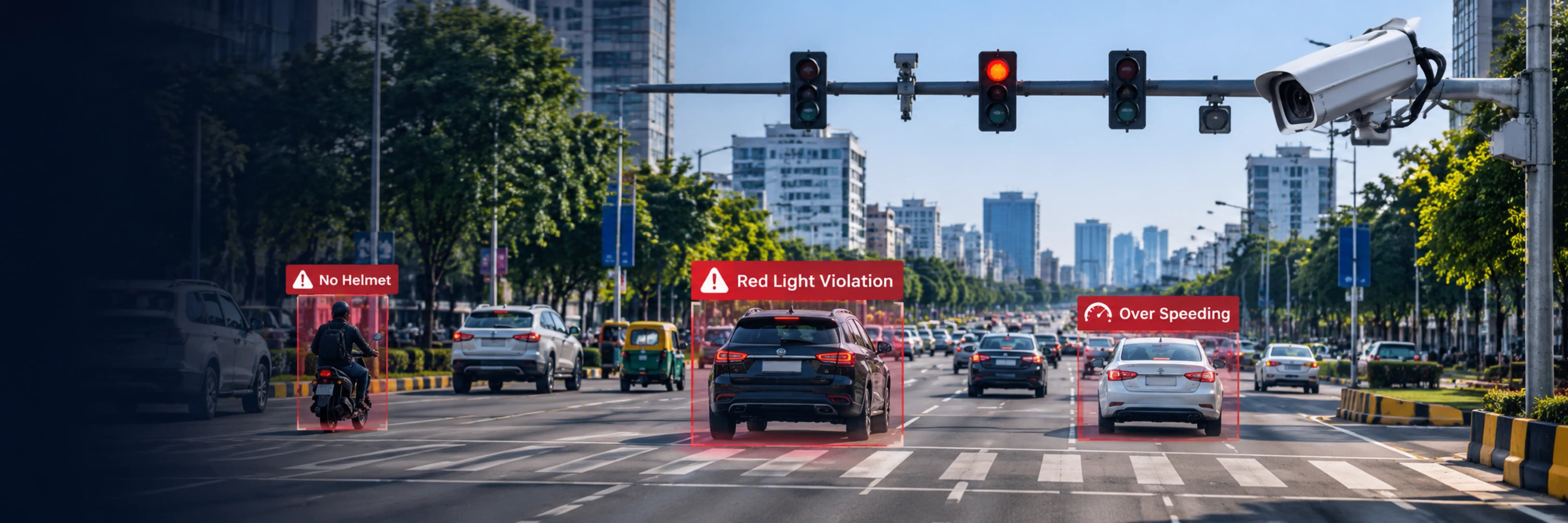
Intelligent Traffic Management System
What is an Intelligent Traffic Management System
An Intelligent Traffic Management System, or ITMS, uses IoT sensors and AI video analytics to watch, study, and manage road traffic in real time. It cuts congestion, improves road safety, catches incidents faster, and supports better traffic control decisions.
Older traffic systems mostly just record what already happened. ITMS gives traffic authorities live visibility into vehicle movement, road conditions, and violations, supporting quicker traffic decisions and more efficient urban mobility.
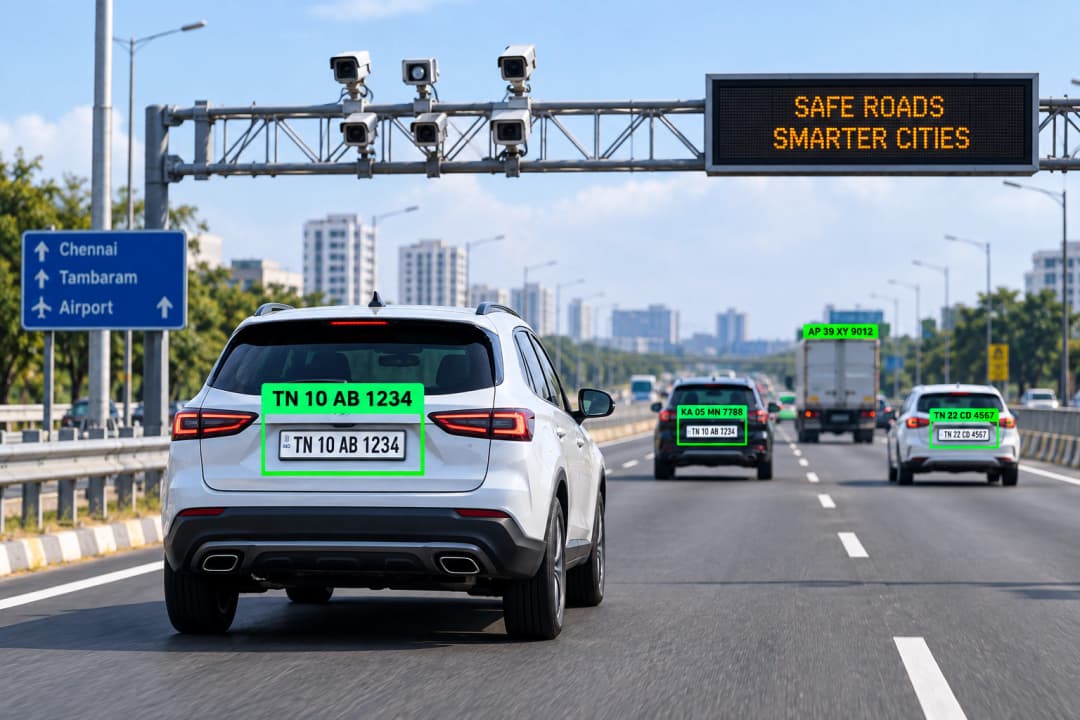
AI Traffic Management System in India
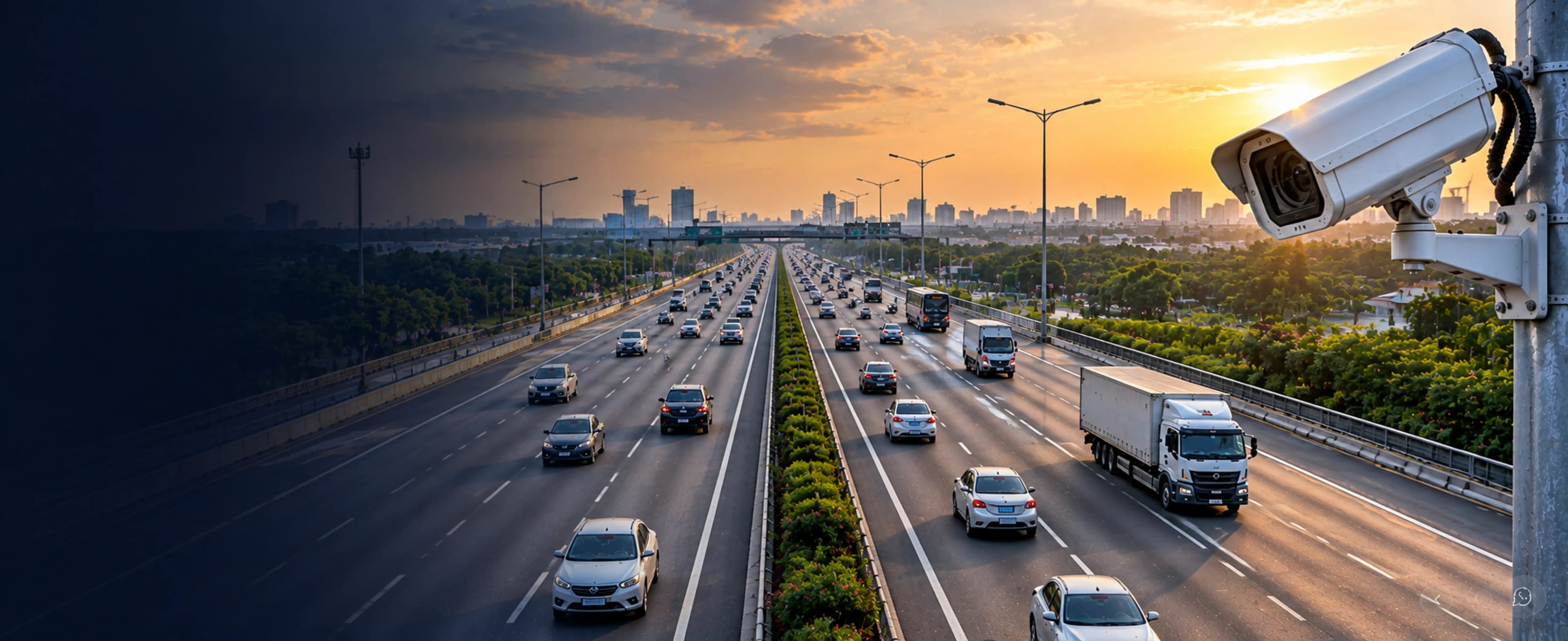
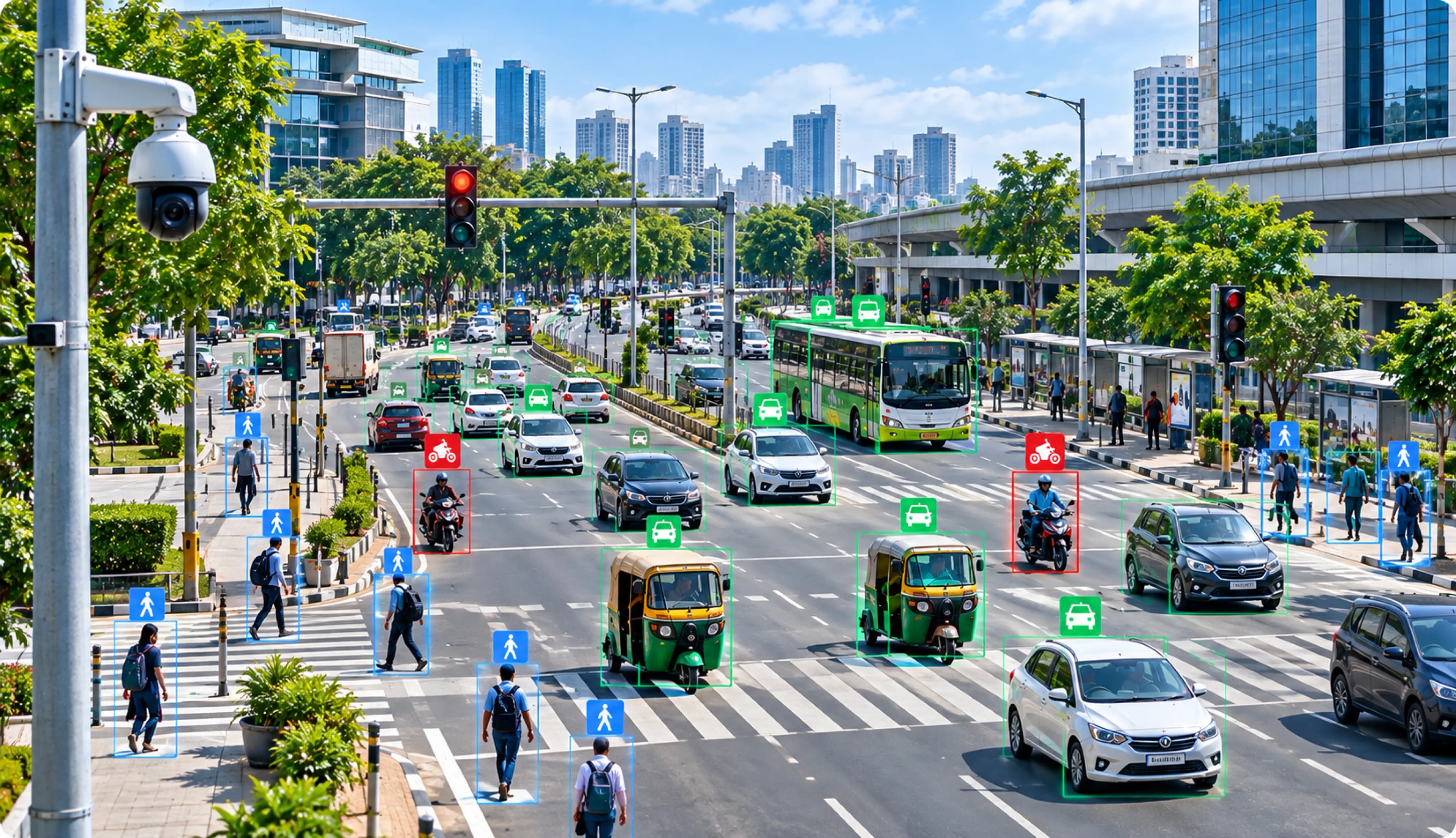
Katomaran builds an AI Traffic Management System for Indian roads, aimed at safer streets, smoother traffic, and better city mobility. Authorities use it to watch, study, and control traffic operations in real time, across both cities and highways.
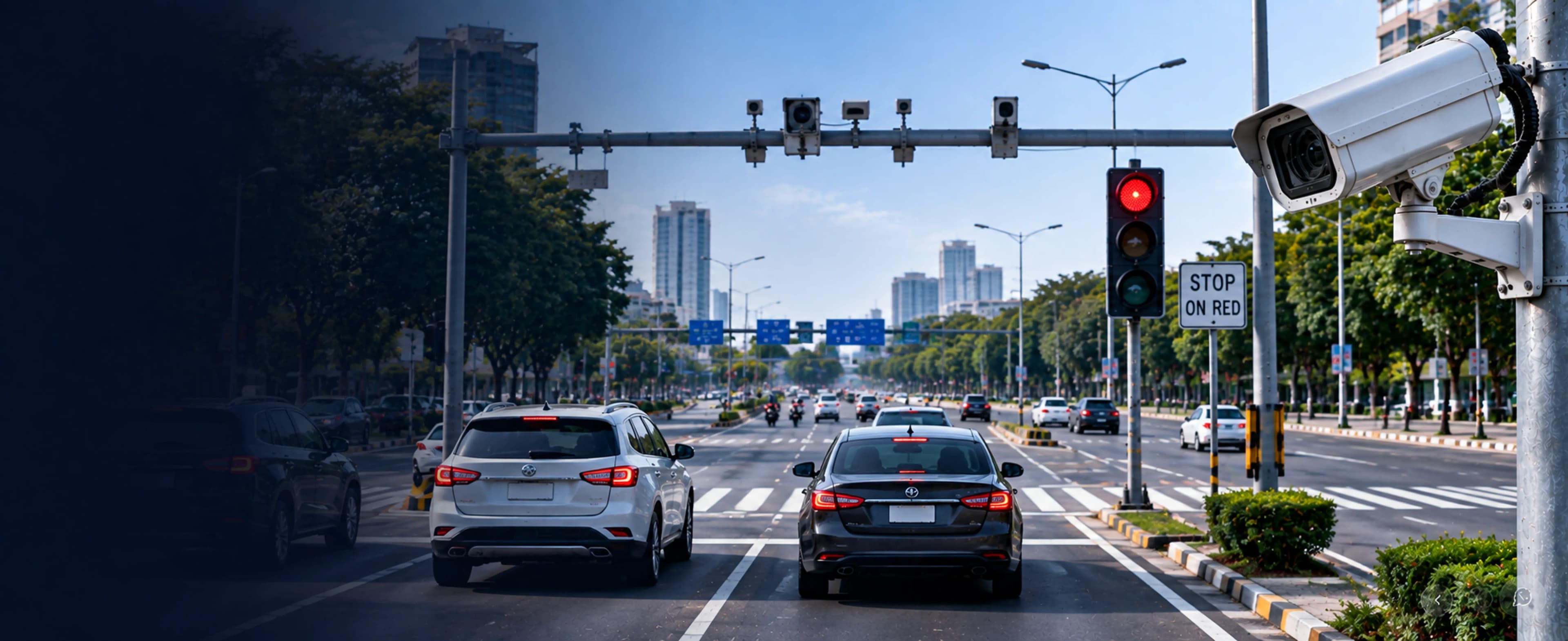
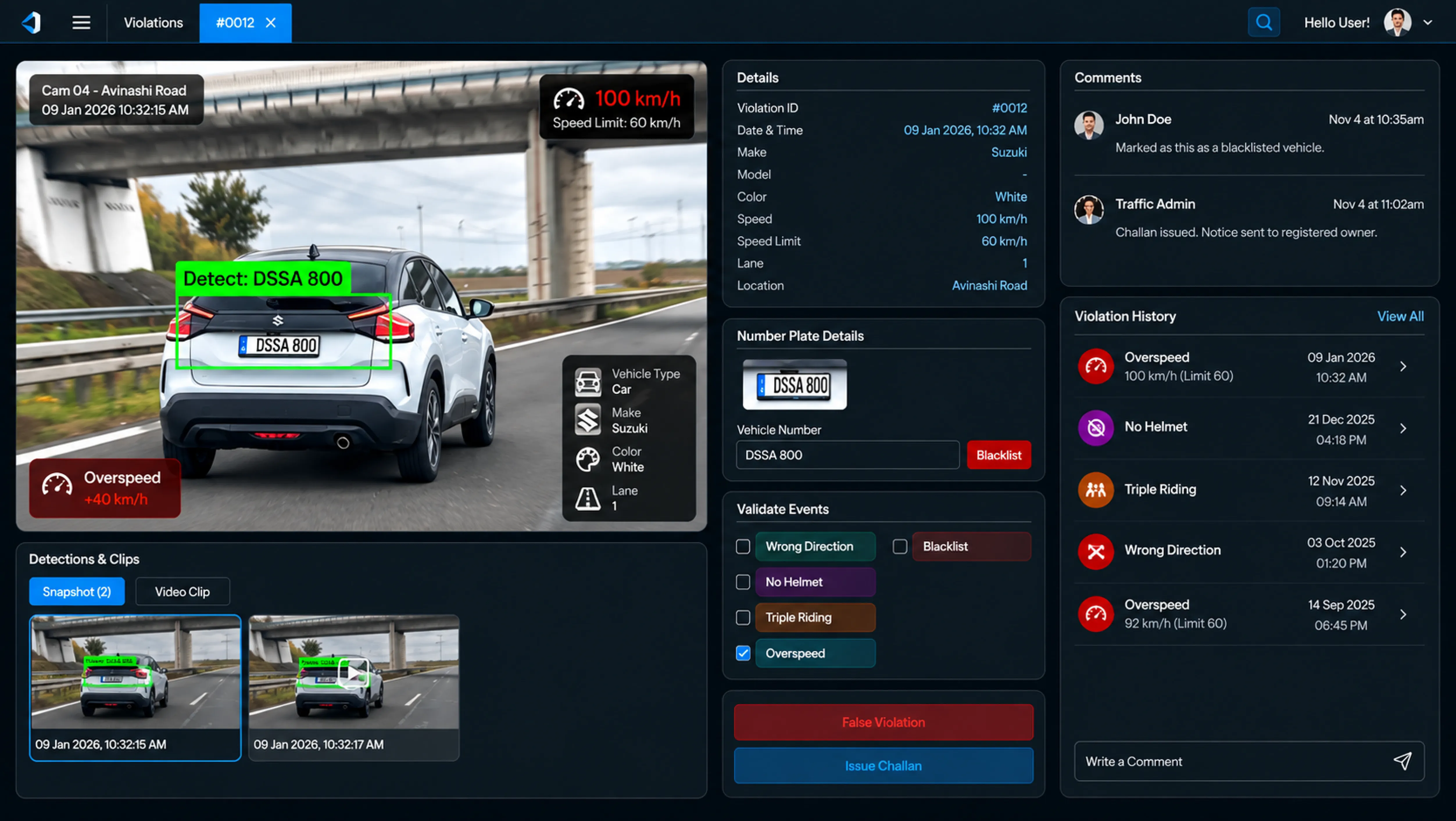
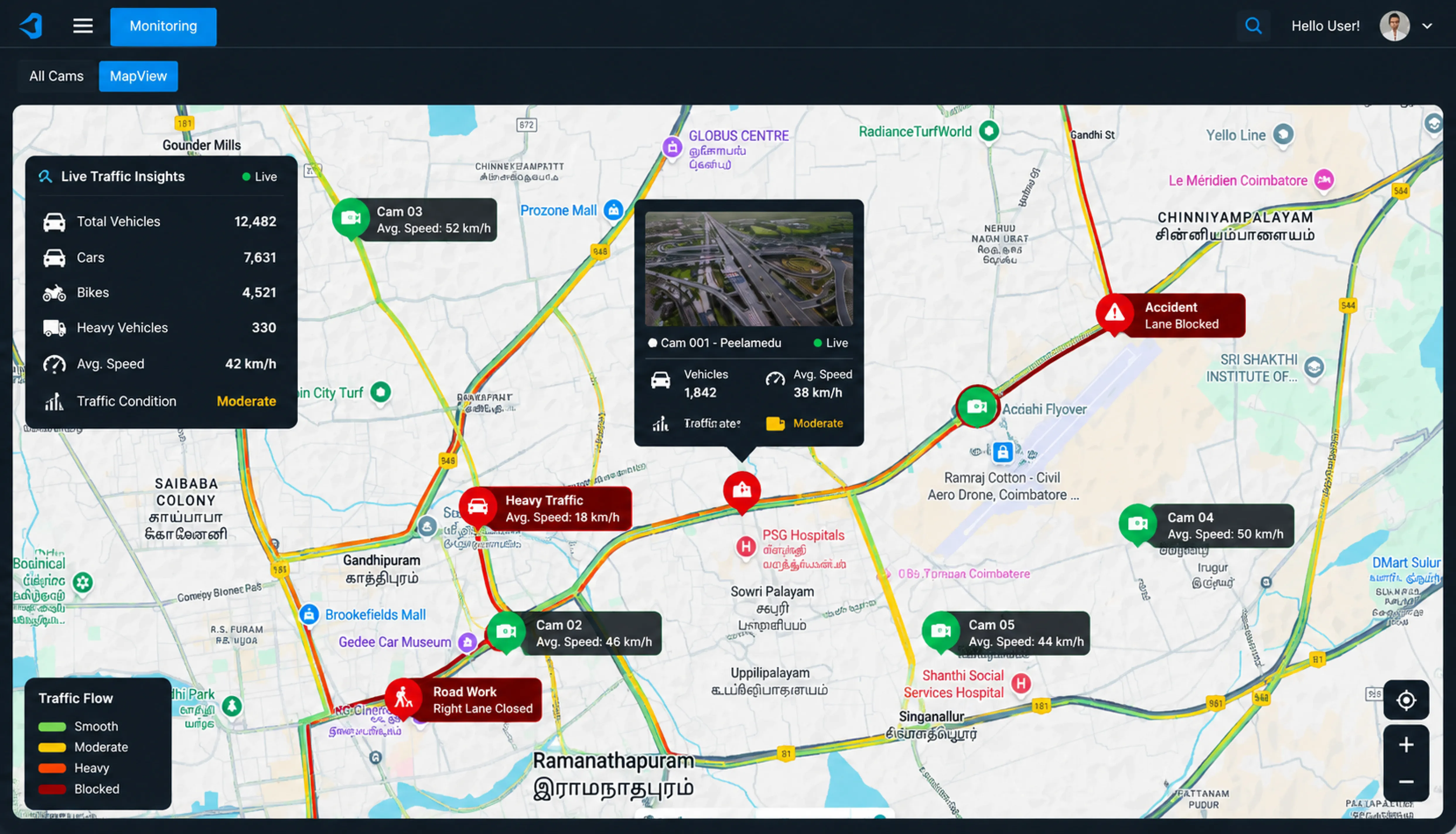
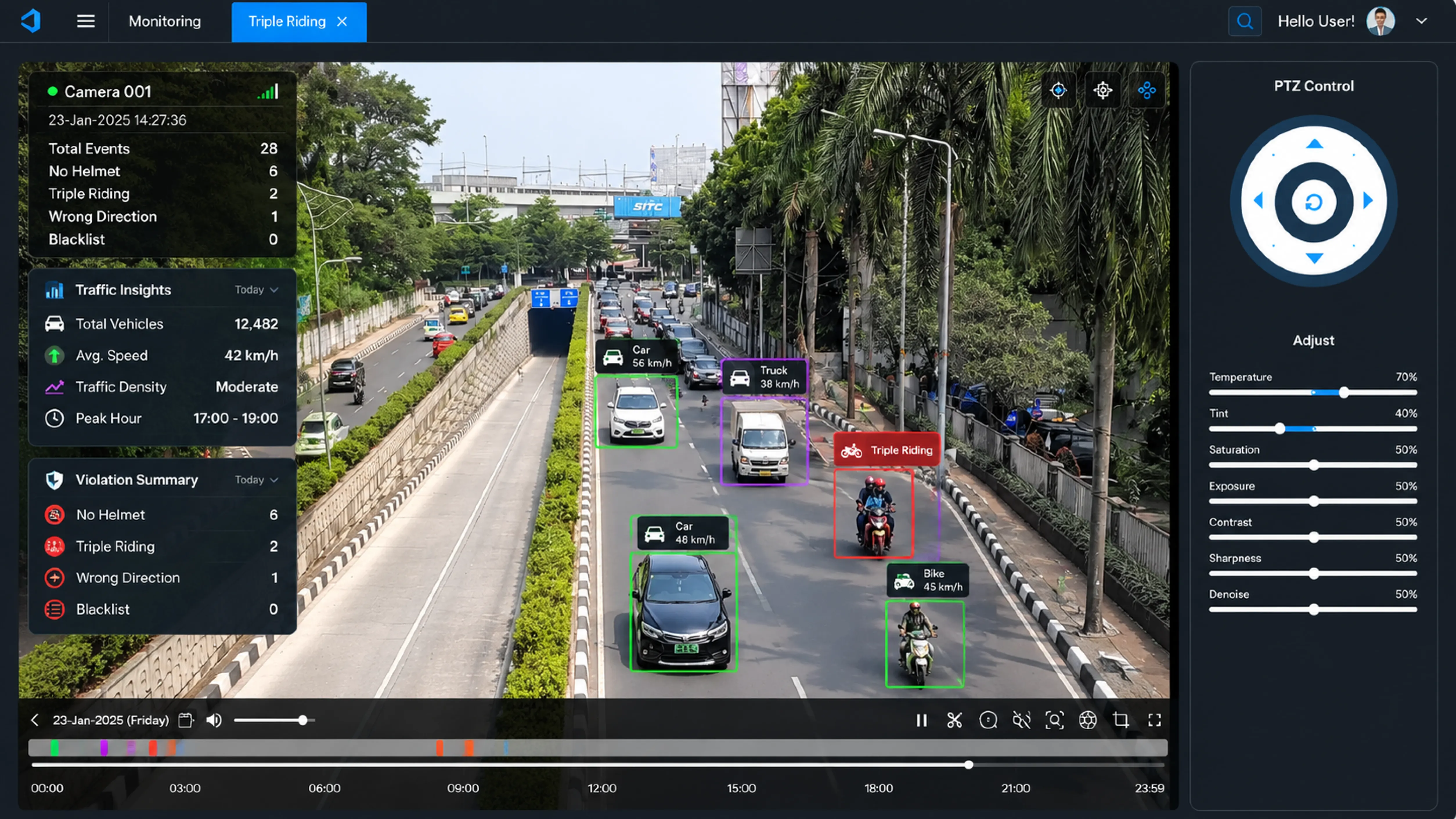
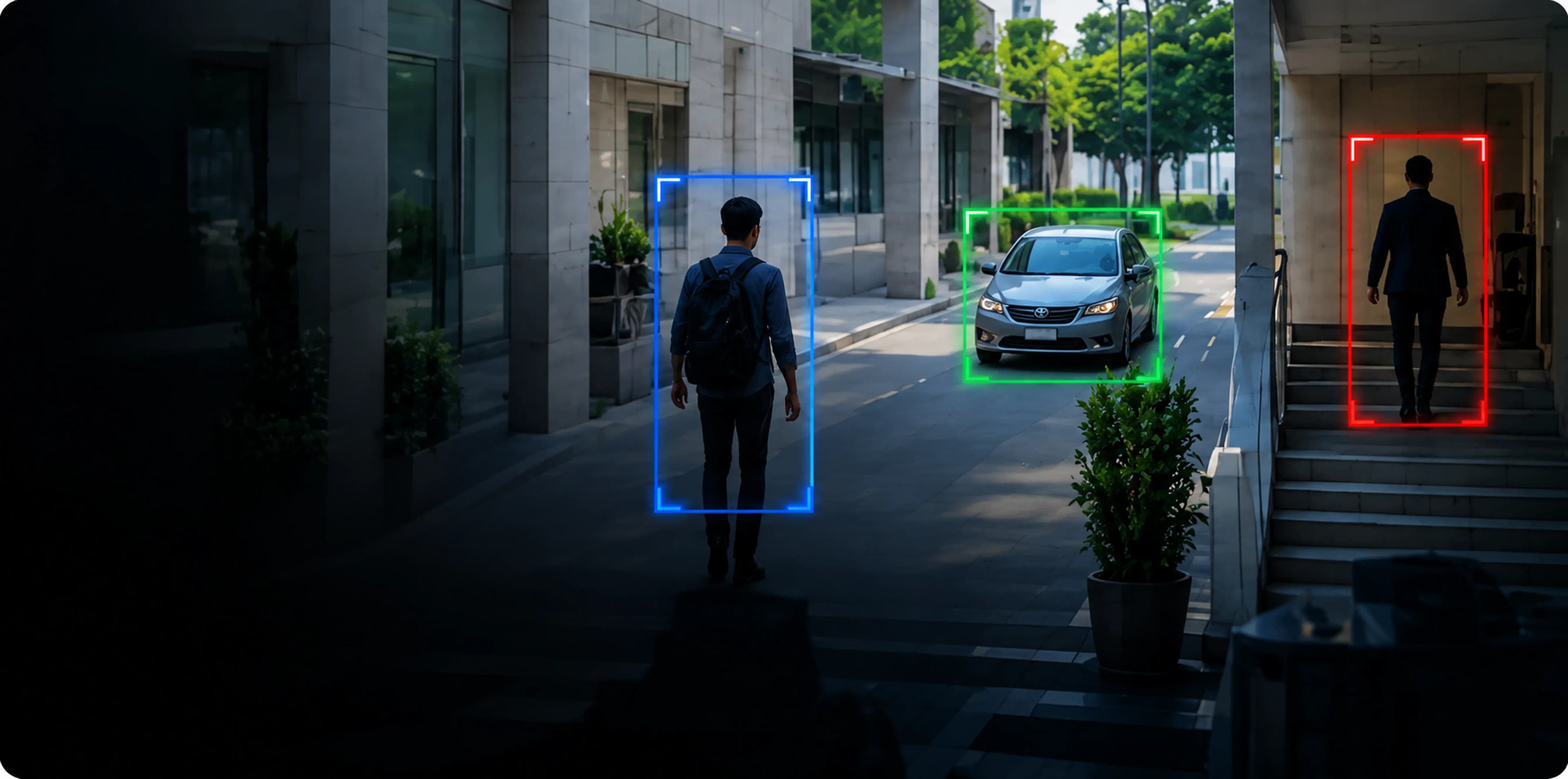
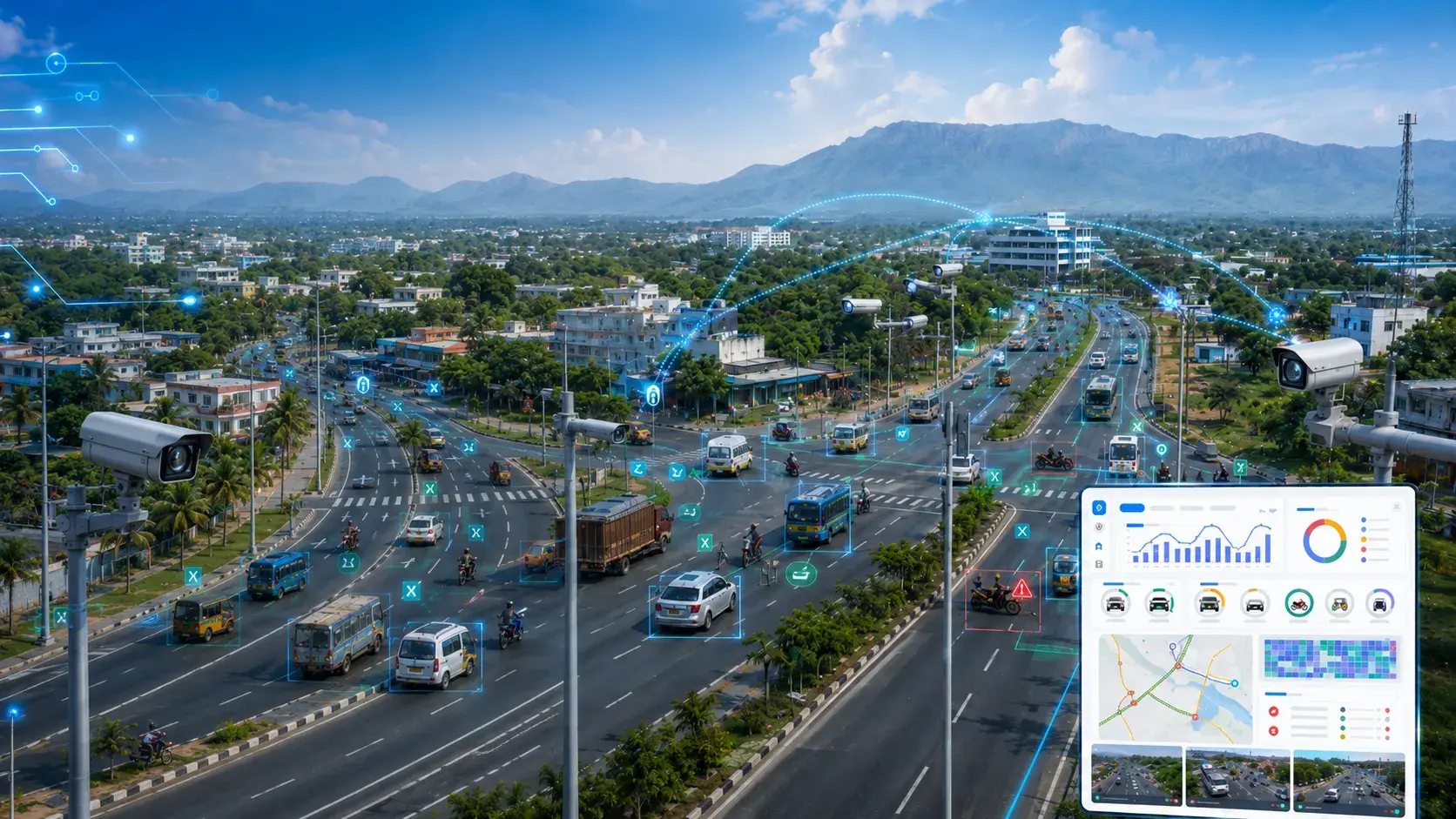
The system picks up on violations through Helmet Detection, speed checks, triple riding alerts, and seat belt monitoring, along with vehicles on a watchlist. Built-in Automatic Number Plate Recognition (ANPR) reads plates accurately, which keeps enforcement moving. Live camera feeds and IoT traffic sensors give authorities a real-time read on vehicle movement, congestion, and anything that needs quick attention.
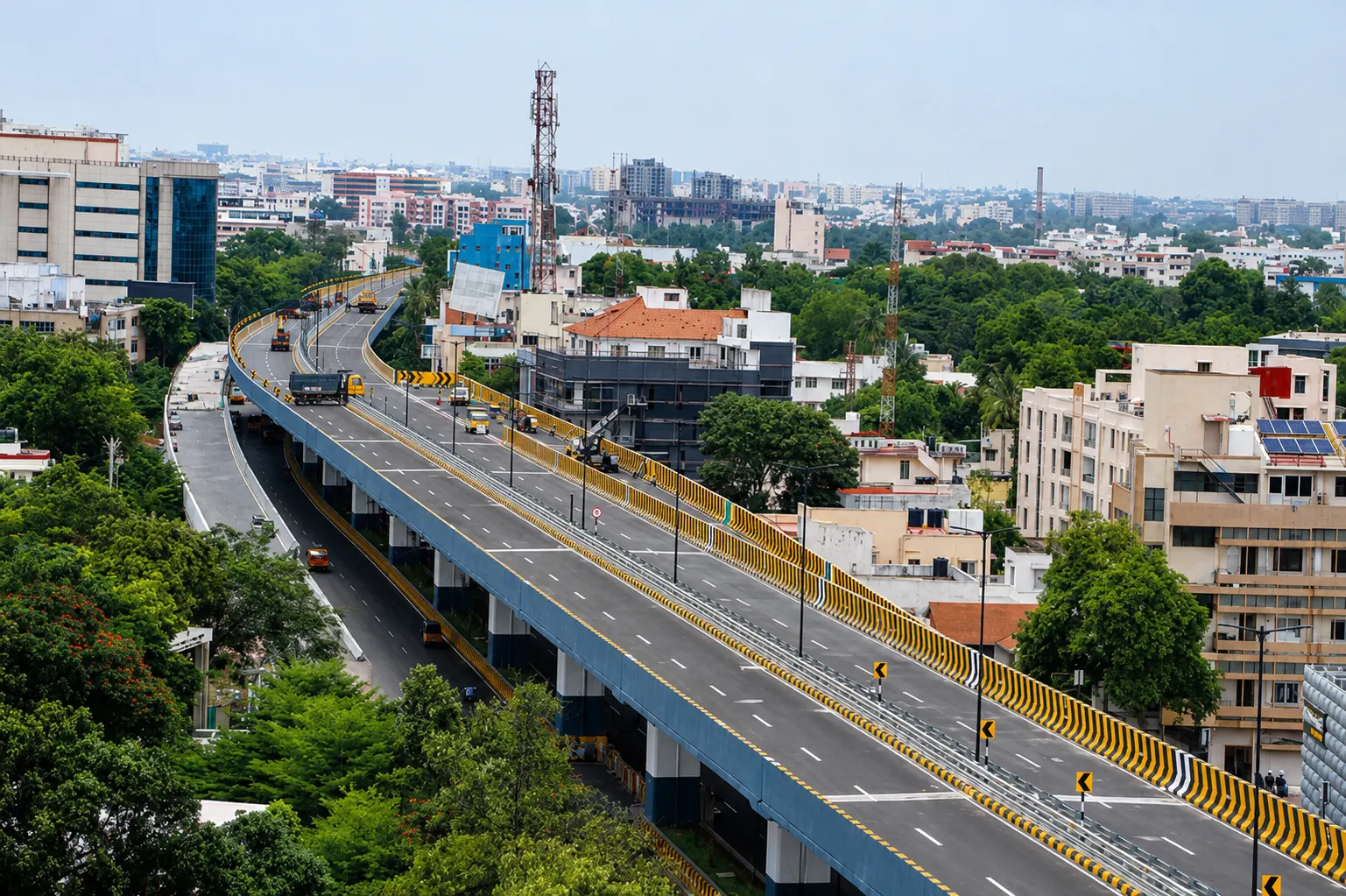
Sectional speed checks, incident detection, and air quality monitoring round out the platform, making it a fit for smart cities, highways, and large campuses alike. Katomaran's AI Traffic Management System supports decisions backed by real data and helps cut down on rule-breaking across Indian roads.
Get in Touch
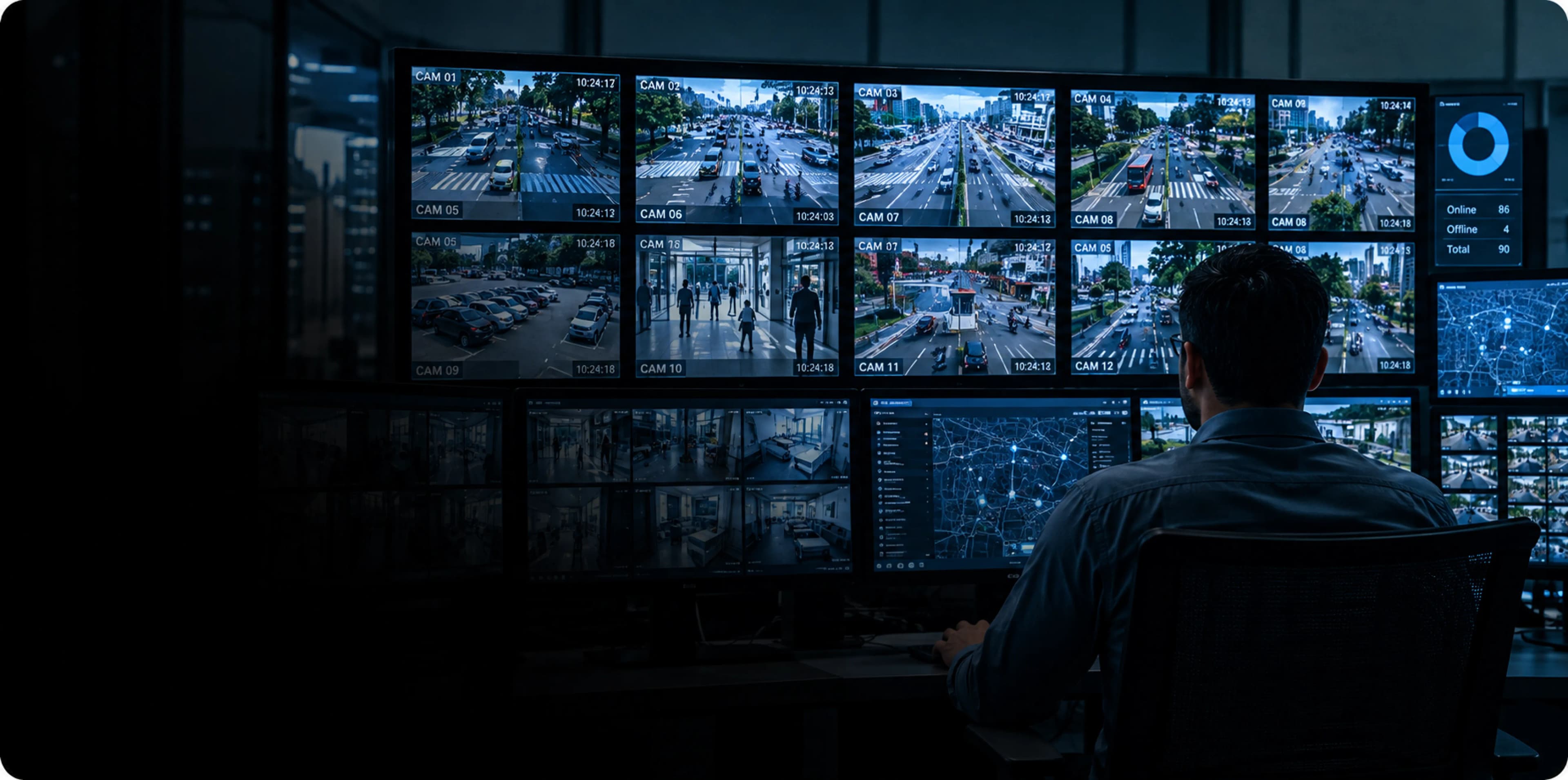
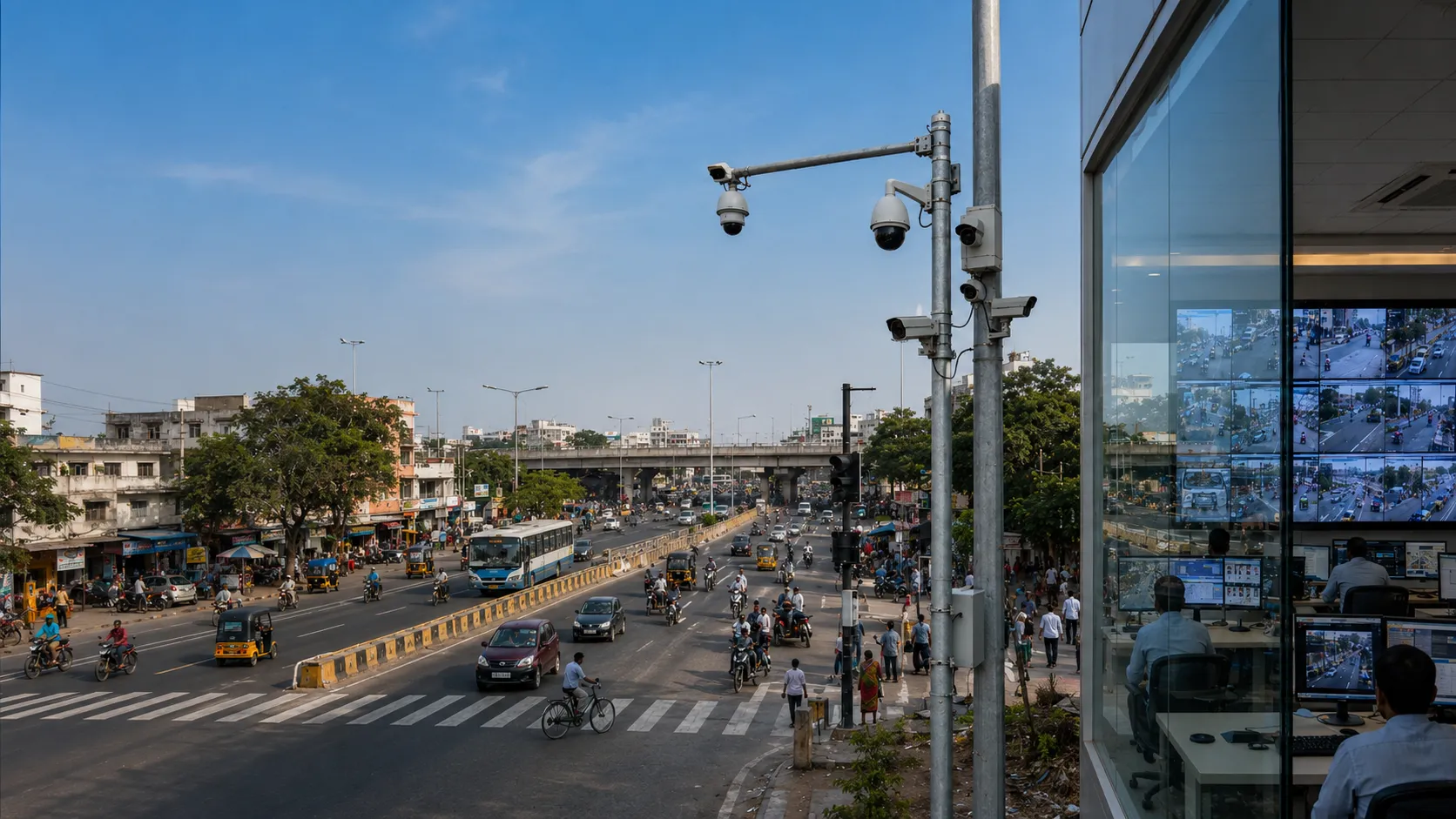
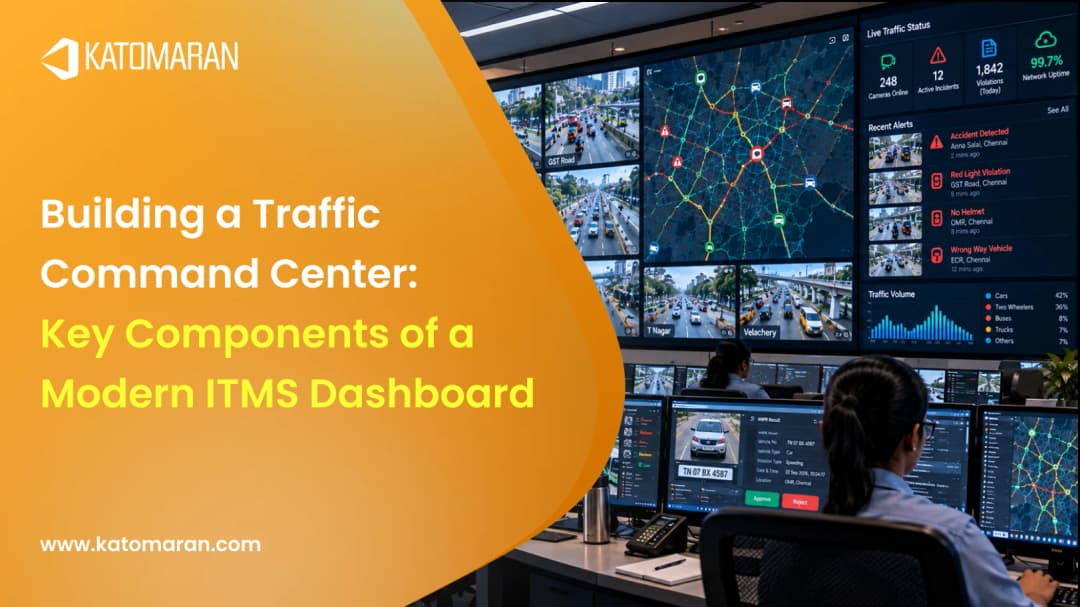
Centralized Traffic Control Centers
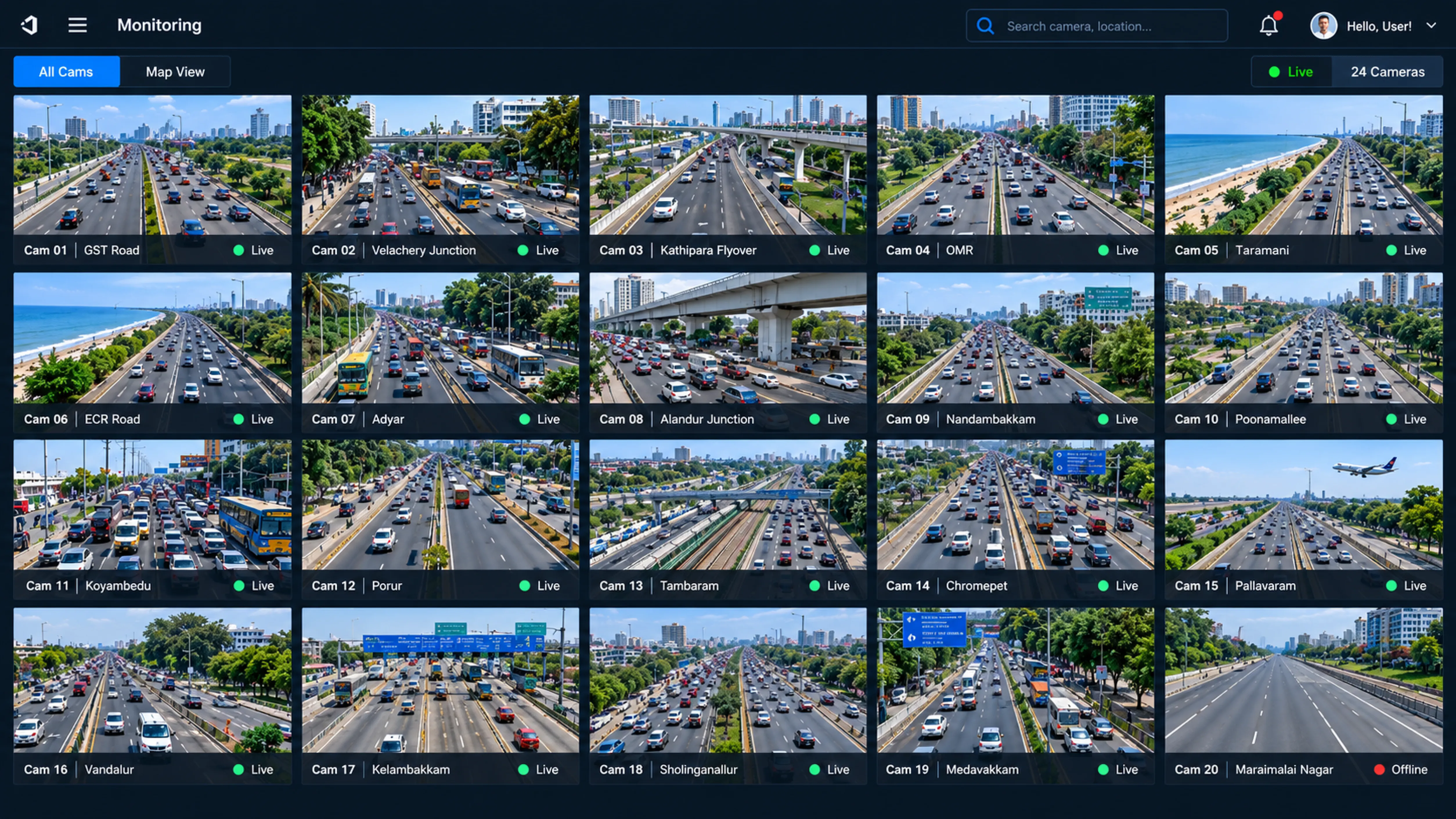
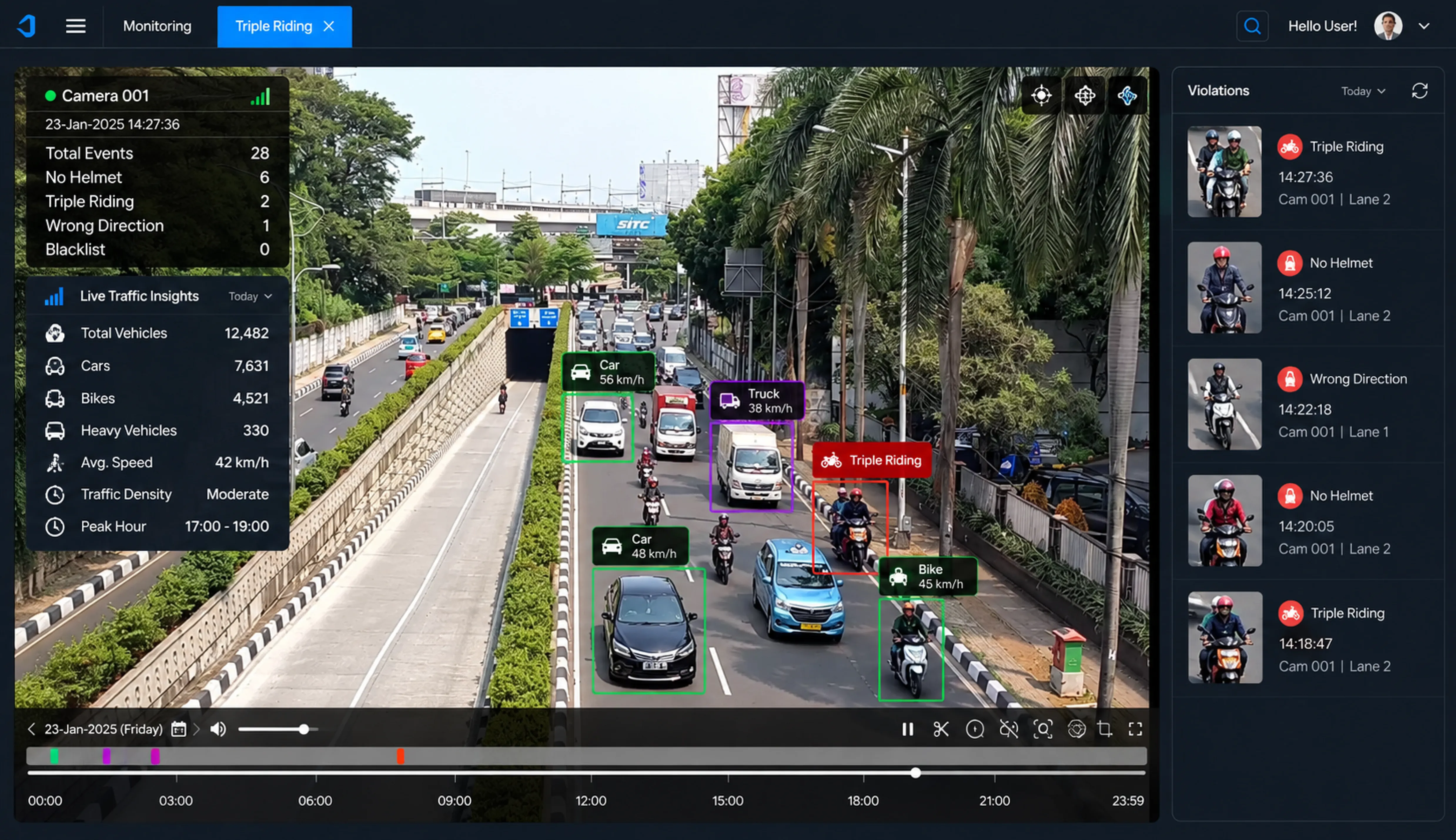
AI Modules That Power ITMS
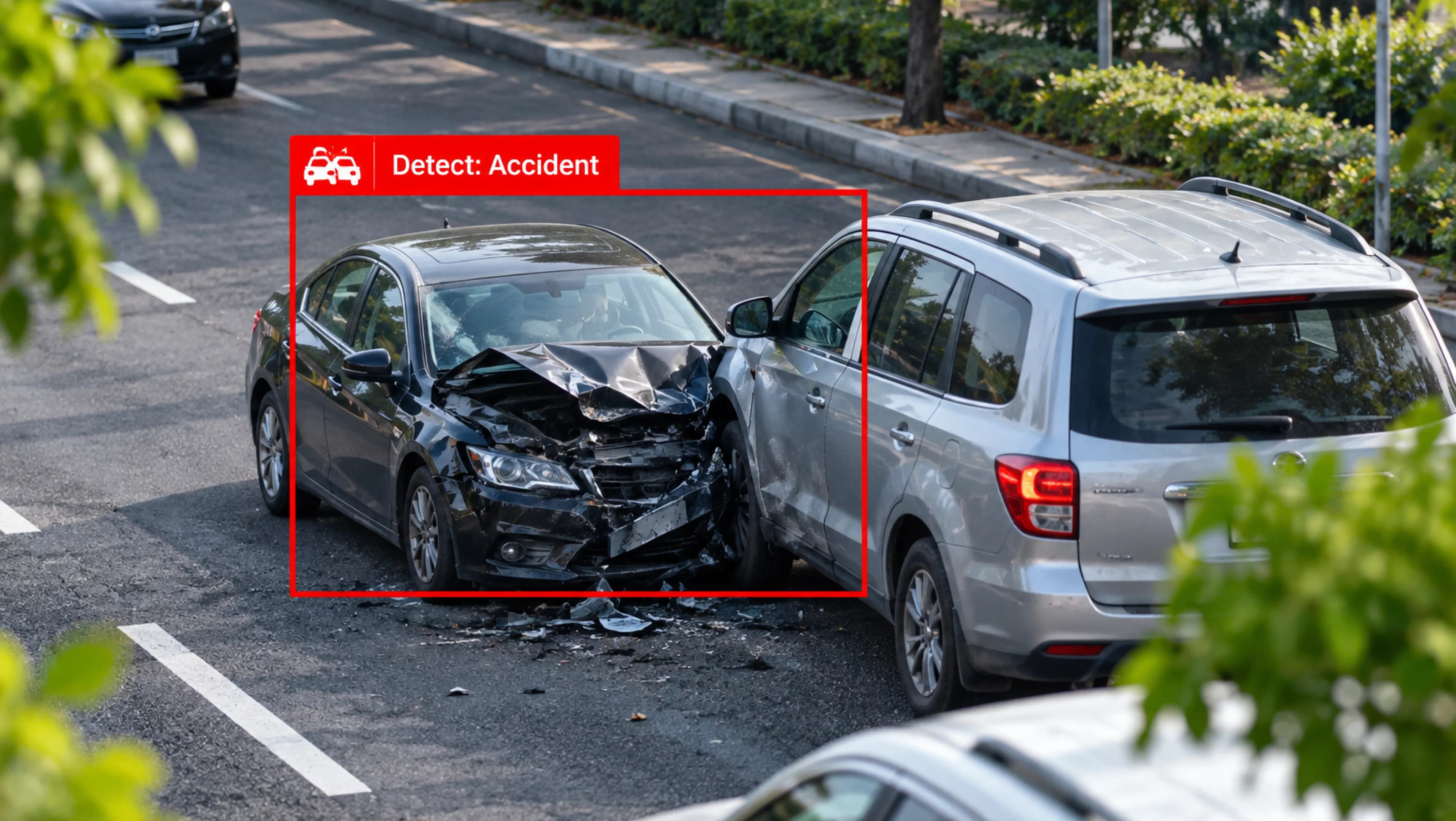
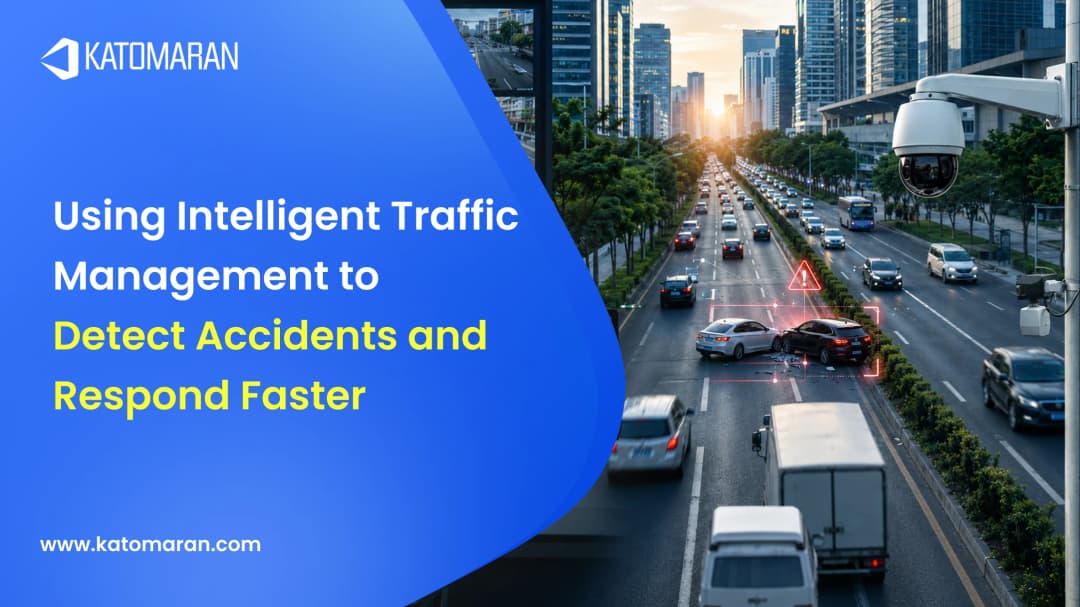
Accident Detection
AI accident detection picks up a crash or sudden impact right away, then saves a snapshot and video clip automatically.
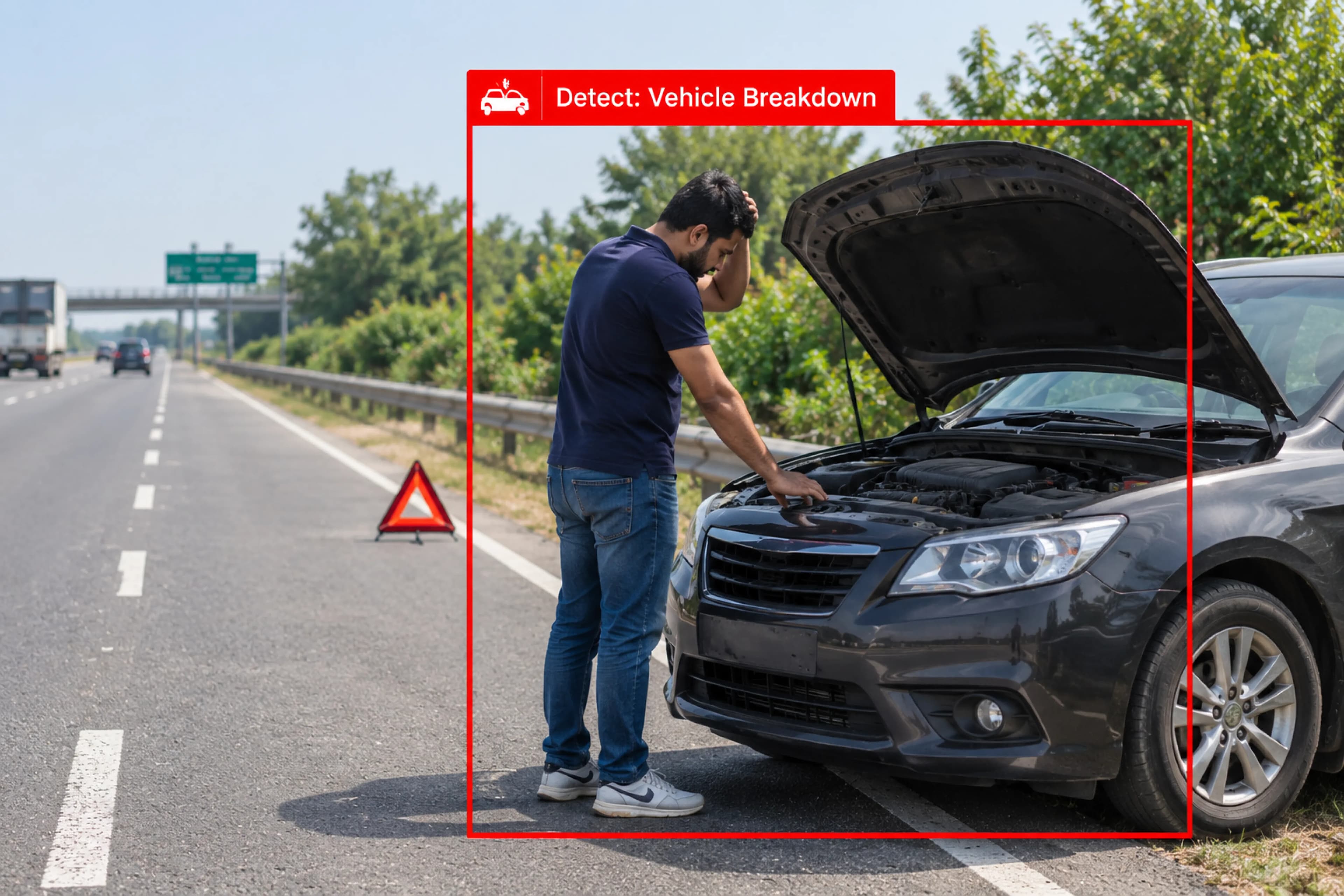
Vehicle Breakdown / Stoppage
Flags a vehicle stopped or stranded in an active lane and lets a team know for quick clearance.
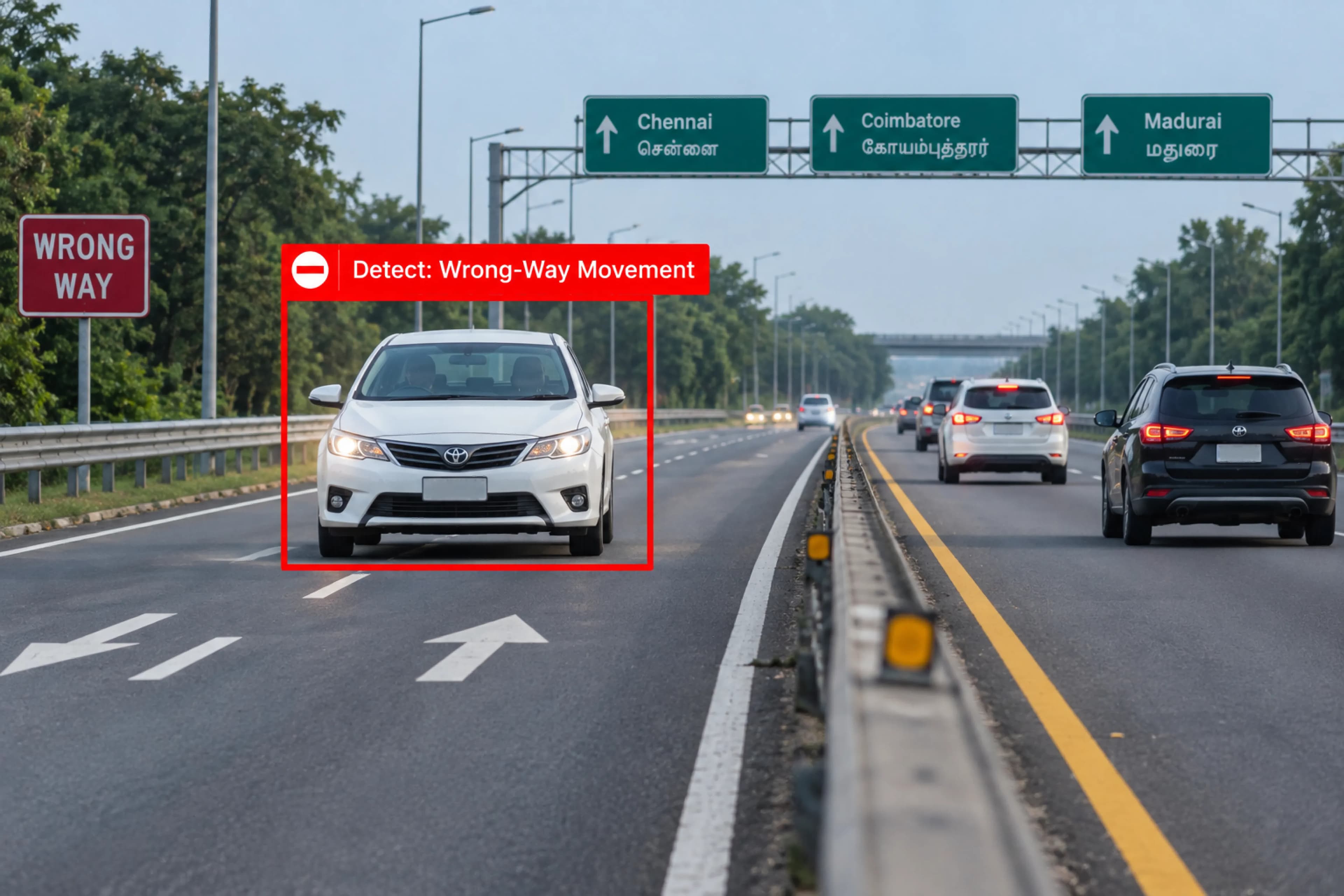
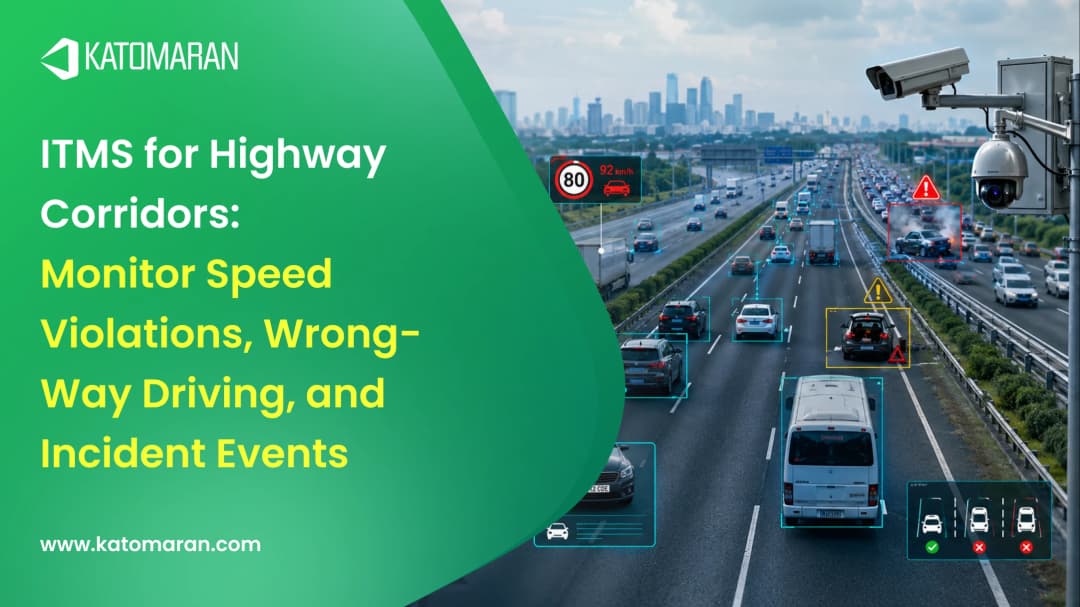
Wrong-Way Movement
Picks up a vehicle moving against traffic on a flyover, ramp, or highway and sends an urgent warning right away.
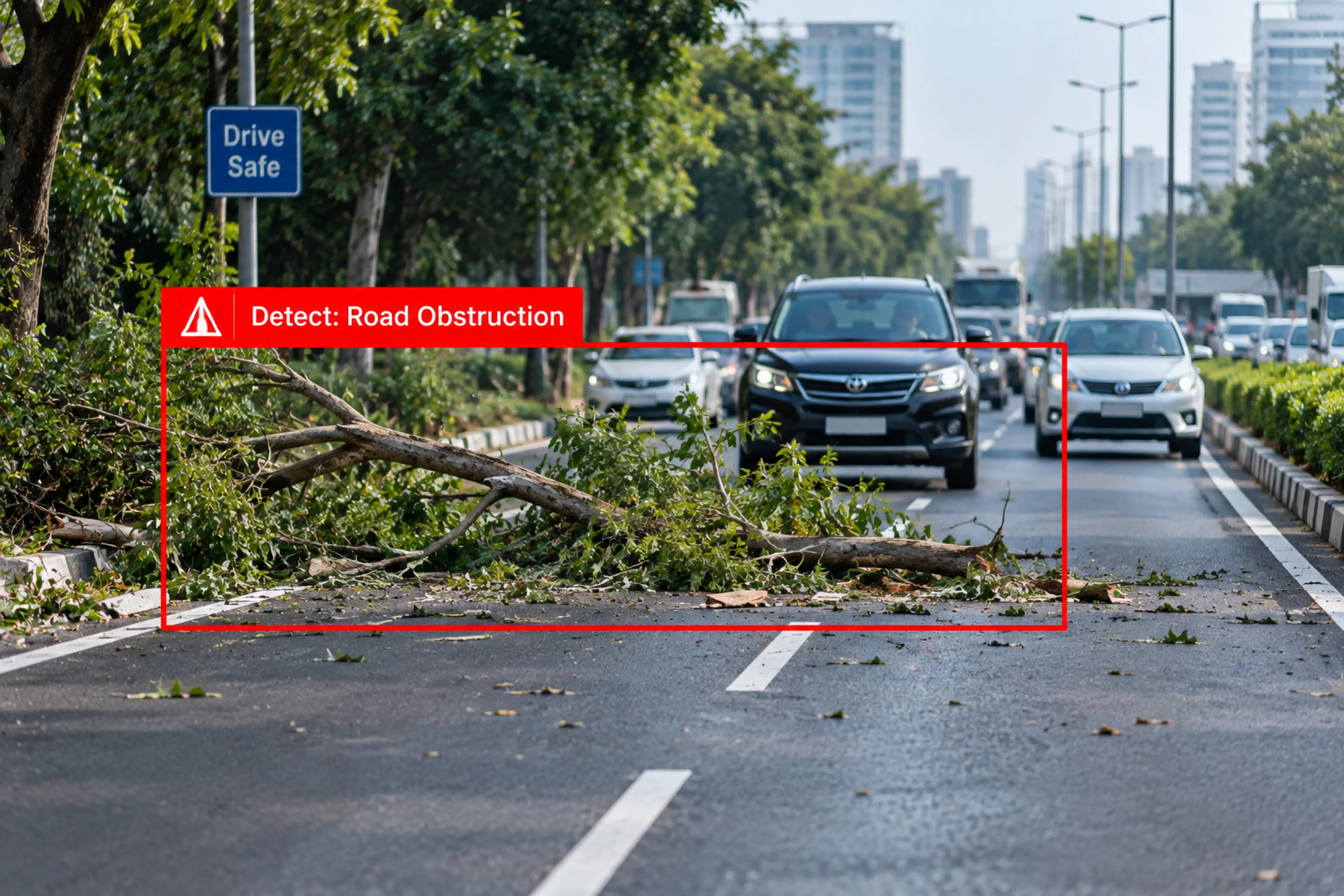
Road Obstruction / Debris
Catches debris, a fallen object, or a blocked lane early, cutting accident risk through a faster response.
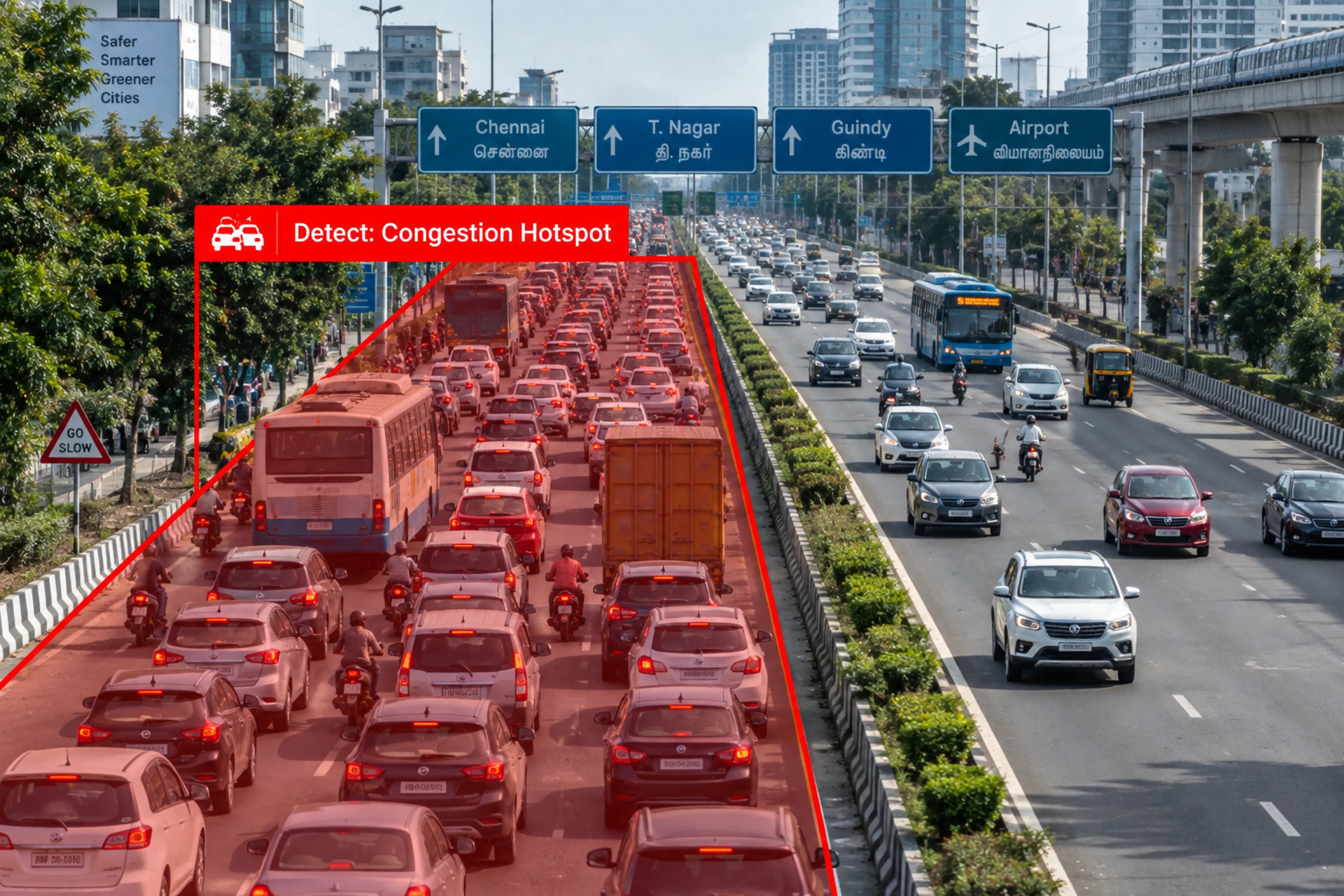
Congestion Hotspot Alert
Tracks traffic build-up as it happens and alerts operators the moment density or queue length crosses a set point, easing peak-hour traffic congestion.
How Our Intelligent Traffic Management System Works
Capture Data
Collect vehicle speed, traffic, and environmental data in real time.
Detect & Analyze
AI picks out violations, incidents, and flagged vehicles as they happen.
Send Alerts
Authorities get notified right away, so response doesn't wait.
Report & Improve
Insights feed back in to sharpen road safety and traffic decisions.
Issue E-Challan
Confirmed violations move straight into an e-challan system, generated and sent automatically.
Why Choose Our Traffic Management System
Why Choose Our Traffic Management System
Years of Hands-On ITMS Work
Built and deployed traffic monitoring systems for government bodies, smart cities, and enterprises across different road conditions.
Solutions Built Around the Site
From vehicle detection and speed checks to accident alerts and air quality tracking, the system gets configured to match what a specific deployment actually needs.
A Modern AI and IoT Stack
Built on AI analytics, IoT sensors, and ANPR to deliver traffic insight and enforcement support that holds up in real conditions.
Works With What's Already There
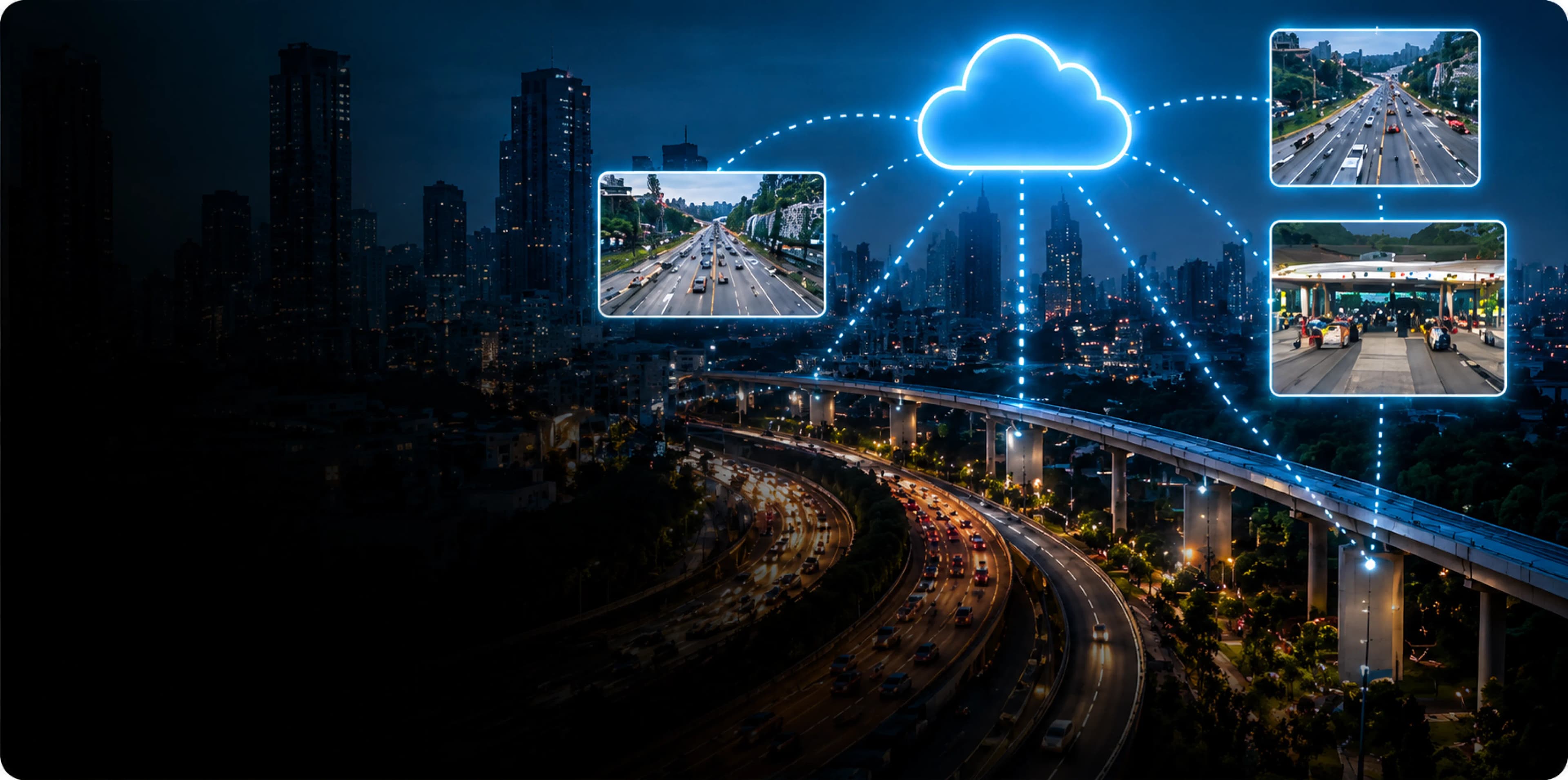
Connects to existing traffic infrastructure, video management systems, and camera networks, without forcing a rebuild.
Built Around Safety First
Aimed at fewer accidents, fewer violations, and traffic patterns that support long-term, sustainable mobility.
A Track Record With Government and Enterprise Teams
Deployed alongside government agencies, enterprises, and smart city projects, including a 40 km AI traffic management deployment in Theni district, with a focus on reliability and follow-through.
Benefits of Our Intelligent Traffic Management System
One ITMS Across Different Road Environments
ITMS for Smart Cities
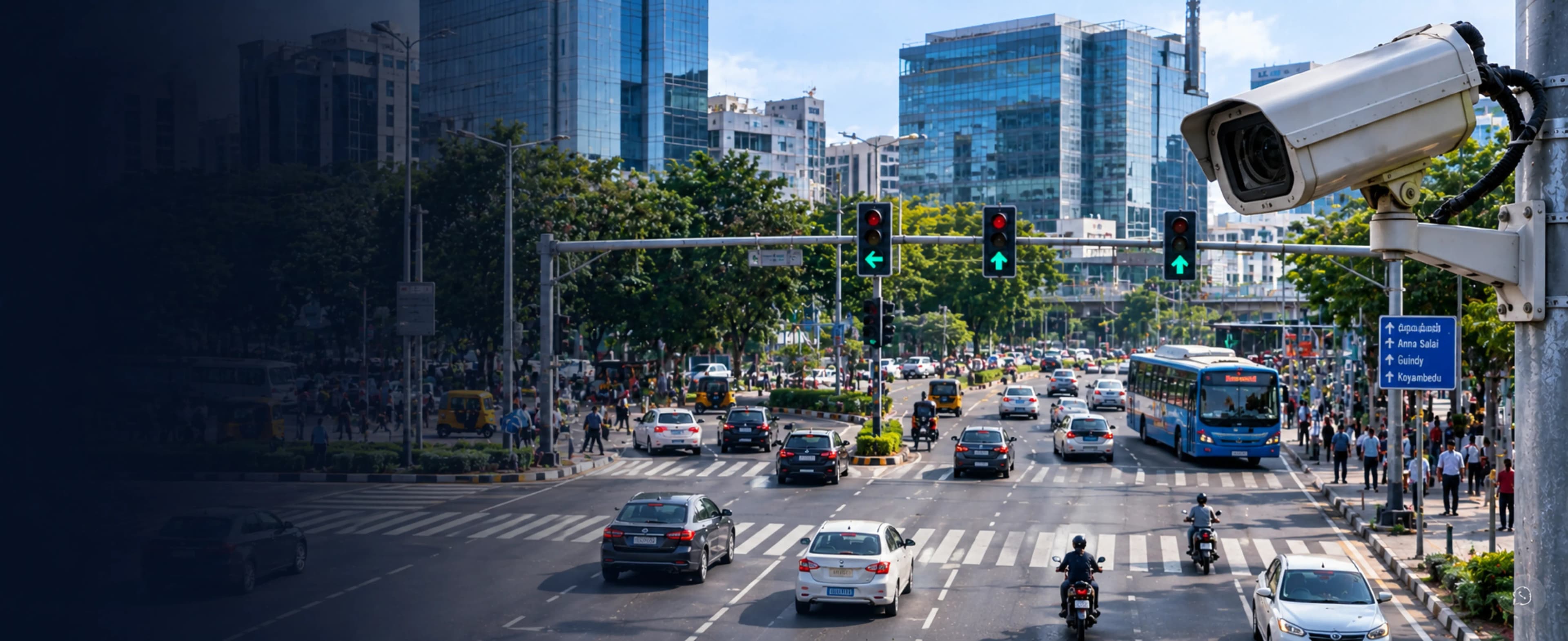
Deploy an AI-powered ITMS to bring traffic intersections, public roads, and municipal corridors under one unified command and control view. Enable real-time violation detection, ANPR, traffic analytics, and city-wide traffic enforcement decisions as part of a broader smart city surveillance deployment.
One Suite for Watching, Managing, and Protecting a Space

VAPT CertifiedIntelligent Traffic Management System
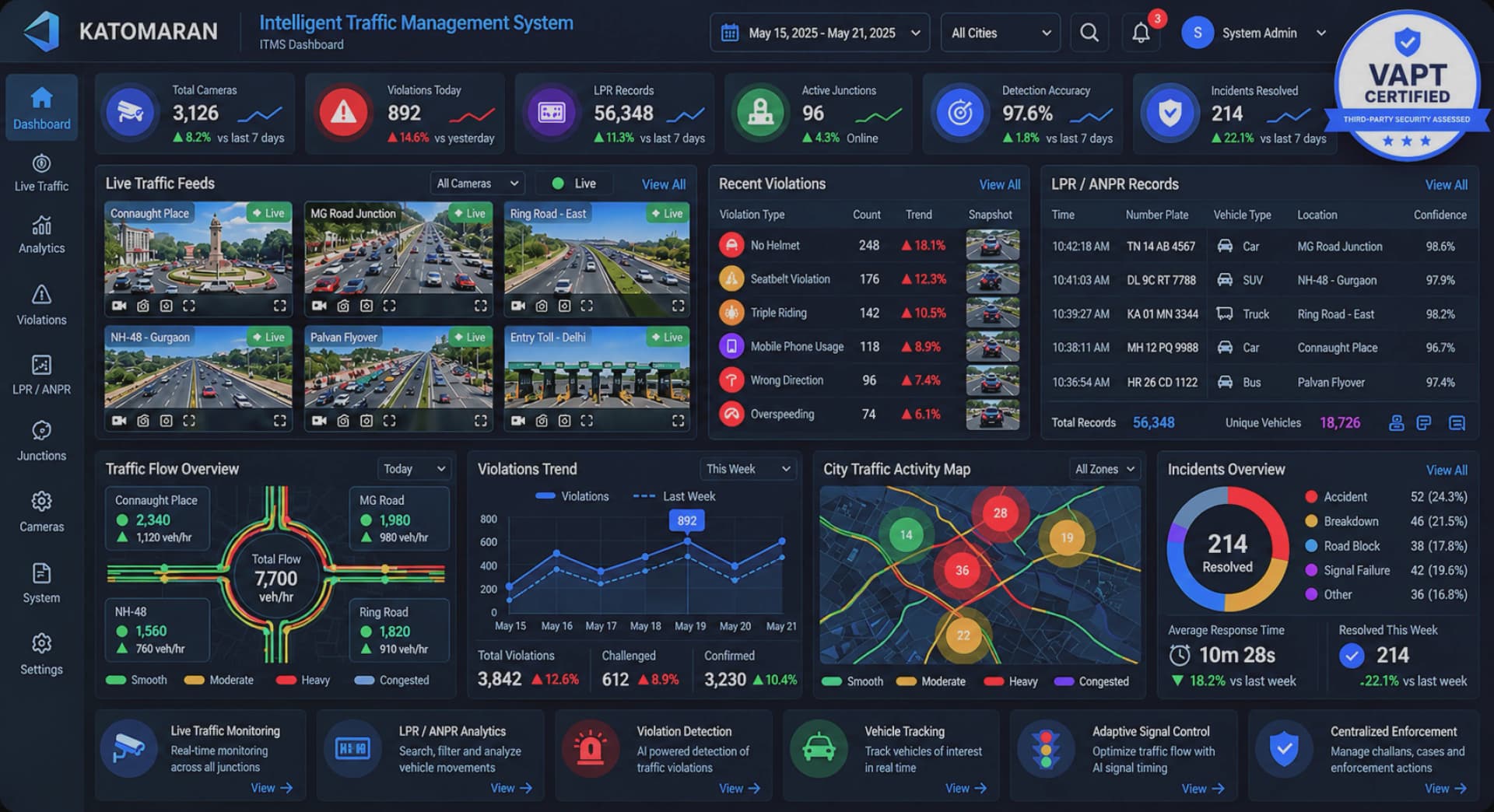
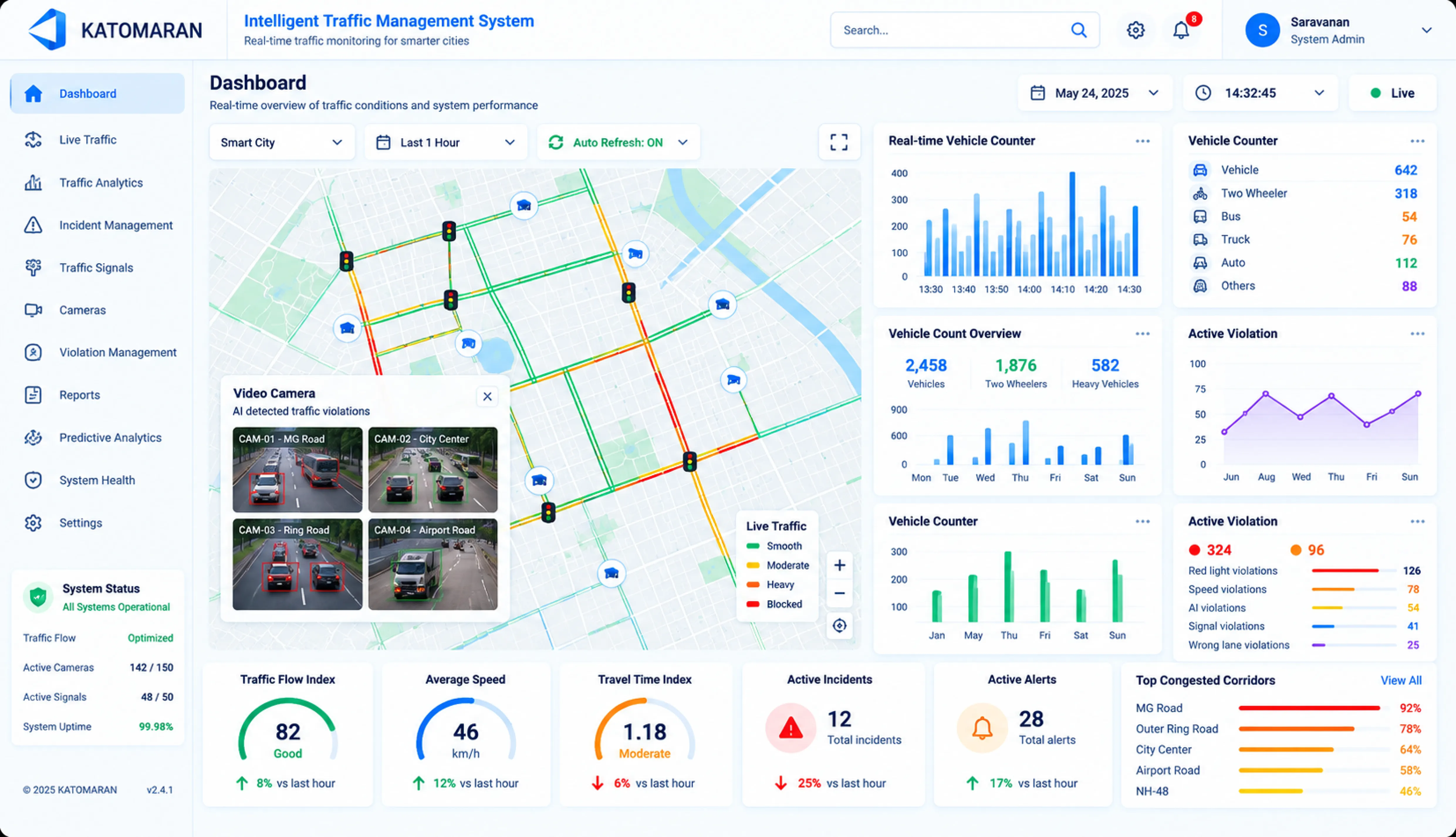
Katomaran's Intelligent Traffic Management System gives authorities and enforcement teams one platform to watch live traffic, capture plate records, catch violations, and manage traffic intelligence. Built for smart city and road safety work, it supports secure monitoring, faster incident review, and enforcement workflows that hold up.
Upgrade city safety with an Intelligent Traffic Management System
Bring AI, IoT, and real-time analytics into how a city manages traffic. Catch violations, prevent accidents, and support safer urban mobility.
Frequently Asked Questions About Intelligent Traffic Management System
1. What is an Intelligent Traffic Management System (ITMS)?
1. What is an Intelligent Traffic Management System (ITMS)?
An Intelligent Traffic Management System uses AI, IoT sensors, and cameras to monitor traffic, detect violations, and support road safety in real time across junctions, highways, and city road networks.
2. How does ITMS improve road safety?
2. How does ITMS improve road safety?
It tracks speeding, helmet and seat belt use, overloaded vehicles, and blacklisted vehicles, catching violations as they happen so authorities can act sooner and prevent repeat offences on the road.
3. Can ITMS detect accidents and send alerts?
3. Can ITMS detect accidents and send alerts?
Yes. Accident and incident detection triggers an instant alert to authorities and emergency teams, sharing the camera location and event details so responders can act faster on the ground.
4. Does ITMS work with existing cameras and infrastructure?
4. Does ITMS work with existing cameras and infrastructure?
In most cases, yes. It connects with existing CCTV cameras, VMS platforms, and IoT sensors through CCTV and ITMS integration, so a full hardware swap usually isn't needed.
5. What is ANPR in ITMS?
5. What is ANPR in ITMS?
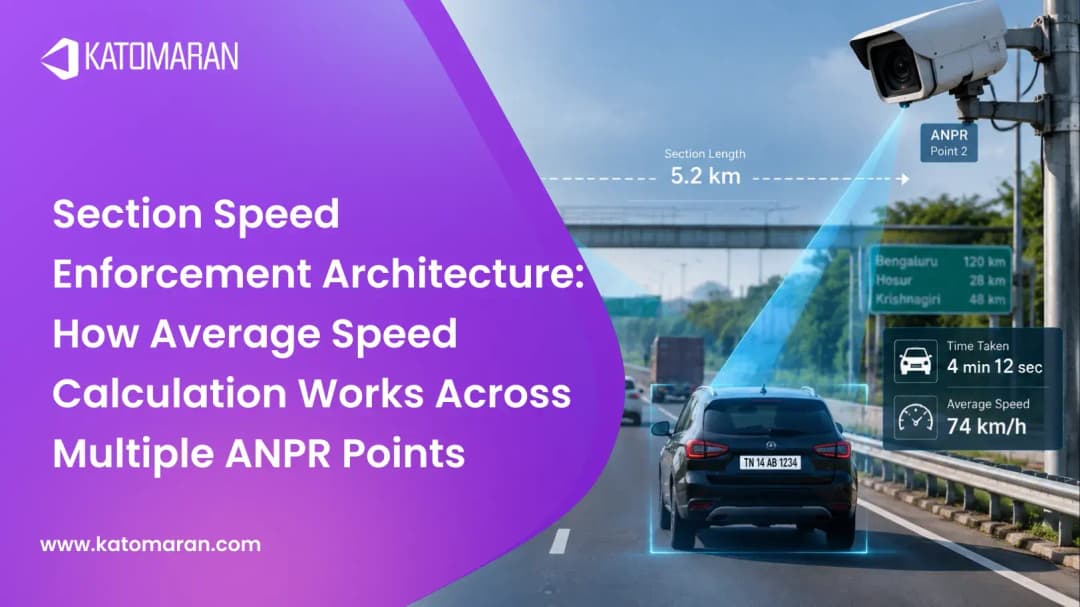
Automatic Number Plate Recognition reads vehicle plates in real time, supporting traffic monitoring, enforcement, and blacklisted vehicle checks, so flagged vehicles can be identified and tracked across connected junctions.
6. Can ITMS help reduce traffic congestion?
6. Can ITMS help reduce traffic congestion?
Yes. By reading traffic flow and vehicle movement and managing speed across road sections, it helps ease congestion in busy areas and gives traffic teams clearer data for planning decisions.
7. Who can use ITMS?
7. Who can use ITMS?
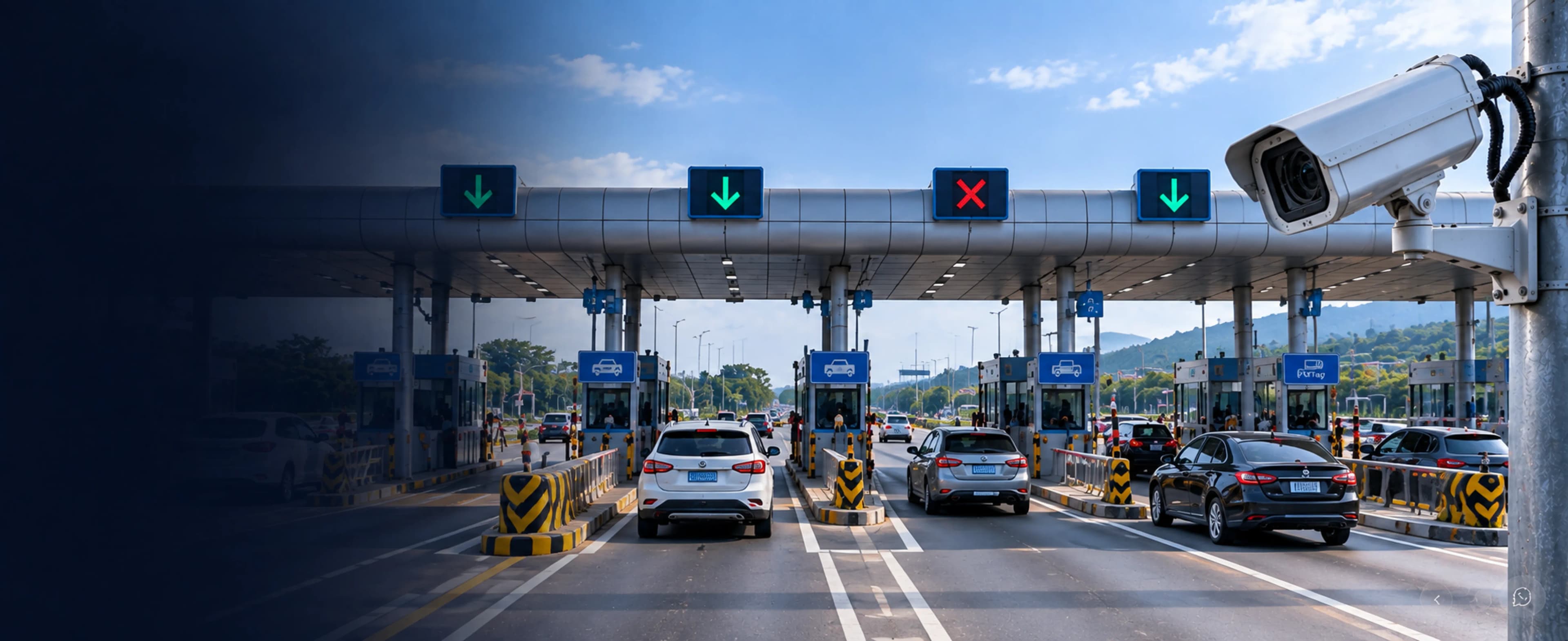
Government authorities, smart cities, highways, airports, toll operators, and large enterprises looking to improve road safety, traffic monitoring, and compliance across busy public roads and private industrial campuses alike.
8. What evidence does ITMS capture when it flags a violation?
8. What evidence does ITMS capture when it flags a violation?
A snapshot or clip, the vehicle plate, timestamp, and camera location, all attached to the same record so it holds up during review and can be shared with enforcement teams.
9. Does ITMS work at night or in poor weather?
9. Does ITMS work at night or in poor weather?
Performance depends on camera resolution and placement. Sites with heavy night traffic or monsoon exposure generally need cameras and lighting suited to those conditions, such as IR or floodlight illumination.
10. How long does an ITMS deployment usually take?
10. How long does an ITMS deployment usually take?
It depends on camera count and site readiness. A single junction moves faster than a multi-site rollout, since every added location brings more integration, testing, and calibration work.