Introduction
Smart highways aren’t just about better roads—they’re about safer driving, faster response, and smoother traffic flow. As vehicle volume increases, highways face recurring issues like overspeeding, wrong-way movement, lane indiscipline, stalled vehicles, and sudden accidents. That’s where ITMS (Intelligent Traffic Management System) becomes critical.
An ITMS for smart highways combines CCTV + AI video analytics + ANPR + speed measurement to continuously monitor traffic, detect violations, and reduce risk—while giving highway authorities actionable data to improve enforcement and planning.
What is ITMS in Smart Highways?
ITMS (Intelligent Traffic Management System) is a highway monitoring and enforcement ecosystem that uses intelligent cameras and analytics to:
Track vehicle speed and lane behavior
Detect traffic violations automatically
Identify accidents, stoppages, obstacles, and dangerous events
Generate evidence packs (snapshot + number plate + time + location + short clip)
Provide dashboards and reports for decision-making
In a smart highway context, ITMS acts like a 24/7 digital traffic officer, monitoring long stretches of roadway where manual enforcement is difficult and delayed reaction can cost lives.
Why Smart Highways Need ITMS
Highways are high-speed environments small mistakes create big consequences. ITMS supports road safety by enabling:
Consistent enforcement across long corridors
Early risk detection before incidents escalate
Reduced accident hotspots through data-led planning
Better compliance with speed, lane discipline, and restricted-zone rules
The result: fewer collisions, reduced congestion caused by incidents, and safer travel for everyone.
Speed Monitoring in Smart Highways
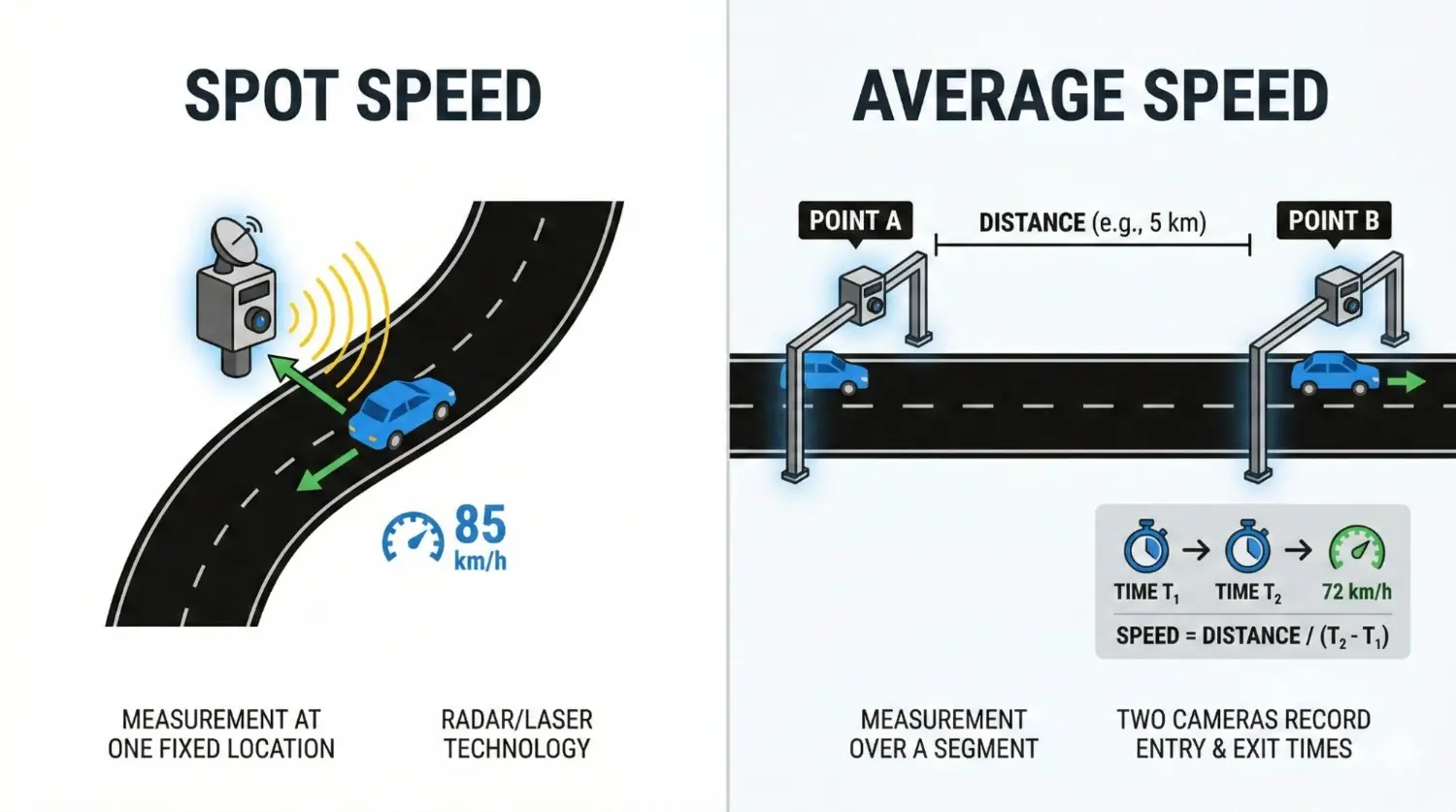
Speeding is one of the biggest causes of highway accidents. ITMS monitors speed automatically and creates clear proof for enforcement.
1) Spot Speed Monitoring
This approach captures speed at a specific location (like a high-risk curve, toll exit, flyover entry, or accident-prone zone).
Best for:
Blackspots and sharp curves
Toll plazas, ramps, merges
School/worker zones near highways
2) Average Speed Monitoring (Corridor Speed Enforcement)
Average speed enforcement calculates speed over distance (point A to point B). It discourages drivers from slowing only near enforcement cameras and speeding up afterward.
Best for:
Long highway stretches
Expressways and bypass roads
Consistent compliance across corridors
3) Evidence That Holds Up
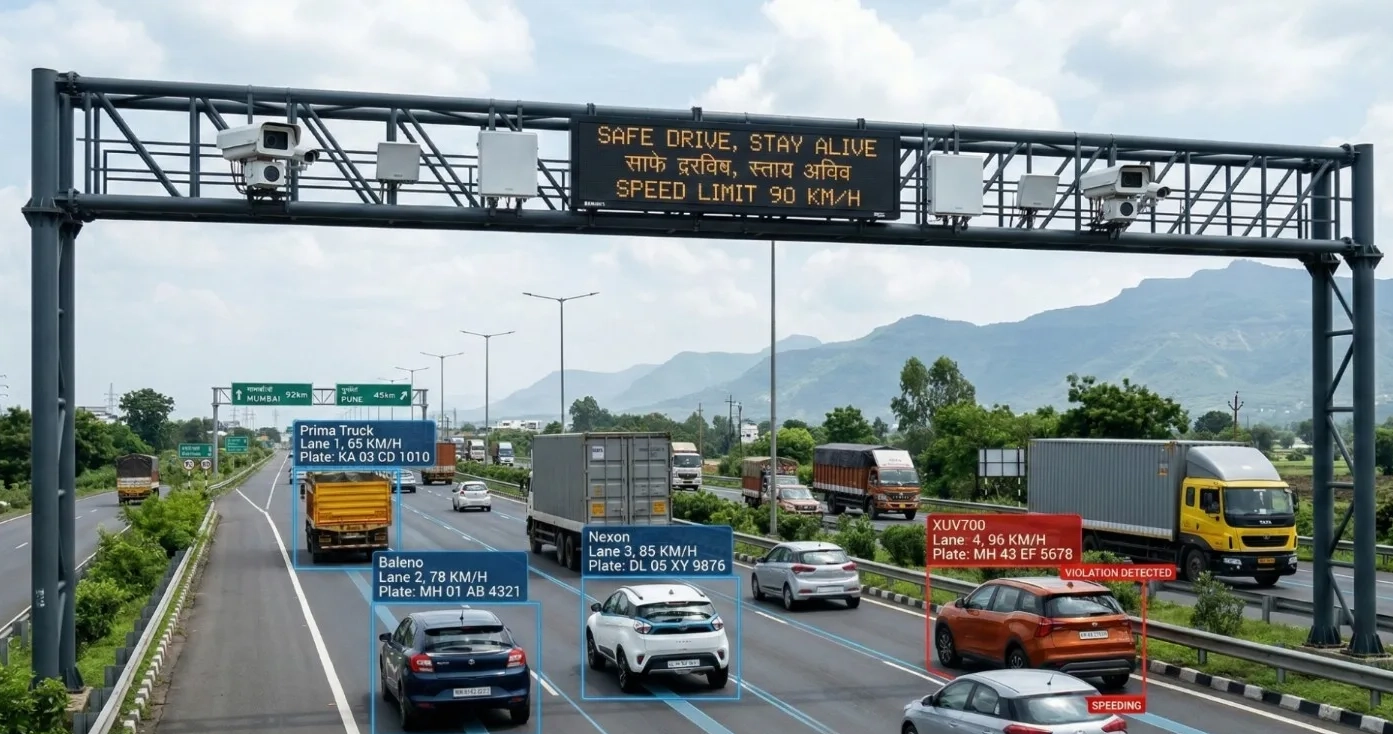
For enforcement and auditing, speed events should include:
Vehicle image + number plate (ANPR)
Speed value and lane
Timestamp and geo-location/zone
Short video clip (before/after)
This creates a transparent, review-friendly trail for authorities.
Violation Detection with Highway ITMS
Speed monitoring is only one part of smart highway enforcement. ITMS can also detect a wide range of risky violations that lead to accidents.
Common Highway Violations ITMS Can Detect
Wrong-way driving on ramps, exits, flyovers, and service lanes
Lane discipline violations (unsafe lane changes, lane cutting patterns)
Shoulder driving (dangerous overtaking on emergency lanes)
Unauthorized stopping in fast lanes and restricted zones
Entry/exit misuse (illegal merges, unsafe crossing behavior)
Overcrowded two-wheelers / helmet violations (where relevant and permitted)
A well-tuned ITMS reduces enforcement load by automatically filtering and flagging events, so teams can focus on critical incidents instead of watching endless live feeds.
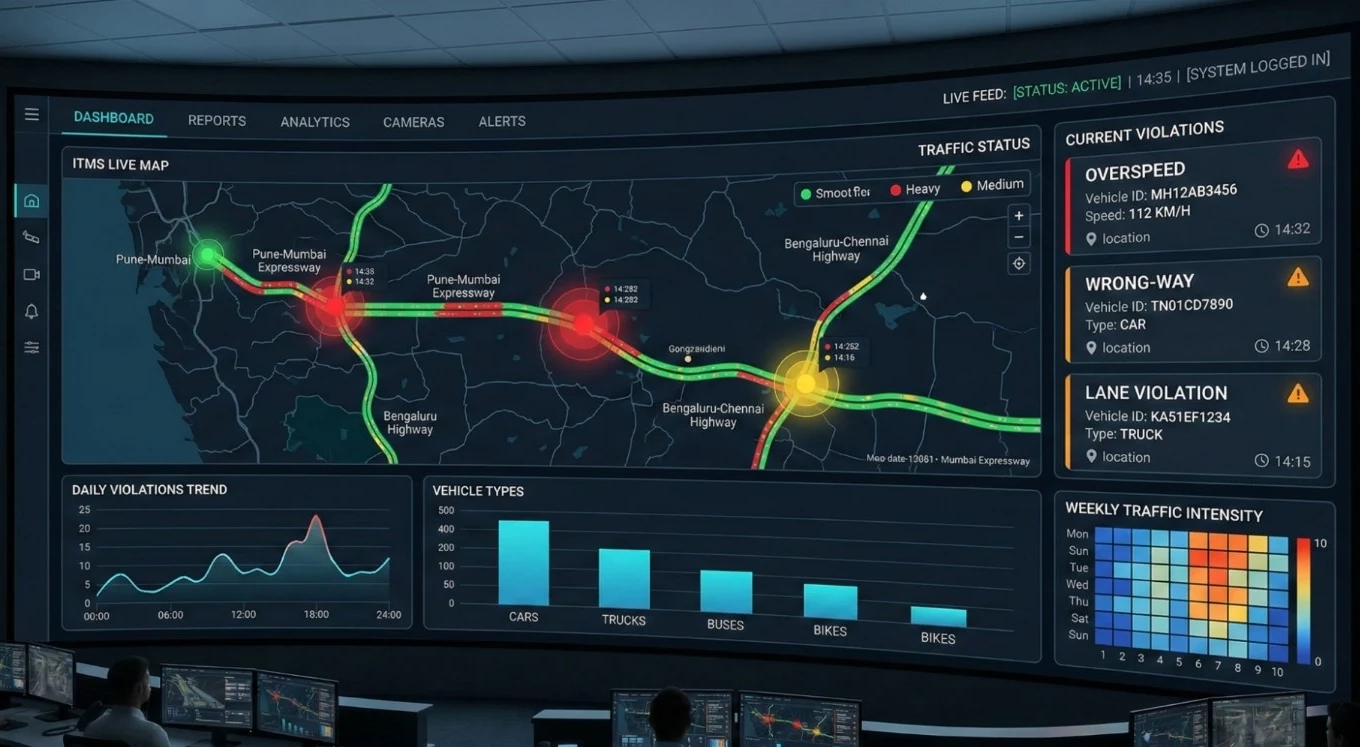
Command Center Visibility and Operational Analytics
Smart highways need more than alerts they need insight. ITMS dashboards typically provide:
Live incident + violation view with evidence cards
Zone-wise monitoring (ramps, toll exits, blackspots, service roads)
Heatmaps for overspeeding and recurring violations
Congestion trend analysis by time/day
Vehicle class breakdown (car, bike, truck, bus)
Top hotspots for safety interventions
This makes ITMS valuable not only for enforcement, but also for highway planning and policy decisions like where to add signage, speed calming, or lane redesign.
Key Integrations That Make Highway ITMS Stronger
For a complete smart highway ecosystem, ITMS often works alongside other systems:
ANPR / vehicle search for investigation and compliance tracking
VMS (Video Management System) to manage live + recorded camera streams
Video wall for centralized monitoring
Incident search & playback for faster investigations
Variable Message Signboards (VMS boards) (optional, for public alerts)
Audit logs and operator actions tracking (for accountability)
When these systems are connected, highway teams get a single operational view instead of managing disconnected tools.
Benefits of ITMS for Smart Highways
Reduced accidents and fatalities
ITMS discourages overspeeding and flags risky driving early.
Practical impact: Fewer crashes, safer corridors, lower severity of accidents.
Faster enforcement with better evidence
Automated detection + structured evidence packs (plate, speed, time, location, clip).
Practical impact: Quicker verification, fewer disputes, transparent enforcement.
Smoother traffic and less congestion
Early detection of incidents/violations helps reduce chain-reaction slowdowns.
Practical impact: Faster clearance, fewer traffic jams, better travel time reliability.
Data-led highway improvements
Hotspot analytics highlights where and why risks repeat.
Practical impact: Helps redesign risky zones, improve signage, plan patrol routes, and optimize enforcement points.
Build a Safer Smart Highway—Starting Now
Turn speed monitoring and violation detection into real, measurable road safety outcomes. Get a tailored ITMS walkthrough for your highway corridor—modules, camera points, and reporting included.
Conclusion
Smart highways demand smart monitoring. A modern ITMS for highways helps authorities track speed, detect violations, identify incidents, and improve road safety—without relying on manual monitoring across hundreds of kilometers. With AI-powered detection, evidence-based enforcement, and actionable dashboards, ITMS becomes the backbone of safer and more efficient highway operations.
If you’re planning ITMS for highways, expressways, toll roads, or city bypass corridors, I can help you structure the right modules (speed, violations, incident detection, dashboards, and integrations) based on your road layout and enforcement goals.

Dinesh Kumar
SEO Analyst
Dinesh Kumar is an SEO Analyst at Katomaran Technologies, writing search-optimized content on AI video analytics, VMS, intelligent surveillance, and IoT-driven technology solutions.