What Is IoT in Warehousing?
IoT in warehousing refers to the use of internet-connected devices such as sensors, cameras, RFID tags, and smart equipment to collect and exchange data across warehouse operations. These devices communicate continuously, providing real-time insights into inventory movement, equipment health, environmental conditions, and workforce activity.
Unlike traditional systems that rely heavily on manual inputs and periodic checks, IoT creates a living, data-driven warehouse ecosystem. This foundation allows businesses to automate decisions, reduce delays, and optimize workflows without human intervention at every step.
Why Warehousing Needs Smart Automation Today
Modern warehouses face several operational challenges:
Inaccurate inventory records
Delays in picking and dispatch
Equipment downtime
Safety risks and human errors
Rising operational costs
Manual processes simply cannot keep up with the scale and speed required today. Smart warehouse automation powered by IoT addresses these issues by enabling continuous monitoring and intelligent response mechanisms. With connected systems in place, warehouse managers can shift from reactive problem-solving to proactive optimization.
Key Components of IoT-Enabled Warehouses
Industrial IoT Sensors
Industrial IoT sensors form the backbone of connected warehouses. These sensors track temperature, humidity, motion, vibration, and location. In sensitive storage environments such as pharmaceuticals or food warehouses, sensors ensure compliance by alerting teams instantly when conditions fall outside acceptable limits.
Connected Warehouse Systems
Connected warehouse systems integrate IoT devices with warehouse management software (WMS), ERP platforms, and analytics dashboards. This integration ensures seamless data flow across departments, enabling faster and more accurate decision-making.
Real-Time Data Networks
High-speed connectivity allows data collected by IoT devices to be transmitted and analyzed instantly. This real-time visibility enables faster responses to inventory shortages, bottlenecks, or equipment failures.
How IoT Improves Warehouse Operations
Real-Time Inventory Tracking
One of the biggest advantages of IoT is real-time inventory tracking. RFID tags, smart shelves, and location sensors automatically update inventory levels as goods move in and out of the warehouse.
This eliminates manual stock counts, reduces discrepancies, and ensures that inventory data is always accurate. Businesses can fulfill orders faster and avoid costly overstocking or stockouts.
Faster Order Picking and Fulfillment
IoT-enabled picking systems guide warehouse staff through optimized routes, reducing travel time within large facilities. Automated alerts direct workers to the exact item location, improving picking speed and accuracy.
As a result, order processing times decrease significantly, leading to faster dispatch and improved customer satisfaction.
Predictive Maintenance in Warehouses
Unplanned equipment downtime can disrupt entire operations. Predictive maintenance in warehouses uses sensor data to monitor equipment health continuously.
By analyzing vibration, temperature, and usage patterns, IoT systems can predict failures before they happen. Maintenance teams receive alerts in advance, allowing repairs to be scheduled without halting operations.
Improved Safety and Compliance
IoT enhances warehouse safety by monitoring restricted zones, equipment usage, and environmental conditions. Smart alerts notify managers about unsafe behaviors, unauthorized access, or hazardous conditions in real time.
This not only protects workers but also helps warehouses maintain regulatory compliance.
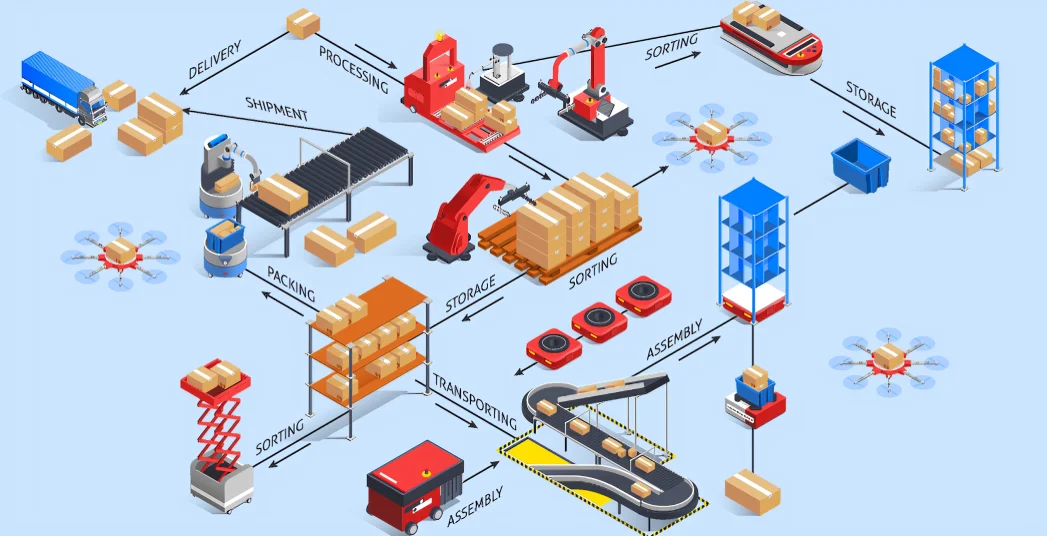
Smart Warehouse Automation in Action
Smart warehouse automation combines IoT with AI-driven analytics and automation tools. For example:
Automated conveyor systems adjust speeds based on real-time load
Smart lighting turns on only in occupied zones
Autonomous mobile robots navigate dynamically using sensor data
These capabilities reduce energy consumption, improve throughput, and lower operational costs.
Benefits of Warehouse IoT Solutions
Higher Operational Efficiency
Warehouse IoT solutions streamline processes by eliminating manual data entry and repetitive tasks. Automated data collection improves accuracy and allows staff to focus on higher-value activities.
Cost Reduction
By optimizing energy usage, preventing equipment failures, and reducing inventory waste, IoT helps warehouses lower operational expenses significantly.
Scalability and Flexibility
IoT systems scale easily as warehouse operations grow. New devices and sensors can be added without redesigning existing infrastructure, making IoT ideal for expanding businesses.
Data-Driven Decision Making
With continuous data flow from connected devices, warehouse managers gain actionable insights into performance trends, bottlenecks, and improvement areas.
Challenges in Implementing IoT in Warehousing
While IoT in warehousing offers immense value, implementation comes with challenges:
Integration with legacy systems
Data security and privacy concerns
Initial investment costs
Workforce training requirements
However, with the right technology partner and a phased implementation approach, these challenges can be addressed effectively.
Future of IoT-Driven Warehouses
The future of warehousing lies in hyper-automation and intelligence. As IoT integrates further with AI, machine learning, and computer vision, warehouses will become increasingly autonomous.
Advanced analytics will enable self-optimizing workflows, while AI-powered video intelligence will enhance security, productivity monitoring, and safety compliance.
Conclusion: Powering Smart Warehouses with Katomaran
As warehouses continue to evolve, IoT in warehousing is no longer a competitive advantage—it is a necessity. Businesses that embrace smart warehouse automation gain faster operations, improved accuracy, and complete operational visibility.
Katomaran Technologies plays a vital role in this transformation by delivering intelligent IoT-driven and video analytics solutions tailored for modern industrial environments. Through advanced monitoring, real-time analytics, and AI-powered automation, Katomaran helps warehouses achieve smarter operations, enhanced safety, and scalable growth.
By integrating Katomaran’s intelligent solutions into your warehouse ecosystem, you can unlock the true potential of connected, automated, and future-ready warehousing.

Kavinpradeep
Digital Marketer
Kavinpradeep is a Digital Marketer at Katomaran Technologies, creating content on AI video analytics, VMS, IoT, and intelligent surveillance technologies for real-world use.