Introduction
Managing visitor and vehicle movement inside large industrial campuses has always been a challenge. Traditional methods like manual entry logs, physical registers, gate pass slips, and human verification often lead to delays, confusion, and security gaps.
Today, industries across manufacturing, logistics, oil & gas, and large warehouses are turning to IoT-powered solutions to overcome these inefficiencies.
The Internet of Things (IoT) enables industries to monitor movement in real time, automate access control, and improve overall campus security—making the entire process faster, safer, and more transparent.
What Is IoT-Based Tracking in Industrial Environments?
IoT (Internet of Things) involves a network of smart devices—such as sensors, RFID tags, BLE beacons, gateways, and cloud platforms—that communicate with each other to provide real-time data.
In an industrial campus, IoT enables:
Automatic entry and exit logging
Real-time movement visibility
Digital access passes
Automated alerts for unauthorized movement
Seamless integration with CCTV and security systems
Unlike traditional access control systems, IoT doesn't just record who entered—it continuously tracks where they are, how long they stayed, and whether they accessed any restricted zones.
Key Challenges in Visitor & Vehicle Movement Tracking
Industrial campuses often operate like small cities—thousands of people, dozens of entry points, moving vehicles, strict safety rules, and high-value assets everywhere. But despite this complexity, many facilities still rely on outdated systems like manual registers and basic ID checks. This creates several operational blind spots that directly affect safety and efficiency.
1. Manual Processes Create Bottlenecks
At peak hours, visitors and vehicles line up at the gates while security staff manually verify IDs and write down details. Every extra minute spent at the gate slows down workflow, delaying material movement, employee schedules, and deliveries.
2. Paper Logs Don't Tell the Full Story
Physical registers often contain illegible handwriting, missing details, or inconsistent entries. When an incident occurs and data is required, these logs offer little accuracy—making investigations slow and unreliable.
3. Zero Visibility Beyond the Gate
Once a visitor or truck enters the campus, their movement becomes a guessing game. Security teams have no way to answer questions like:
Where is the visitor right now?
Has the truck reached the loading bay?
Did someone enter a restricted zone by mistake?
This lack of visibility increases both risk and inefficiency.
5. Emergency Coordination Becomes a Challenge
In high-risk environments like factories, chemical plants, or warehouses, emergencies require instant action. But without accurate, real-time location data, teams struggle to answer:
Who is still inside?
Where are they trapped?
Did visitors exit safely?
This slows down rescue operations and increases risk during critical situations.
How IoT Transforms Visitor Tracking
| Feature | How It Works | Key Advantages |
|---|---|---|
| 1. Smart Visitor Registration & Verification | IoT enables contactless check-ins using QR codes, mobile pre-registration, and digital visitor passes. |
|
| 2. Real-Time Visitor Location Tracking | RFID badges, UWB tags, and BLE beacons track visitor movement across the campus. |
|
| 3. Automated Access Control | IoT-enabled gates/doors grant or deny access based on identity, permissions, visit duration, and approved zones. |
|
| 4. Emergency Safety & Evacuation Support | IoT identifies who is inside during emergencies and sends real-time alerts to both visitors and staff. |
|
How IoT Enhances Vehicle Movement Tracking
| Feature | How It Works | Key Advantages |
|---|---|---|
| 1. Automated Gate Entry with RFID / ANPR | RFID tags on vehicles and ANPR cameras auto-read license plates for seamless verification. |
|
| 2. Real-Time Vehicle Location Monitoring | IoT sensors track trucks, forklifts, loaders, visitor cars, and contractor vehicles inside the facility. |
|
| 3. Unauthorized Movement Prevention (Geo-fencing) | Virtual boundaries detect if a vehicle enters a restricted area or deviates from an assigned route. |
|
| 4. Logistics & Operational Efficiency Improvement | IoT monitors loading/unloading time, idle time, and movement workflows. |
|
How IoT Integrates With Existing Security Systems
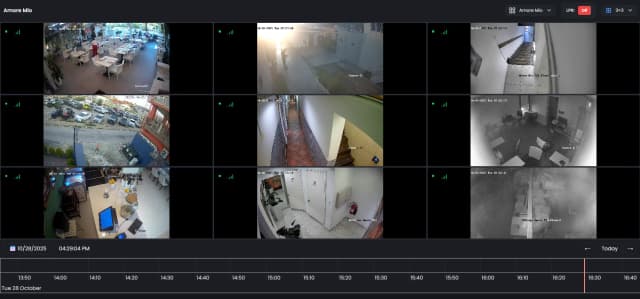
CCTV & VMS Systems for Visual Verification
IoT syncs with your video management system to match sensor alerts with live camera feeds—helping security teams verify movement instantly.
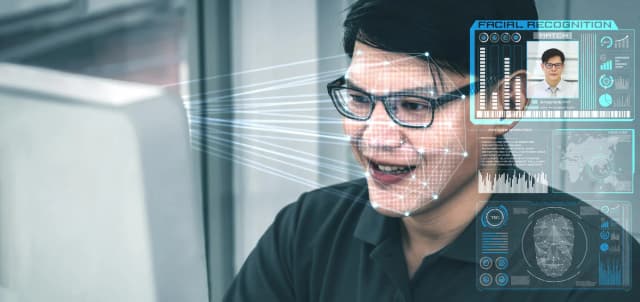
Face Recognition Systems (FRS) for Dual Authentication
Combining IoT access data with facial recognition ensures only authorized individuals enter sensitive zones.
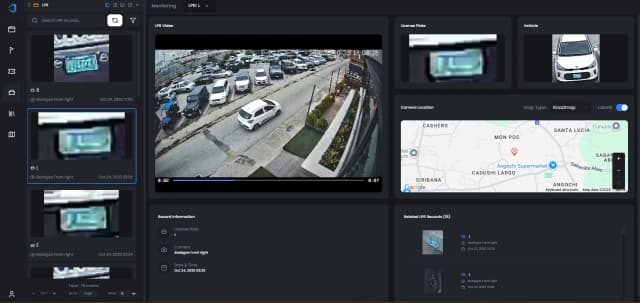
Boom Barriers & Access Control Systems
IoT automates gate operations by linking RFID, ANPR, or digital passes with physical barriers for smooth and secure entry/exit.
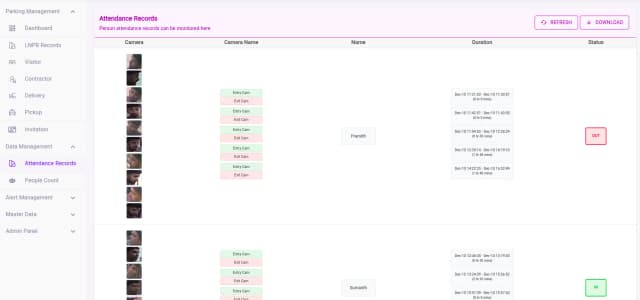
ERP and Attendance Systems for Workforce Tracking
Movement data is mapped to employee records, contractor logs, and work schedules—giving organizations a centralized, unified view of workforce activity.
Benefits of IoT-Based Tracking for Industrial Campuses
Adopting IoT brings multiple advantages:
Higher security with automated access and real-time tracking
Faster entry/exit for visitors and vehicles
Transparent analytics for audits and compliance
Better monitoring of contractors and temporary workers
Reduced manpower at security gates
Improved safety during emergencies
Operational efficiency through automated workflows
IoT transforms campus movement management from reactive to proactive.
Conclusion
Industrial campuses are becoming larger and more complex, making traditional visitor and vehicle tracking methods unreliable and outdated. IoT provides a modern, automated approach that brings real-time visibility, stronger security, and improved operational efficiency to campus movement management.
By adopting IoT-based tracking, industries can create a safer, smoother, and more transparent environment for employees, visitors, contractors, and vehicles.
Katomaran Technologies helps enterprises accelerate this transformation through advanced IoT solutions designed specifically for industrial environments. With our expertise in automation, smart tracking, and security integration, we empower organizations to move towards a truly digital and intelligent campus ecosystem.

Digitize Visitor & Vehicle Tracking With IoT for Smarter Industrial Campuses
Reduce gate delays, eliminate manual logs, and gain real-time visibility with IoT-based tracking. Katomaran helps you deploy RFID/ANPR, geo-fencing, live dashboards, and security integrations for safer, faster campus movement management.

Dinesh Kumar
SEO Analyst
Dinesh Kumar is an SEO Analyst at Katomaran Technologies, writing search-optimized content on AI video analytics, VMS, intelligent surveillance, and IoT-driven technology solutions.