Introduction
In manufacturing, serious incidents rarely begin as major events. More often, they start as small safety lapses that go unnoticed, such as a worker entering a hazardous area without a helmet, a person crossing into a forklift path, or unauthorized access near operating machinery. These moments may end without injury, but they are still warnings. Left unchecked, they can quickly turn into accidents, downtime, or compliance issues.
That is why manufacturers are moving beyond passive surveillance and manual supervision. They need systems that do more than record footage. They need real-time intelligence that can detect unsafe behavior the moment it happens. This is where PPE analytics and restricted zone analytics are making a real impact.
What PPE analytics does on the factory floor
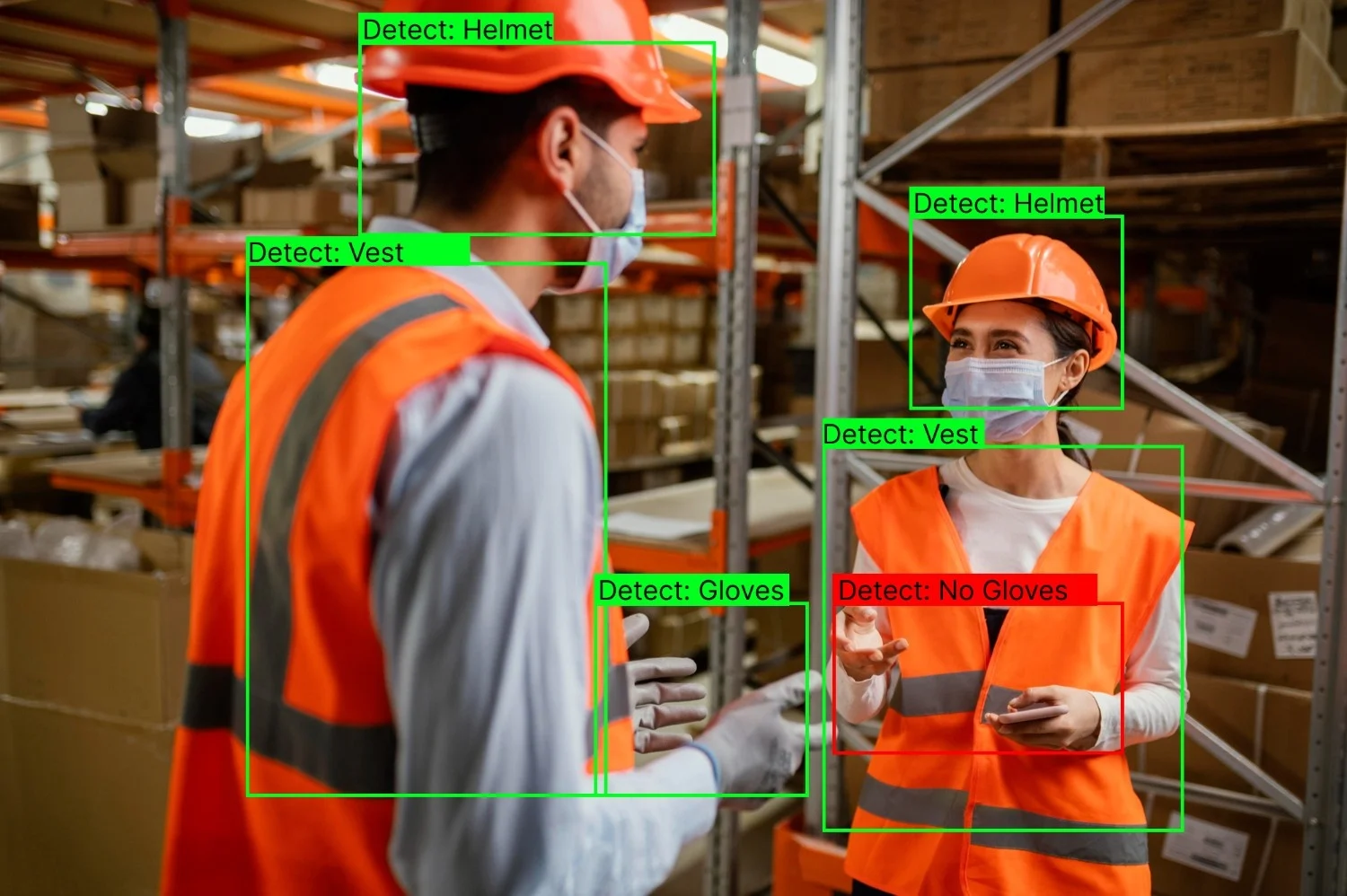
PPE analytics uses AI-powered video analytics to detect whether workers are wearing required safety gear in specific areas. Depending on the plant’s safety policy, this may include helmets, reflective vests, masks, gloves, or other visible protective equipment.
This is especially useful at high-risk points such as:
plant entry points
machine operating zones
loading bays
maintenance work areas
chemical handling sections
The value of PPE analytics is not just in identifying non-compliance. It is in identifying it early enough for someone to intervene. With Katomaran Video Analytics, manufacturers can detect PPE violations across live camera feeds and receive alerts in real time. This helps safety teams move from delayed checks to immediate action, improving compliance and reducing preventable exposure to risk.

Restricted zone analytics adds another layer of protection
Not every manufacturing risk comes from missing PPE. In many cases, the danger begins with someone entering a space they should not be in at all.
Restricted zone analytics helps manufacturers define virtual safety boundaries around hazardous or limited-access areas and detect when a person crosses into them. These zones may be permanent, such as machine enclosures and electrical rooms, or temporary, such as maintenance sections under active repair.
Common restricted areas in manufacturing include:
heavy machinery zones
forklift movement lanes
chemical storage rooms
utility and electrical spaces
maintenance-only sections
loading and unloading corridors
Unlike physical signage, analytics-based virtual boundaries do not depend on someone noticing a warning board. The system watches continuously and generates an alert as soon as the boundary is crossed. With Katomaran Video Analytics, this type of live zone monitoring helps reduce unauthorized access and improves response speed in critical areas.
Why do these two analytics work better together?
PPE analytics and restricted zone analytics are powerful individually, but together they create stronger safety coverage.
Consider a simple example. A worker without a helmet walking through a normal corridor may be a compliance issue. That same worker without a helmet entering a heavy machinery zone is a much more serious risk. The problem is not just missing PPE or zone access alone—it is the combination.
That is why manufacturers benefit from using both systems together. They do not just see where a violation happened. They also gain context about how severe that violation is.
This makes real-time response more effective because teams can quickly identify situations such as:
entry into hazardous zones without mandatory protective gear
unsafe movement near active machines
unauthorized presence in maintenance spaces
repeated rule violations in high-risk sections
In practical terms, that means fewer missed warning signs and better prevention before incidents escalate.
How Katomaran tools fit naturally into this safety workflow
For manufacturers, detection alone is not enough. Once a safety event is identified, teams need visibility, evidence, and a way to respond efficiently. This is where Katomaran’s broader toolset becomes important.
Katomaran Video Analytics detects PPE violations and restricted zone intrusions in real time, turning standard surveillance into proactive safety intelligence.
Katomaran VMS gives centralized monitoring, event playback, and investigation support. When a near-miss occurs, teams can quickly review the footage, verify the event, and use it for reporting or internal safety analysis.
Katomaran VSaaS is valuable for manufacturers managing multiple plants or distributed facilities. It supports remote monitoring and centralized oversight, helping safety teams track alerts and maintain visibility across locations.
Together, these tools create a more connected safety system—one that supports prevention, investigation, and operational control.
Where manufacturers see the most value
The strongest results usually come from deploying these analytics in areas where movement, machinery, and compliance risk overlap.
Best-fit manufacturing environments:
production and assembly lines
packaging sections
warehouse and dispatch zones
heavy equipment areas
maintenance and service corridors
chemical and utility rooms
In these environments, small violations are easy to miss through manual observation. Real-time alerts make those same violations visible the moment they occur. That improves more than safety alone. It also improves discipline, response coordination, and incident traceability across the facility.
The business value goes beyond compliance
Manufacturers often first look at PPE and restricted zone analytics as safety tools. But the real value extends further.
When near-misses are reduced, plants also benefit from:
fewer disruptions to operations
lower risk of injury-related downtime
stronger compliance readiness
better incident documentation
improved accountability across teams
There is also a cultural impact. When workers know safety rules are being monitored consistently, compliance becomes more routine. Safety no longer depends only on who is on duty or which shift is active. It becomes part of everyday plant operations. That consistency matters in large facilities where uneven enforcement can create hidden risks over time.
Real-time prevention is becoming essential in modern manufacturing
Manufacturing plants are under constant pressure to improve output, maintain quality, and keep operations running smoothly. But none of that works without a safe environment. A single preventable incident can affect people, productivity, and compliance all at once.
This is why more manufacturers are investing in intelligent safety monitoring. They are not replacing supervisors or safety officers. They are giving them better visibility and faster alerts so they can respond before an event becomes serious.
PPE analytics and restricted zone analytics support that shift. They help plants identify unsafe conditions earlier, act faster, and build a more proactive safety culture.
Conclusion
Near-misses should never be dismissed as harmless moments. In manufacturing, they are often the first clear sign that a bigger incident could happen next.
PPE analytics helps ensure workers are properly equipped for the environment they enter. Restricted zone analytics helps prevent unsafe or unauthorized access to hazardous areas. Together, they give manufacturers a smarter way to detect risk in real time and respond before it turns into injury or disruption.
With Katomaran Video Analytics, Katomaran VMS, and Katomaran VSaaS, manufacturers can strengthen safety monitoring without adding unnecessary complexity. The result is a plant environment that is not only more compliant, but also more aware, more responsive, and better prepared to prevent near-misses before they become accidents.

Dinesh Kumar
SEO Analyst
Dinesh Kumar is an SEO Analyst at Katomaran Technologies, writing search-optimized content on AI video analytics, VMS, intelligent surveillance, and IoT-driven technology solutions.