
Introduction
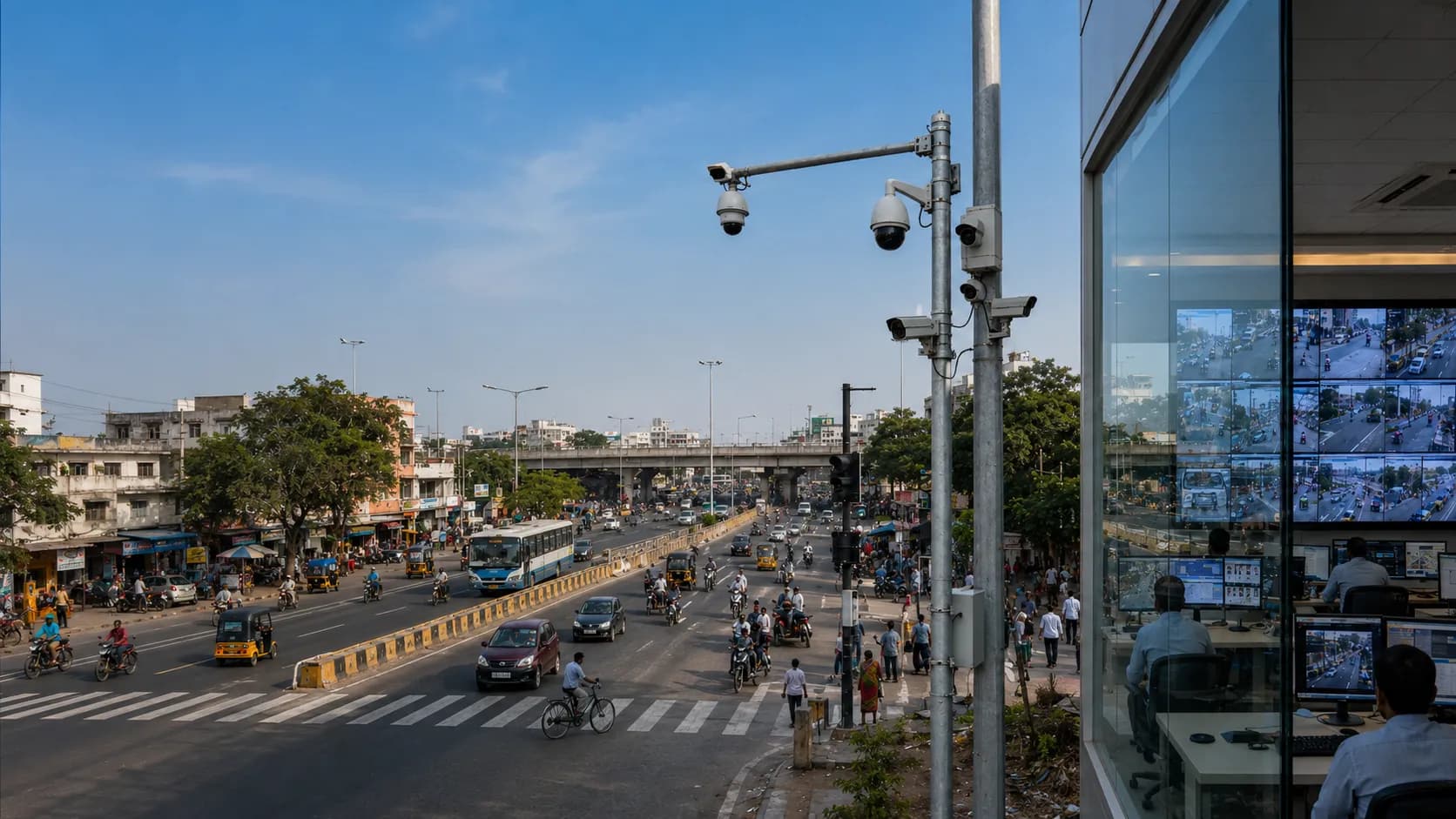
- Katomaran Technologies implemented an integrated surveillance and traffic management solution across Cuttack district in Odisha. The project connected more than 800+ cameras through a centralized platform combining a Video Management System, Facial Recognition System, Intelligent Traffic Management System and e-Challan integration.
- The objective was to create a unified environment for public surveillance, traffic management, incident investigation and digital enforcement. Instead of operating cameras as separate systems, the deployment brought live video, recorded footage, face alerts, vehicle events, traffic violations and enforcement evidence into one connected workflow.
| Project Details | Information |
|---|---|
| Location | Cuttack District, Odisha |
| Cameras Integrated | 800+ |
| Core Platform | Centralized Video Management System |
| AI Applications | Facial Recognition and Traffic Analytics |
| Traffic Solution | Intelligent Traffic Management System |
| Enforcement | e-Challan Integration |
| Monitoring Model | Centralized Command and Control |
Project Requirement
- Managing more than 800 cameras across multiple locations required more than basic live viewing. Operators needed a central platform to organize feeds, monitor important areas, retrieve recorded video and respond to relevant events.
- The solution needed to support:
- 1Centralized camera management
- 2Live and recorded video monitoring
- 3Fast incident footage retrieval
- 4Watchlist-based facial recognition alerts
- 5Vehicle and number plate tracking
- 6Traffic violation review
- 7e-Challan integration
- 8Camera health monitoring
- 9Role-based user access
- 10Future system expansion
The main challenge was connecting surveillance, analytics and enforcement without forcing operators to use isolated applications.
The Integrated Solution
The Integrated Solution
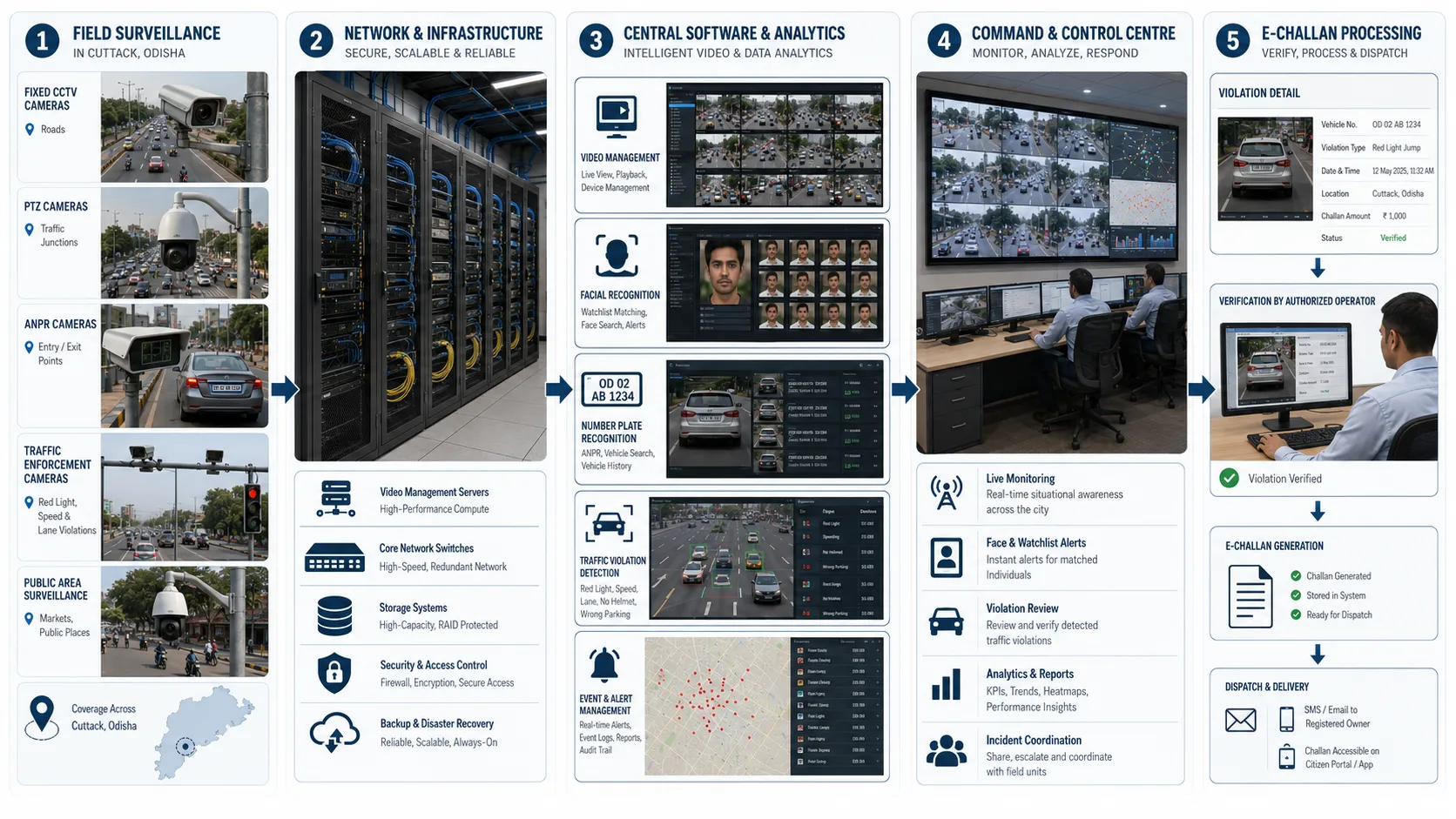
- Katomaran Technologies designed a connected architecture in which cameras, network infrastructure, central servers, video management, analytics and enforcement systems worked together.
- Camera feeds were transmitted to the central platform, where the VMS handled live viewing, recording, playback and camera management. Selected feeds were processed by facial recognition and traffic analytics. Verified traffic violation records were then connected to the e-Challan system.
Centralized Video Management System
Centralized Video Management System
- The Video Management System formed the foundation of the project.
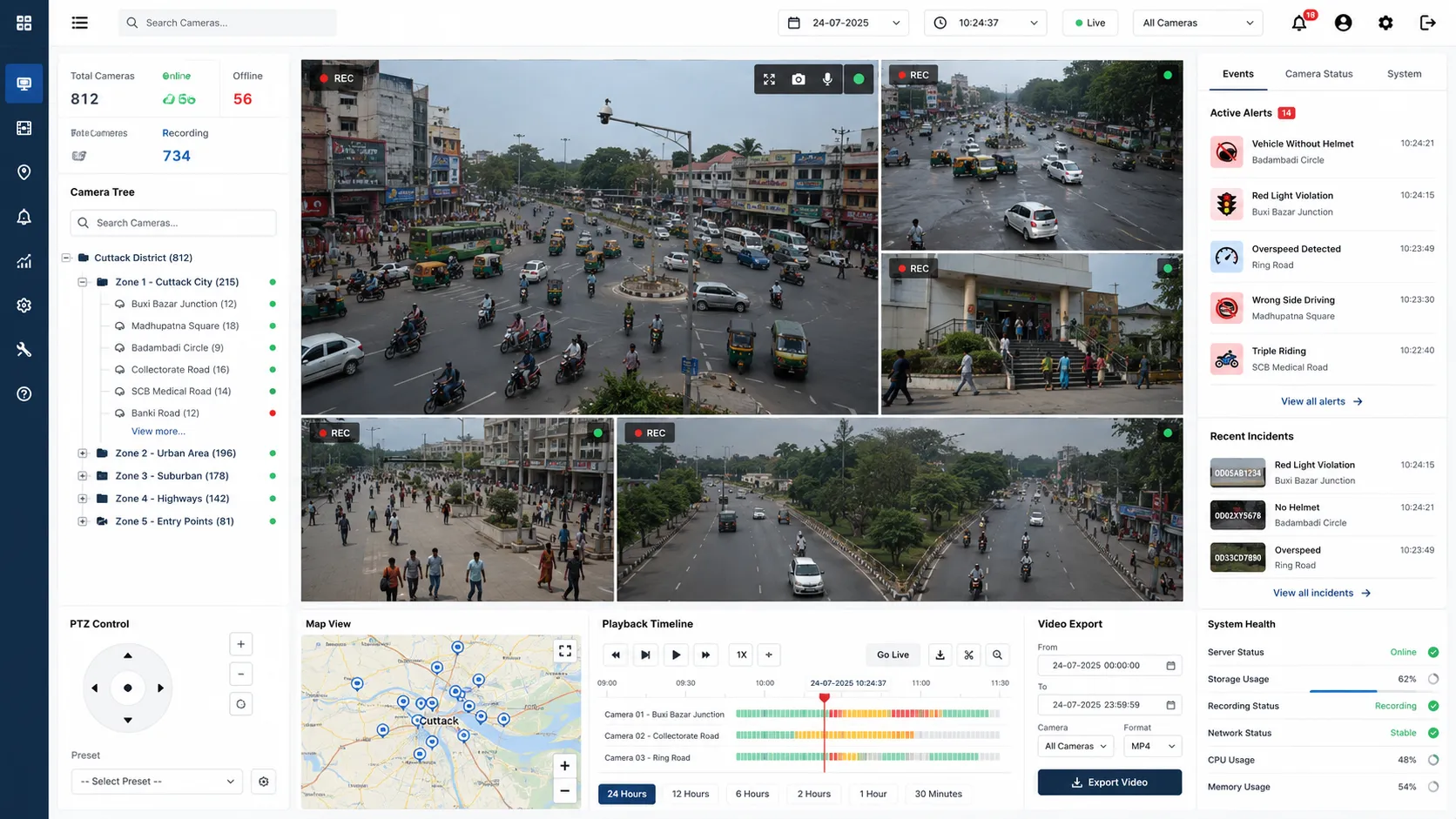
- It allowed authorized operators to access live camera feeds, review recorded footage and manage cameras from a central interface. Cameras could be grouped by location, zone or operational priority, helping users avoid searching manually through hundreds of feeds.
- The VMS supported structured playback using camera, date and time filters. When an alert or incident was reported, operators could quickly open the relevant footage.
- Camera health monitoring helped technical teams identify unavailable devices, while role-based permissions ensured that users accessed only the cameras and functions relevant to their responsibilities.
Facial Recognition System
Facial Recognition System
- The Facial Recognition System added identity-based intelligence to selected surveillance feeds.
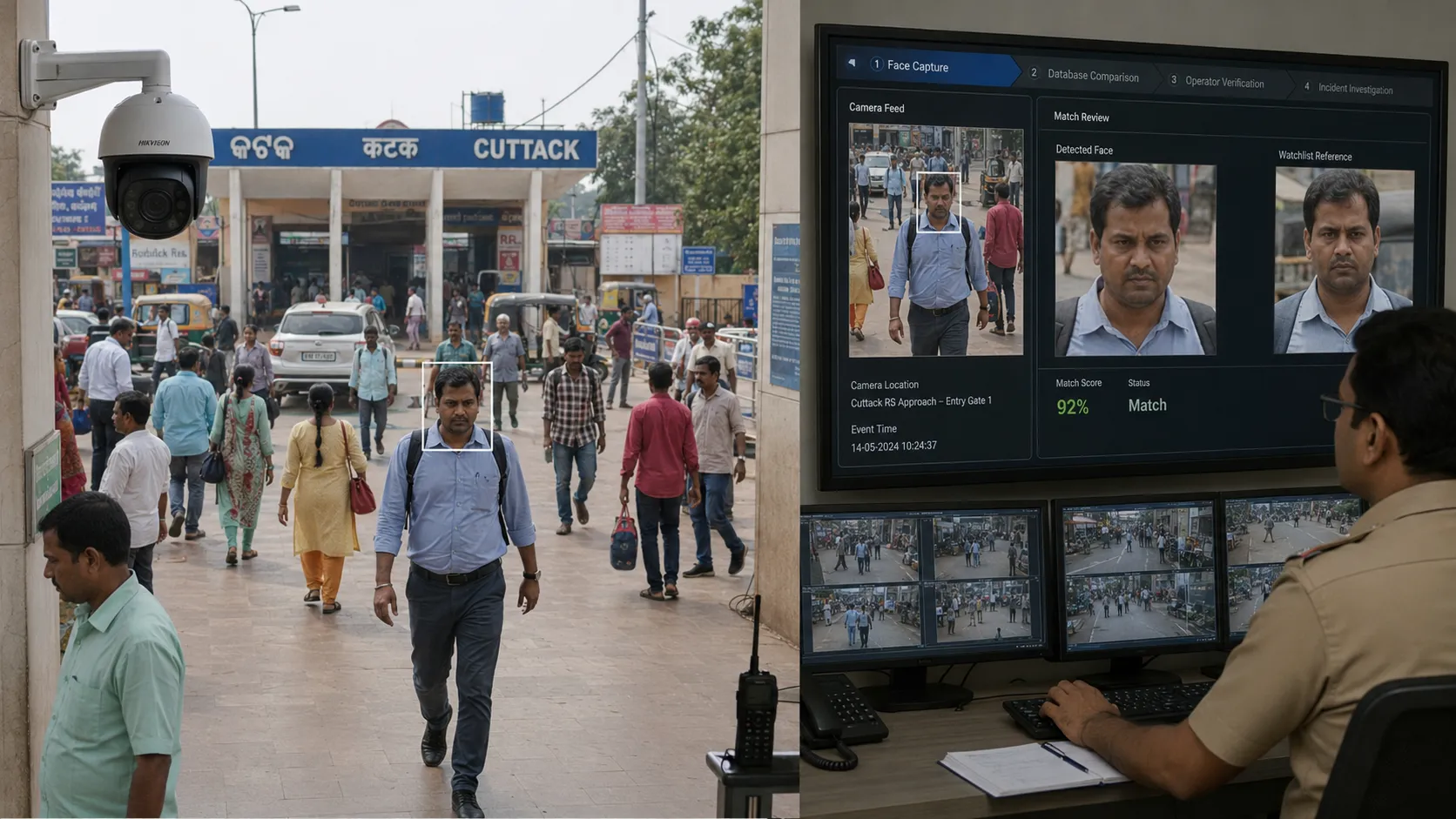
- When a visible face was detected, the system generated an event and compared it with an approved watchlist or reference database. An event could include the captured face, matching image, camera location, timestamp and review status.
- Authorized operators could review the alert and open the related video through the VMS. This connected identity alerts with the surrounding event context instead of treating each match as an isolated notification.
- Human verification remained an important part of the workflow before any operational decision.
Intelligent Traffic Management System
Intelligent Traffic Management System
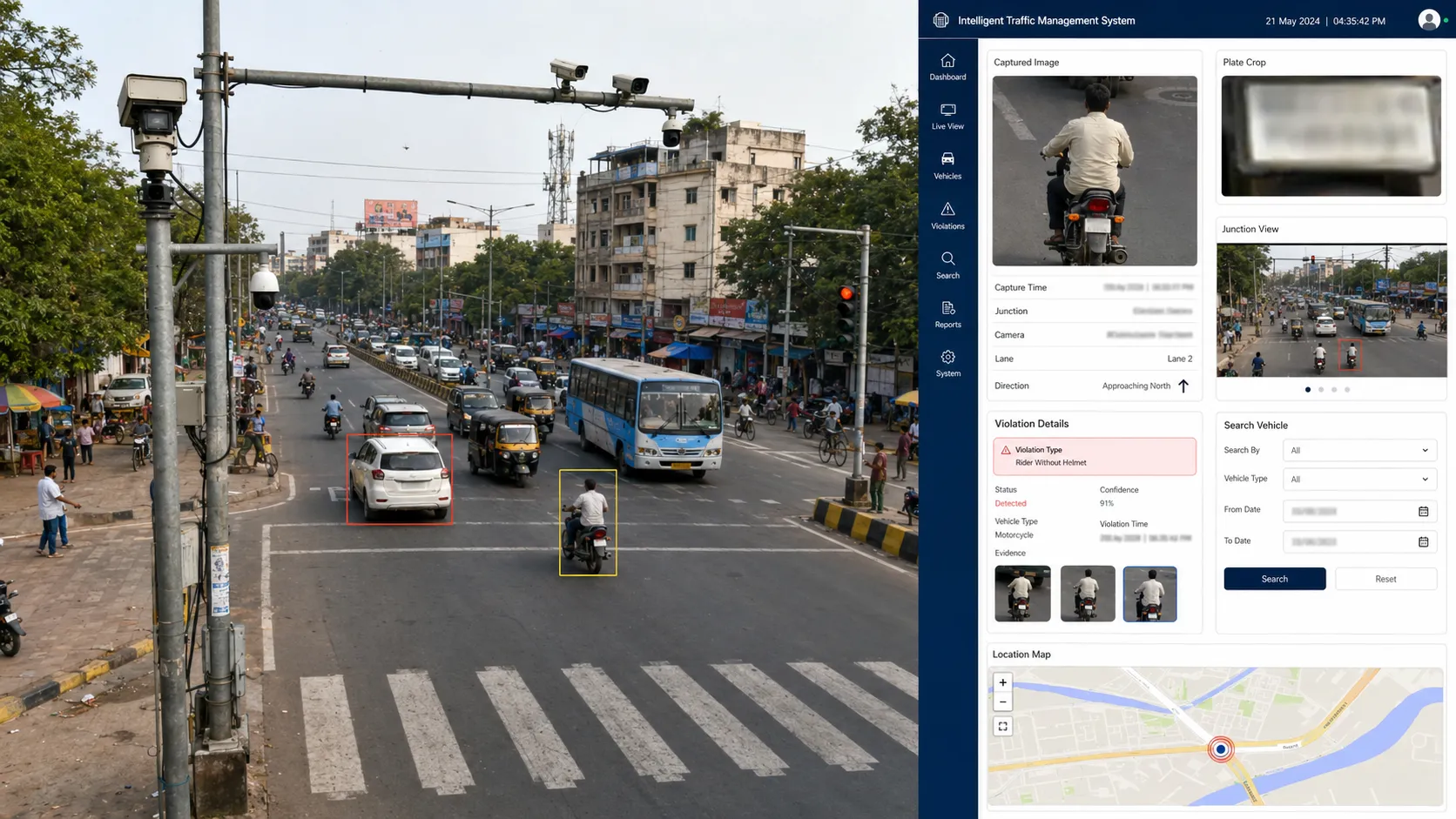
- The Intelligent Traffic Management System converted traffic camera feeds into structured vehicle and violation information.
- Traffic cameras captured vehicle movement and number plate details at configured locations. Records could include the vehicle image, plate image, registration number, camera location, timestamp and travel direction.
- Authorized users could search historical vehicle records using registration number, date, time or location. This supported faster investigation and vehicle movement tracking.
- The system also generated traffic violation events based on configured rules. Each event was linked with images, video evidence, location and time information, allowing operators to review incidents through an organized queue instead of checking continuous footage manually.
e-Challan Integration
e-Challan Integration
- The e-Challan integration connected traffic violation detection with digital enforcement.
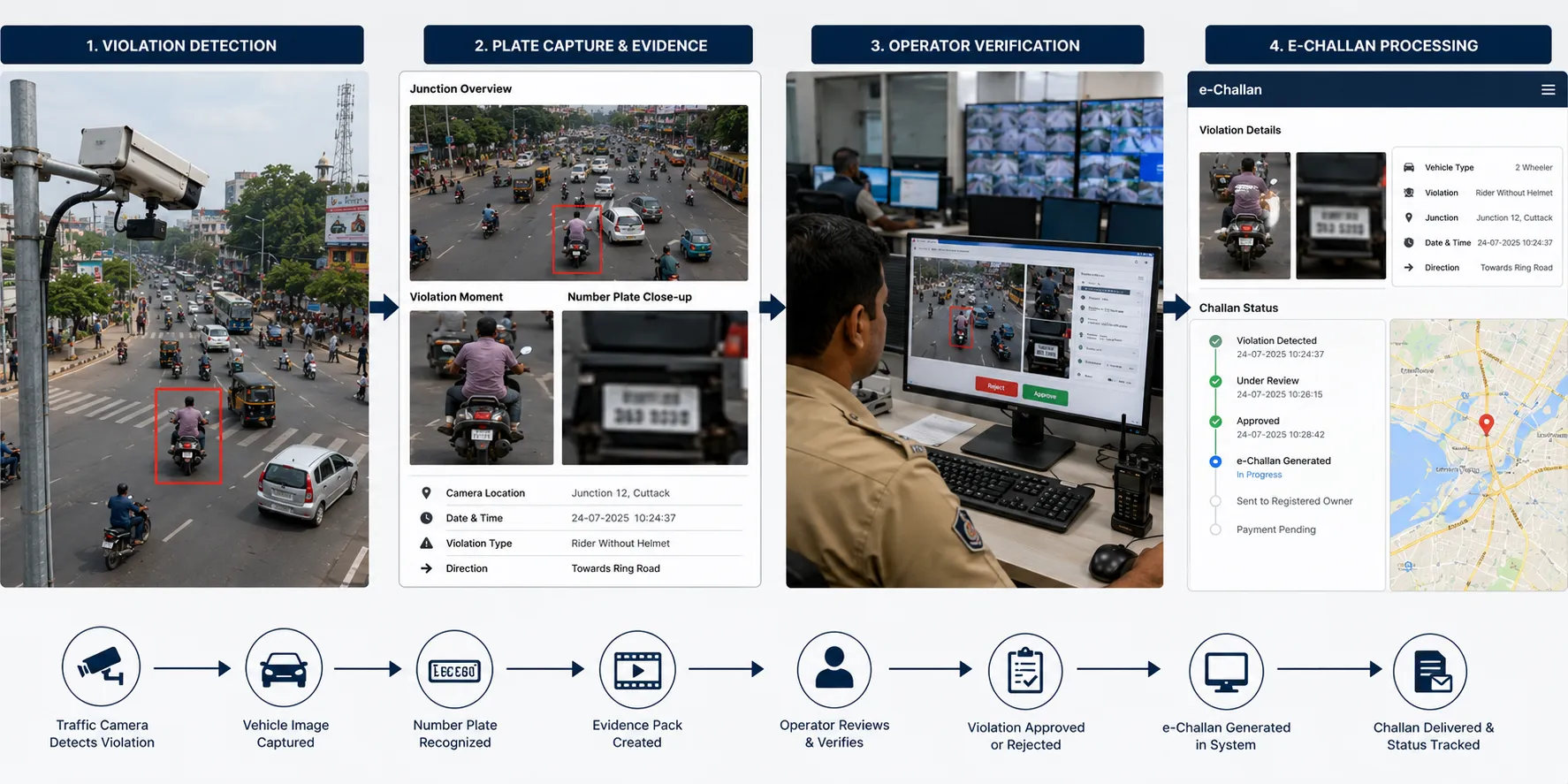
- A detected event was not treated as a final violation automatically. It first passed through an operator verification workflow:
- 1A configured violation was detected.
- 2The vehicle and number plate were captured.
- 3Image or video evidence was created.
- 4Location, date and time were recorded.
- 5An authorized operator reviewed the event.
- 6The event was approved or rejected.
- 7Approved violations were transferred to e-Challan.
- 8Enforcement status remained available for tracking.
This workflow reduced duplicate data entry and maintained a clear link between each violation and its supporting evidence.
Command and Control Centre Operations
Command and Control Centre Operations
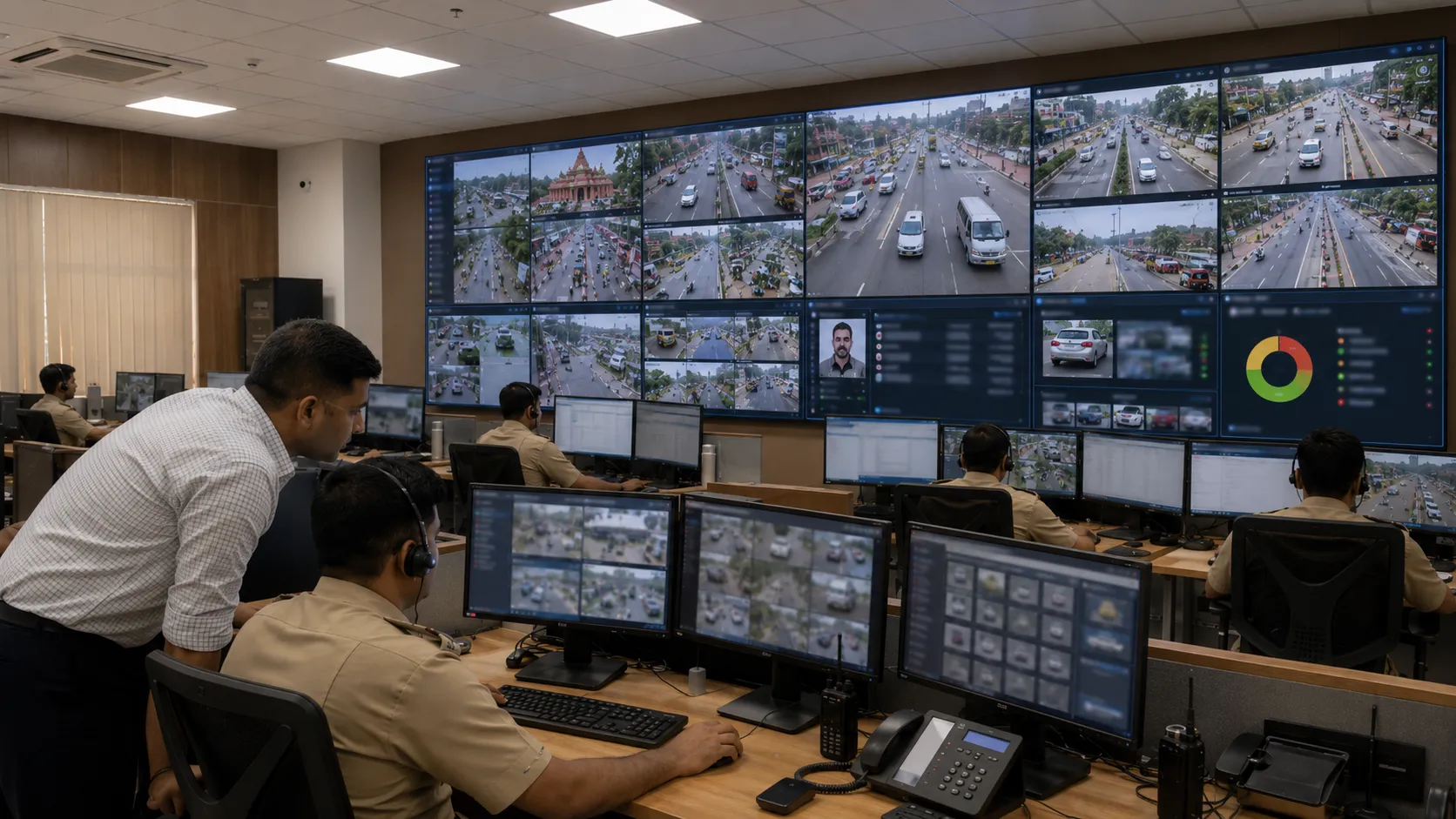
- The command and control centre acted as the main operational hub.
- Authorized teams could monitor priority feeds, review facial recognition alerts, search vehicle records, verify traffic violations, retrieve recorded footage, check camera availability and coordinate with field or enforcement teams.
- The command centre helped operators move from live monitoring to investigation and action through a connected workflow.
Implementation Approach
- The team assessed camera locations, network readiness and monitoring requirements before onboarding feeds into the VMS. Cameras were grouped and configured according to operational needs.
- The VMS, FRS, ITMS and e-Challan components were integrated and tested for live streaming, recording, playback, event generation, face and plate image quality, permissions, camera status and enforcement data flow.
- Authorized users were trained in live monitoring, event review, video search, traffic investigation and system administration.
Project Outcomes
Project Outcomes
- The deployment created a centralized surveillance and traffic management environment across Cuttack district.
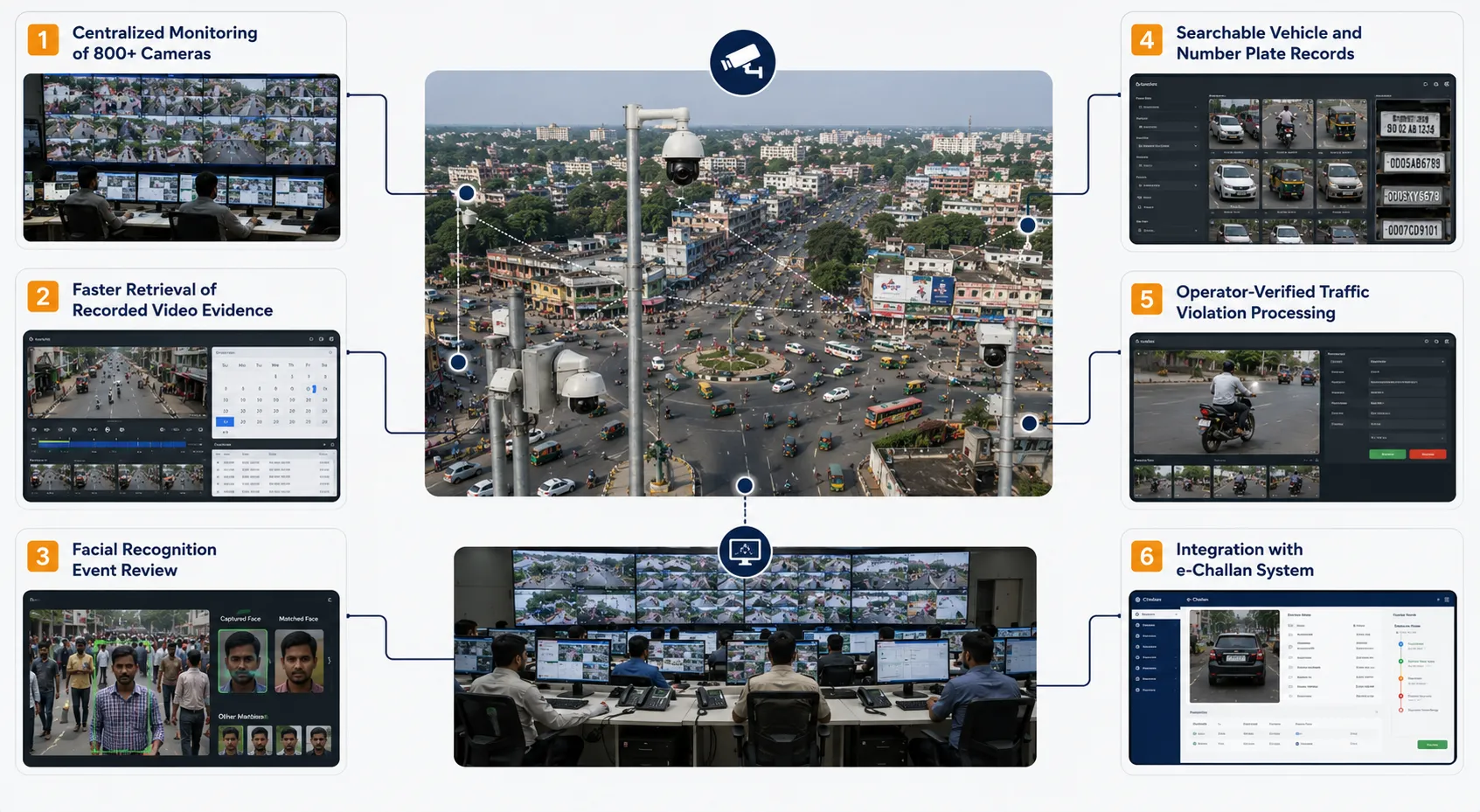
- Key outcomes included:
- 1Unified monitoring of 800+ cameras
- 2Faster retrieval of recorded evidence
- 3Organized face and vehicle events
- 4Structured traffic violation review
- 5Evidence-based e-Challan processing
- 6Better camera health visibility
- 7Reduced dependency on isolated systems
- 8Scalable infrastructure for future expansion
The project transformed a large camera network into an operational platform supporting monitoring, investigation and enforcement.
Conclusion
- The Cuttack project demonstrates how VMS, facial recognition, intelligent traffic management and e-Challan integration can work together within one surveillance ecosystem.
- By connecting more than 800 cameras to a centralized platform, Katomaran Technologies enabled better live monitoring, faster evidence retrieval, identity-based alerts, vehicle tracking and structured traffic enforcement.
- The deployment provides a scalable foundation for future surveillance and smart traffic management requirements across Cuttack district.
Table of contents
Planning a Similar Surveillance Project?
Katomaran Technologies delivers integrated VMS, Facial Recognition Systems, Intelligent Traffic Management Systems, ANPR, AI video analytics and e-Challan integration for large-scale public safety and traffic monitoring projects.
Discuss Your Project