Introduction
Warehouses are no longer simple storage spaces. They are active operational zones where goods, people, vehicles, vendors, dispatch teams, security staff, and supervisors move throughout the day. In this busy environment, controlling who enters sensitive areas is very important.
A warehouse may have multiple restricted zones such as dispatch rooms, high-value storage areas, loading docks, server rooms, control rooms, packing zones, and inventory sections. If access to these areas is not properly controlled, it can lead to inventory loss, unauthorized movement, operational delays, and security risks.
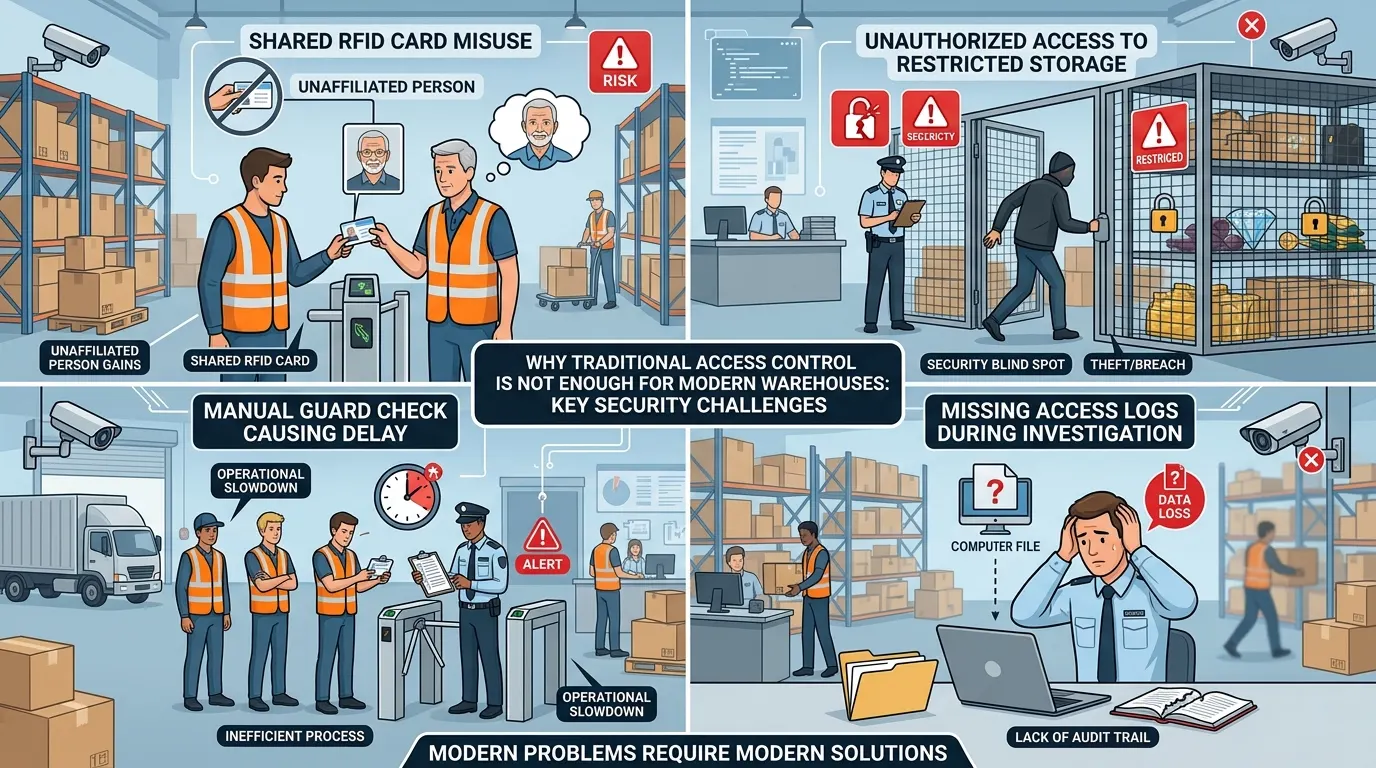
Traditional methods such as manual checking, RFID cards, PIN numbers, and basic CCTV monitoring are useful, but they are not always enough. Cards can be shared. PINs can be leaked. Manual verification can fail during peak hours. Basic CCTV may record an incident, but it may not prevent unauthorized access at the right time.
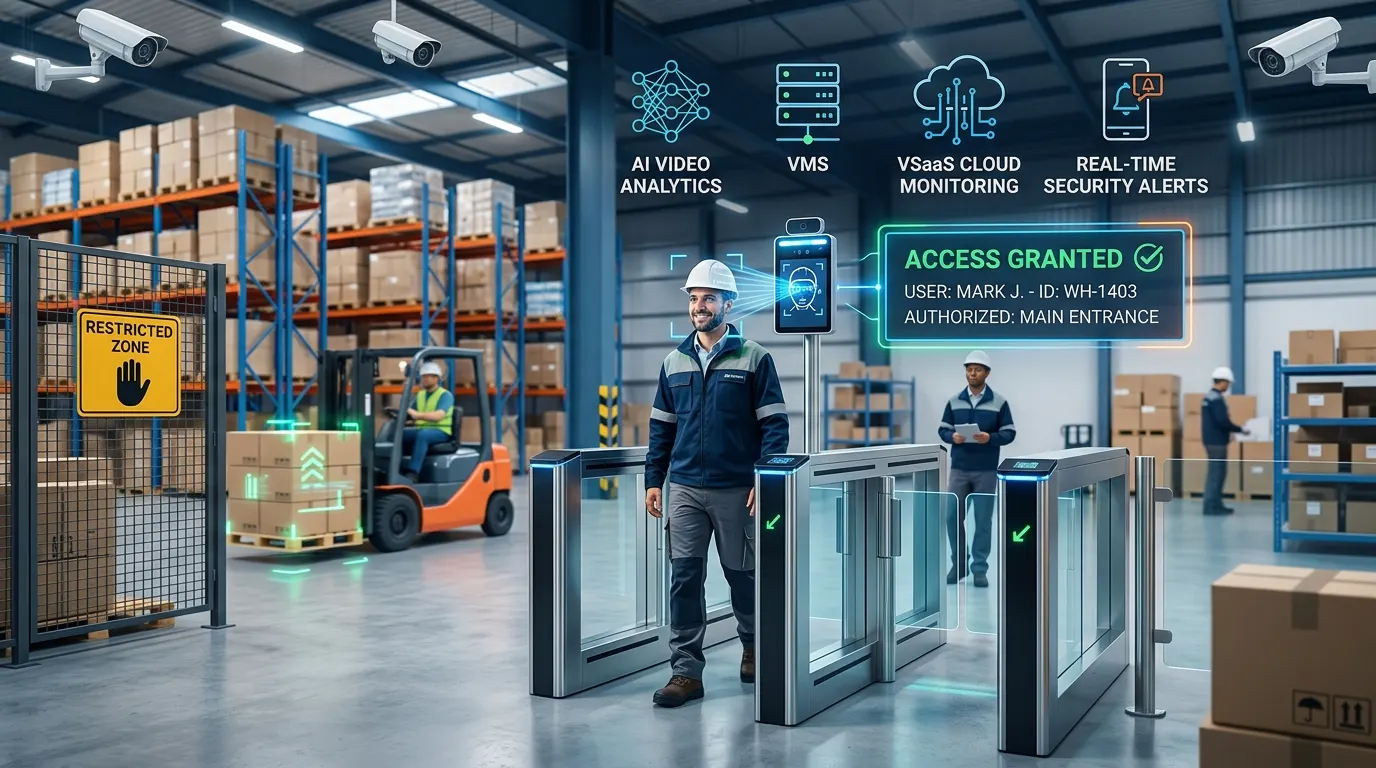
This is where a warehouse access control system with face recognition becomes more effective. By combining Face Recognition System, VMS, VSaaS, and AI video analytics, warehouses can improve identity verification, monitor restricted zones, and receive real-time alerts when unauthorized access happens.
Why Warehouse Need Smarter Access Control
Warehouses operations depend on speed, accuracy, and security. Every area inside a warehouse does not need to be accessible to everyone. A picker may need access to storage aisles, but not to the dispatch control room. A vendor may need entry to the loading area, but not to high-value inventory zones. A visitor may be allowed only in the reception or meeting area.
Without a smart warehouse access control system, it becomes difficult to manage these permissions clearly.
Some common warehouse security challenges include:
| Challenge | Business Impact |
|---|---|
| Unauthorized people entering restricted areas | Increases theft and safety risk |
| Shared RFID cards or PINs | Makes identity tracking difficult |
| Manual guard verification | Creates delays and human errors |
| No proper access logs | Makes investigation harder |
| Multiple warehouse locations | Difficult to monitor centrally |
| Basic CCTV-only monitoring | Records incidents but may not prevent them |
For warehouses handling electronics, pharma products, documents, raw materials, finished goods, or high-value inventory, access control becomes even more important. The goal is not only to record who entered but also to verify identity before access is allowed.
What Is Face Recognition for Warehouse Access Control?
Face recognition for warehouses is a biometric access control method that identifies a person using facial features. When a person approaches an entry point, camera, or access-controlled zone, the system checks the face against an authorized database. If the person is approved, access can be allowed. If the person is not authorized, the system can trigger an alert.
Unlike RFID cards or PIN-based systems, face recognition verifies the actual person. This helps reduce card sharing, proxy entry, and unauthorized access.
A complete warehouse access control setup can include:
| System | Purpose |
|---|---|
| Face Recognition System | Identifies employees, visitors, vendors, and security staff |
| VMS | Records and manages video evidence |
| AI Video Analytics | Detects restricted zone entry, suspicious movement, and rule violations |
| VSaaS | Supports remote video monitoring and centralized access visibility |
| Alerts and Reports | Notifies security teams and supports investigation |
Key Warehouse Areas Where Face Recognition Can Be Used
A face recognition access control system can be used in several important warehouse zones. The main objective is to allow only the right people into the right areas at the right time.
1. Dispatch Rooms
The dispatch room is one of the most important areas in a warehouse. It may contain shipment records, delivery planning data, customer order information, transport coordination details, and dispatch approvals.
If unauthorized people enter this area, it can create serious problems such as wrong shipment handling, data misuse, operational confusion, and inventory mismatch.
With dispatch room access control, only authorized dispatch managers, supervisors, and approved staff can enter. Face recognition helps verify the person before access is granted. If an unknown person or unauthorized employee tries to enter, the system can send a real-time alert to the security team.
This is especially useful for logistics companies, e-commerce warehouses, 3PL providers, and distribution centers where dispatch accuracy is critical.
2. Restricted Storage Areas
Many warehouses have restricted storage zones for high-value goods, sensitive materials, expensive equipment, spare parts, pharma products, documents, or client-specific inventory.
A restricted storage area access control system helps ensure that only approved staff can enter these zones. Face recognition can verify employees before entry and create a clear access record with date, time, identity, and video evidence.
This helps warehouse managers answer important questions such as:
Who entered the restricted storage area?
At what time did they enter?
How long did they stay?
Was the person authorized?
Is video evidence available for review?
This level of visibility is very important for security, compliance, and internal investigation.
3. Loading and Unloading Zones
Loading docks are high-activity areas where drivers, vendors, loaders, supervisors, and warehouse staff move frequently. These zones are often exposed to security risks because external people may enter the warehouse during loading or unloading.
Using face recognition and AI video analytics, warehouses can monitor who is entering the loading area and detect unauthorized movement. The system can also help identify whether approved workers, drivers, or vendors are present in the correct zone.
When integrated with VMS, every access event can be linked with recorded video, making it easier to review incidents later.
4. High-Value Inventory Zones
Warehouses storing electronics, automotive parts, luxury goods, medicines, confidential materials, or expensive machinery need stronger access control. A basic lock or manual entry register may not be enough.
A face recognition-based warehouse security system helps protect high-value inventory areas by allowing only selected employees or managers to enter. If someone outside the approved list attempts access, the system can raise an alert.
This can reduce internal theft risk, improve accountability, and create a stronger security process.
5. Server Rooms and Control Rooms
Modern warehouses use software systems, CCTV networks, VMS servers, access control panels, network devices, and automation systems. These are often placed inside server rooms or control rooms.
If unauthorized people enter these areas, it may affect warehouse operations, surveillance systems, network connectivity, or data security.
Face recognition can help restrict access to IT teams, security heads, and authorized administrators only. When combined with video management software, the system can also keep a proper visual record of every access event.
6. Employee and Visitor Entry Points
Face recognition can also be used at main entry gates, staff entry points, visitor areas, and contractor access points. This helps the warehouse verify employees, vendors, contract workers, and visitors without depending only on physical ID cards.
For large warehouses with multiple shifts, this can improve attendance visibility, reduce proxy entry, and support better workforce monitoring.
How FRS, VMS, VSaaS, and AI Video Analytics Work Together
A strong warehouse access control system is not only about opening or closing a door. It should help the security team detect, verify, record, alert, and investigate.
That is why combining Face Recognition System, VMS, VSaaS, and AI video analytics is more powerful.
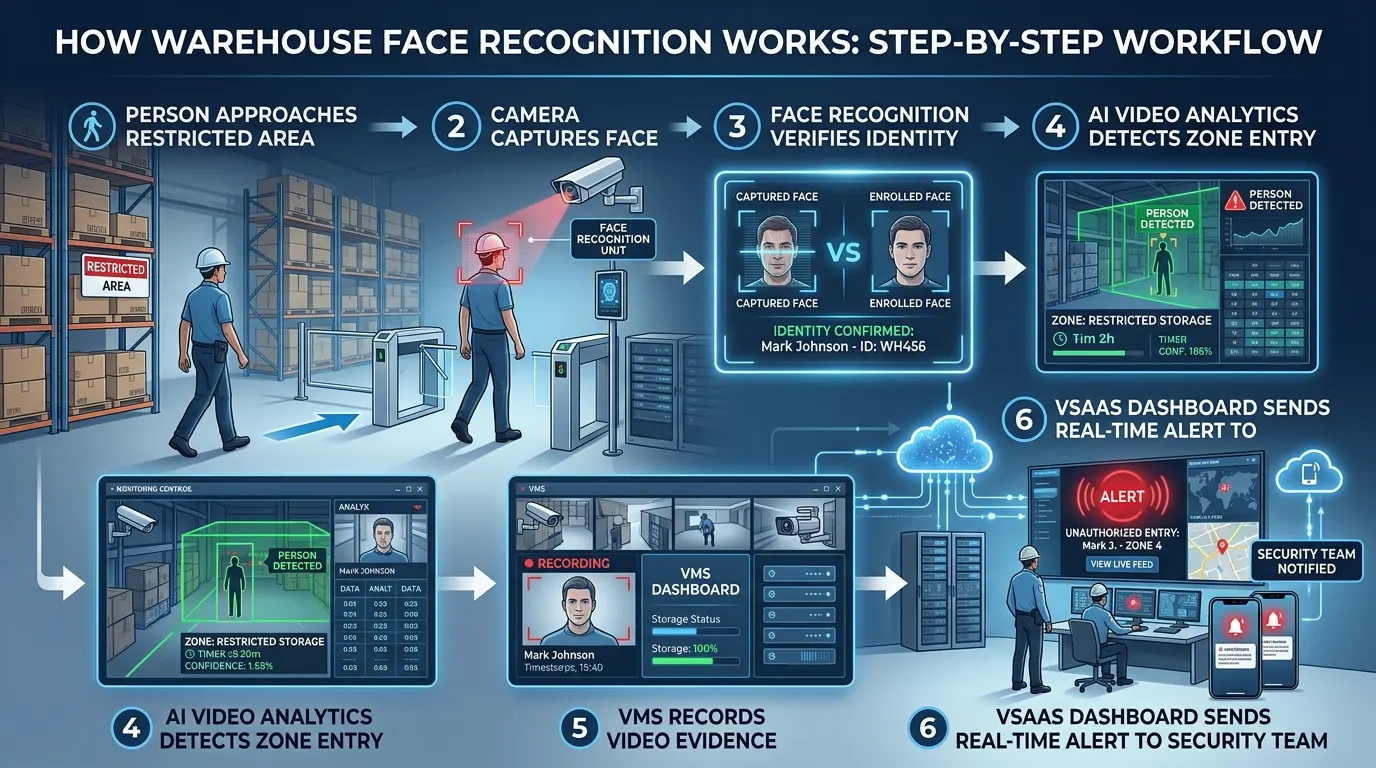
Here is how the system can work:
A person approaches a restricted warehouse zone
The camera captures the person’s face
The Face Recognition System checks the identity against the authorized database
If the person is approved, access can be allowed
If the person is unauthorized, an alert can be sent
AI video analytics can detect restricted zone entry or unusual movement
VMS stores the related video footage as evidence
VSaaS enables remote monitoring across single or multiple warehouse locations
This creates a complete security workflow. Instead of only recording video, the warehouse gets real-time awareness and better control over restricted areas.
Benefits of Face Recognition-Based Warehouse Access Control
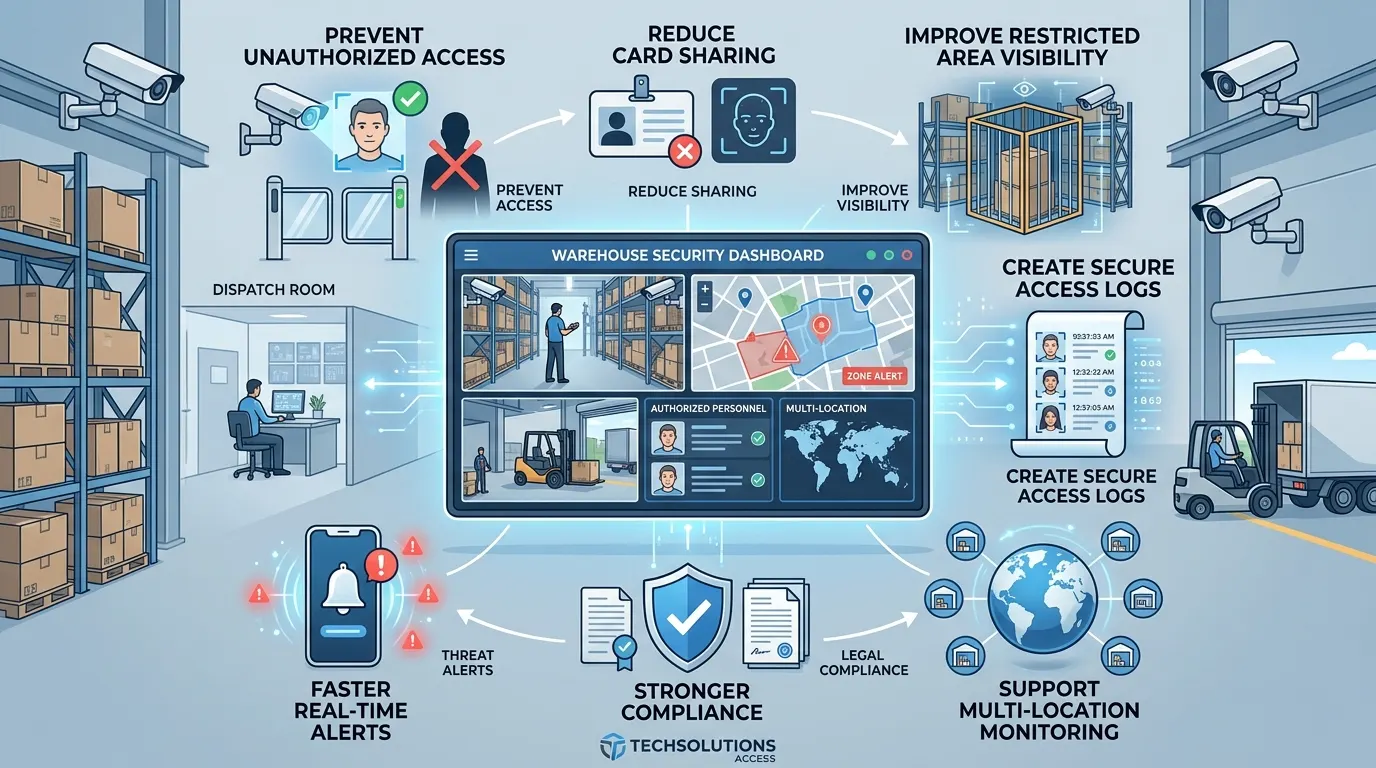
1. Prevent Unauthorized Access
The main benefit of face recognition for warehouses is better access control. Only approved employees, supervisors, vendors, or visitors can enter specific areas. This reduces the risk of unauthorized movement inside sensitive zones.
2. Reduce Card Sharing and Proxy Entry
RFID cards and PIN numbers can be shared between employees. Face recognition solves this issue because access is connected to the person, not just a card or password.
This makes the system more reliable for warehouse security and employee accountability.
3. Improve Visibility Across Restricted Zones
With AI video analytics and VMS integration, warehouse teams can monitor restricted areas more effectively. Security managers can see access events, alerts, and related video footage from a single system.
This is useful for dispatch rooms, storage areas, loading docks, control rooms, and high-value zones.
4. Create Clear Access Logs
A good warehouse access control system should provide clear records. Face recognition helps create logs that show who entered, when they entered, and where they entered.
When connected with VMS, access logs can also be linked with video evidence. This makes investigation faster and more accurate.
5. Support Multi-Location Warehouse Monitoring
Many businesses operate more than one warehouse. Managing access control across multiple locations can become difficult if every site works separately.
With VSaaS and centralized monitoring, security teams can view access events, alerts, and video feeds from different warehouse locations. This is helpful for logistics companies, 3PL providers, retail chains, and manufacturing groups.
6. Improve Response Time
Real-time alerts help security teams respond faster. If an unauthorized person enters a restricted storage area or dispatch room, the system can notify the team immediately instead of waiting for manual review.
Faster response can reduce loss, prevent incidents, and improve operational control.
7. Strengthen Warehouse Security and Compliance
For industries such as pharma, food storage, electronics, manufacturing, and logistics, proper access records are important. Face recognition, VMS, and AI video analytics can support better documentation, audit trails, and compliance processes.
AI-Powered FRS vs Traditional Access Control in Warehouse
Many warehouses still depend on manual checks, RFID cards, PINs, access cards, or basic CCTV. These methods can help, but they have limitations. An AI-powered Face Recognition System gives warehouses stronger identity-based access control because access is linked to the actual person, not to a card, PIN, or manual register.
Access Method Comparison: AI-Powered FRS vs Traditional
| Access Method | Limitation | Face Recognition Advantage |
|---|---|---|
| Manual guard checking | Slow and depends on human accuracy | Automated identity verification |
| RFID card access | Cards can be lost, stolen, or shared | Access is linked to the actual person |
| PIN or password | Can be shared or forgotten | Contactless and identity-based |
| Basic CCTV | Records incidents after they happen | Supports real-time alerts and verification |
| Manual entry register | Can be inaccurate or incomplete | Creates digital access logs |
Face recognition does not replace every security layer. Instead, it makes warehouse security stronger by adding identity-based verification, real-time monitoring, and better access records for restricted areas.
Real-World Use Cases for Warehouses
1. E-Commerce Warehouses
E-commerce warehouses handle fast-moving goods, multiple shifts, and high dispatch volumes. Face recognition can help secure dispatch rooms, packing areas, and high-value storage sections.
2. 3PL and Logistics Facilities
Third-party logistics providers manage goods for multiple clients. Access control becomes important because different teams may need permission for different zones. A role-based warehouse access control system can help manage this more clearly.
3. Pharma and Cold Storage Warehouses
Pharma and cold storage warehouses often store sensitive products that require strict access control. Face recognition can help ensure only authorized staff enter temperature-controlled or compliance-sensitive areas.
4. Manufacturing Warehouses
Manufacturing warehouses store raw materials, spare parts, tools, and finished goods. Face recognition and AI video analytics can help protect these materials and monitor employee movement in restricted areas.
5. Retail Distribution Centers
Retail distribution centers move large volumes of products daily. Access control can help secure stock rooms, dispatch areas, loading docks, and return processing zones.
Features to Look for in a Warehouse Access Control System
When choosing a warehouse access control system, businesses should look beyond basic entry control. The system should support real-time monitoring, video evidence, alerts, and centralized management.
Important features include:
| Feature | Why It Matters |
|---|---|
| Real-time face recognition | Verifies identity quickly |
| Role-based access control | Allows different access levels for different users |
| Restricted zone monitoring | Helps protect sensitive warehouse areas |
| VMS integration | Stores searchable video evidence |
| AI video analytics | Detects zone violations and suspicious activity |
| VSaaS support | Enables remote and centralized monitoring |
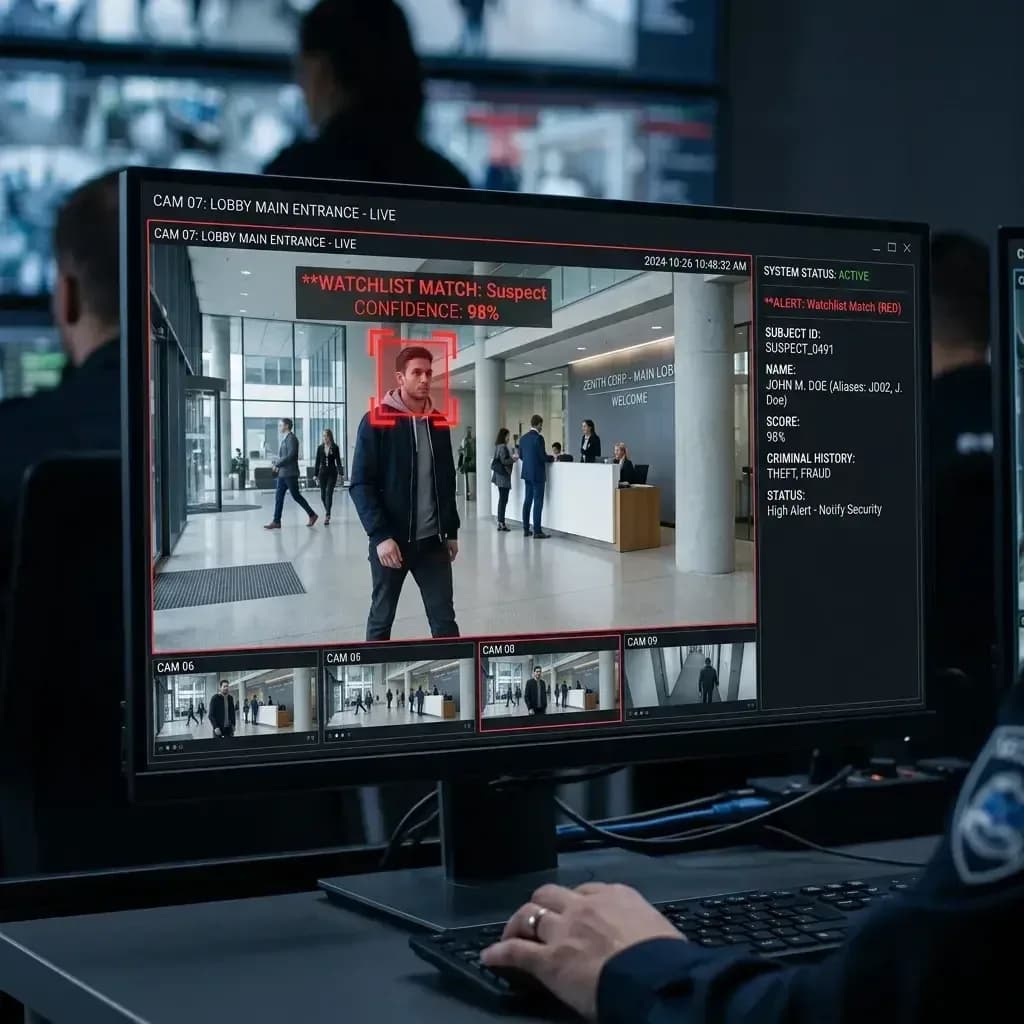
| Watchlist alerts | Helps identify blacklisted or unauthorized people |
| Access logs and reports | Supports audit and investigation |
| Multi-location dashboard | Useful for warehouse chains and logistics networks |
| CCTV integration | Uses existing cameras where possible |
A good system should not only allow access. It should help warehouse managers understand what is happening across the facility.
How This Improves Warehouse Operations
Warehouse security is not only a security department concern. It affects daily operations, dispatch accuracy, inventory protection, employee accountability, and customer trust.
When face recognition is used with VMS, VSaaS (Video Surveillance as a Service), and AI video analytics, warehouses can improve:
security visibility
restricted area control
employee accountability
incident investigation
multi-site monitoring
dispatch room protection
high-value inventory safety
response time during security events
This helps businesses move from reactive monitoring to proactive warehouse security.
Conclusion
Warehouses need more than basic CCTV and manual access control. With multiple people, goods, vehicles, and sensitive zones moving every day, businesses need a smarter way to verify identity and monitor restricted areas.
A warehouse access control system with face recognition helps secure dispatch rooms, restricted storage areas, loading docks, server rooms, and high-value inventory zones. When combined with VMS, VSaaS, and AI video analytics, it gives warehouses better visibility, faster alerts, stronger evidence, and centralized control.
For businesses that want to improve warehouse security, reduce unauthorized access, and protect sensitive areas, face recognition-based access control is a practical and scalable solution.

Dinesh Kumar
SEO Analyst
Dinesh Kumar is an SEO Analyst at Katomaran Technologies, writing search-optimized content on AI video analytics, VMS, intelligent surveillance, and IoT-driven technology solutions.