Introduction
Warehouses, manufacturing plants, and logistics hubs depend heavily on forklifts to keep operations moving. From loading docks to narrow aisles, forklifts are constantly in motion—often working close to people, inventory, and infrastructure. While they are essential, forklifts are also one of the leading causes of serious workplace injuries in industrial environments.
Traditional safety measures like floor markings, mirrors, warning signs, and manual supervision help—but they are no longer enough. Today’s fast-paced operations require smarter, real-time safety solutions. This is where forklift safety systems with Video Analytics are transforming how organizations prevent accidents and protect workers.
What Are Forklift Safety Systems with Video Analytics?
A forklift safety system with video analytics uses cameras combined with artificial intelligence to monitor forklift movement, worker presence, and environmental risks in real time.
Unlike traditional CCTV, these systems don’t just record footage. They analyze it instantly and trigger alerts when unsafe situations are detected.
How Video Analytics Identifies Safety Risks in Real Time
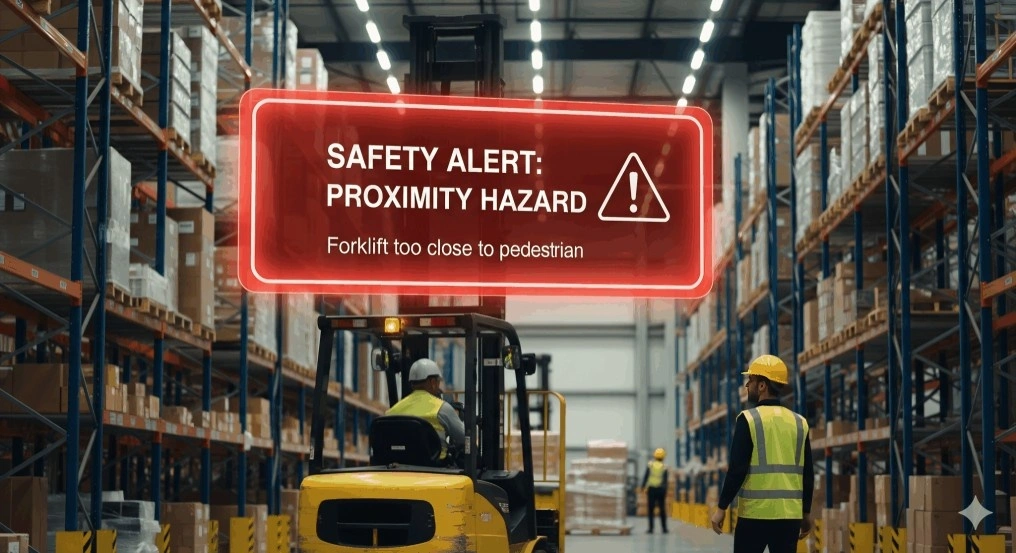
1. AI Forklift Monitoring Through Computer Vision
At the heart of AI forklift monitoring is computer vision. Cameras installed on forklifts or mounted in strategic warehouse locations continuously observe:
Forklift speed and direction
Distance between forklifts and pedestrians
Entry into restricted or high-risk zones
Sudden stops, sharp turns, or unsafe maneuvers
The system processes these visuals instantly and understands what is happening—not just what is visible.
2. Forklift Collision Prevention Before Accidents Happen
One of the most powerful benefits of forklift collision prevention is early warning. Video analytics can predict danger before impact by analyzing movement patterns. For example:
A pedestrian steps into a forklift’s blind spot
Two forklifts approach an intersection at unsafe speeds
A forklift reverses toward a crowded zone
The system triggers real-time alerts such as audible alarms, visual warnings, or dashboard notifications—giving operators and supervisors time to react.
3. Reducing Injuries Through Pedestrian Detection
Pedestrian-related accidents account for a significant percentage of forklift injuries. Forklift safety video analytics excels in detecting human presence—even in busy, cluttered environments. Key capabilities include:
Human detection near moving forklifts
Proximity alerts when safety distances are breached
Monitoring pedestrian-only and forklift-only zones
By clearly identifying people and vehicles separately, warehouse forklift analytics drastically reduces the risk of workers being struck or crushed.
4. Improving Operator Behavior with Data-Driven Insights
Unsafe driving habits often develop over time and go unnoticed—until an accident occurs. Forklift operator behavior analysis changes this by turning daily activity into measurable safety data. Video analytics tracks:
Speed violations
Harsh braking
Aggressive turns
Frequent near-miss events
Instead of blaming operators after incidents, managers can use this data for targeted training and coaching. This leads to long-term behavioral improvement and fewer injuries.
5. Managing Blind Spots and High-Risk Zones
Warehouses are full of blind spots—racks, pillars, dock doors, and narrow aisles limit visibility. Video analytics for forklift safety eliminates these blind spots by providing constant surveillance from multiple angles.
Warehouse Forklift Analytics for Safer Layouts Over time, analytics data reveals:
Areas with frequent near-misses
Congested zones during peak hours
Unsafe layout designs
With this insight, organizations can redesign workflows, adjust aisle widths, relocate pedestrian paths, and improve overall safety planning.
6. Reducing Fatigue-Related Accidents
Operator fatigue is a silent risk factor. Long shifts, repetitive tasks, and pressure to meet deadlines reduce reaction times and decision-making ability. AI forklift monitoring helps by:
Identifying erratic driving patterns
Detecting delayed responses
Flagging unusual movement behavior
Supervisors can intervene early—adjusting shifts or assigning breaks—before fatigue leads to injury.
7. From Reactive to Proactive Workplace Safety
Traditional safety systems are reactive. They investigate incidents after someone is already hurt. Forklift safety system video analytics shifts safety into a proactive model. Key Preventive Benefits:
Real-time alerts instead of post-incident reviews
Near-miss detection to prevent future accidents
Continuous safety monitoring without manual supervision
Objective data for audits and compliance
This proactive approach is the reason organizations see a significant reduction in injury rates after implementation.
8. Compliance, Accountability, and Insurance Benefits
Workplace safety regulations increasingly emphasize prevention, documentation, and accountability. Industrial workplace safety analytics supports compliance by providing:
Automated safety reports
Incident and near-miss logs
Visual evidence for audits
Proof of safety enforcement
Fewer accidents also mean lower insurance claims, reduced downtime, and improved trust with regulators and stakeholders.
9. Scalability Across Warehouses and Industries
One of the biggest advantages of forklift safety video analytics is scalability. Whether you operate a single warehouse or multiple industrial sites, the system adapts easily. It works across:
Warehouses and distribution centers
Manufacturing plants
Ports and logistics hubs
Cold storage and high-bay facilities
As operations grow, analytics systems scale without adding more supervisors or manual checks.
10. Real-World Impact: Fewer Injuries, Safer Operations
Organizations that adopt video analytics for forklift safety consistently report:
Reduction in forklift-related injuries
Fewer near-miss incidents
Improved operator awareness
Stronger safety culture
When workers feel protected, productivity improves and safety becomes a shared responsibility—not just a rulebook requirement.
Conclusion
Workplace injuries involving forklifts are preventable. The key lies in visibility, intelligence, and real-time action. Forklift safety systems with video analytics provide exactly that—by combining AI-powered vision, predictive alerts, and actionable insights to prevent accidents before they happen.
Katomaran delivers advanced AI-based video analytics solutions designed for industrial and warehouse environments. With capabilities in AI forklift monitoring, forklift collision prevention, and warehouse forklift analytics, Katomaran helps organizations move from reactive safety practices to proactive injury prevention.
By integrating Katomaran’s intelligent video analytics solutions, businesses can protect their workforce, improve compliance, and create safer, more efficient material-handling operations.
To explore how Katomaran’s safety-focused AI video analytics solutions can be implemented in your facility, connect with the Katomaran team

Kavinpradeep
Digital Marketer
Kavinpradeep is a Digital Marketer at Katomaran Technologies, creating content on AI video analytics, VMS, IoT, and intelligent surveillance technologies for real-world use.