Introduction: Why Access Systems Are Changing
In today's rapidly evolving security landscape, organisations across sectors are re-evaluating how people access their facilities. For decades, Traditional Access Cards were the standard solution for workforce authentication and entry management. However, with the rise of advanced AI technologies, businesses are increasingly adopting the AI-powered Facial Recognition System as a more secure, efficient, and future-ready alternative.
This blog dives deep into both systems, compares their benefits and challenges, and outlines what industries should consider before transitioning. Whether you manage large manufacturing plants, IT campuses, corporate offices, healthcare facilities, educational institutions, or secure industrial environments, understanding these differences is crucial.
As security threats evolve and operations become more digital, industries now need solutions that go beyond identity verification. They want systems that:
Improve operational efficiency
Ensure Workplace Safety
Reduce human dependency
Eliminate fraudulent entries
Maintain audit trails
Enable Time & Attendance Automation
This is where the shift from Traditional Access Cards to AI-driven systems is becoming a major upgrade rather than just an option.
What Is an AI-Powered Facial Recognition System?
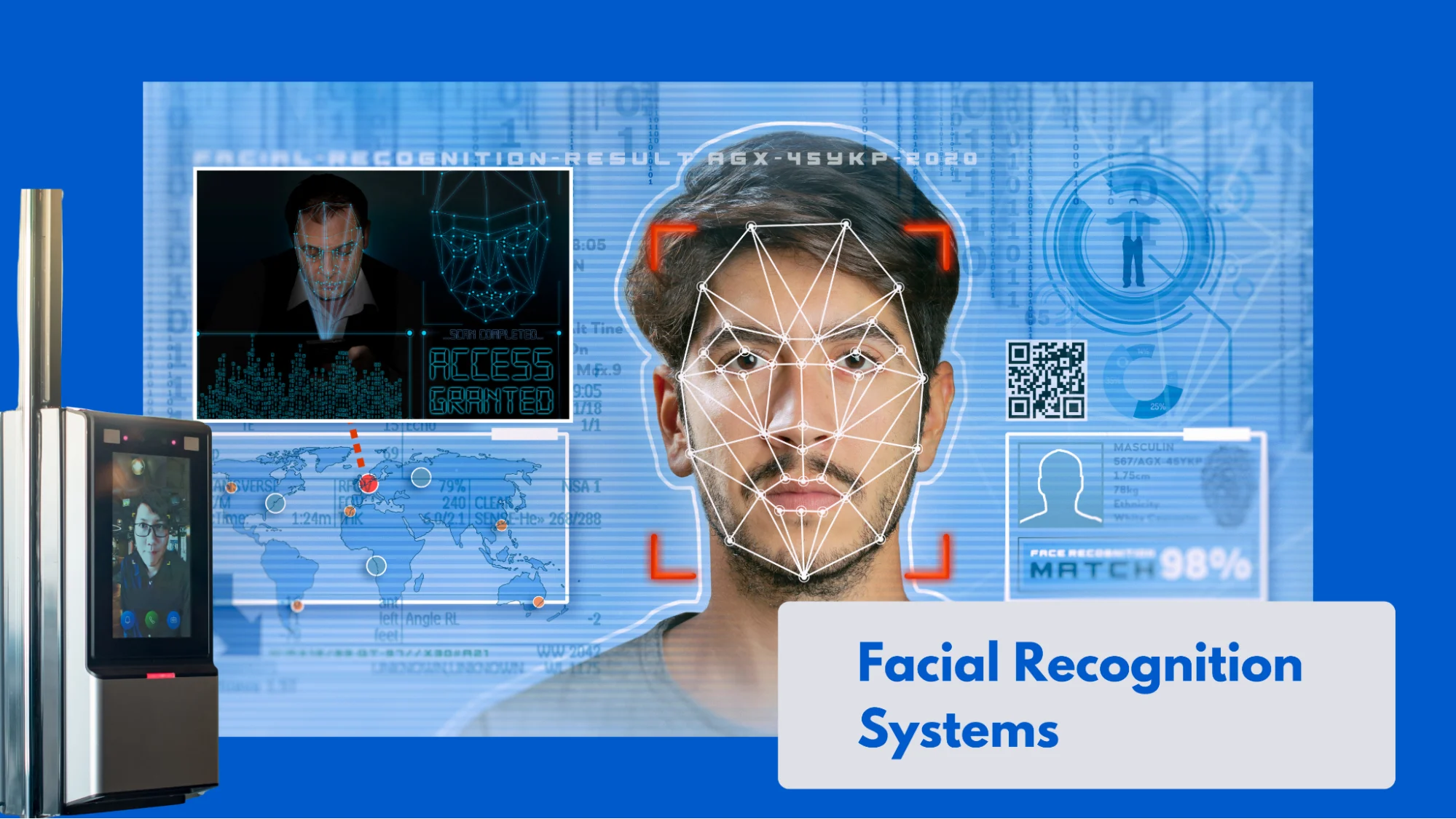
An AI-powered Facial Recognition System uses computer vision and machine learning algorithms to identify and authenticate individuals by analysing their facial features. Instead of relying on something the user "has" (like a card), it verifies who the user "is."
Key Capabilities of an AI-Powered FRS:
Real-time identity matching
Highly accurate detections, even with masks, glasses, or changes in appearance
Works with existing CCTV cameras or dedicated devices
Enables Contactless Authentication
Cloud or on-premises compatibility
Supports large databases for enterprises
What Are Traditional Access Cards?
Traditional Access Cards include RFID, NFC, magnetic stripe, or smart ID-based systems used to open doors or authenticate workforce entries. How Access Cards Typically Work:Employees carry a physical card. A reader scans the card's information, and access is granted based on preconfigured permissions. Although widely used, card systems come with limitations that are increasingly becoming bottlenecks for modern industries.
FRS vs Traditional Access Cards: A Detailed Comparison
Below is a practical comparison showing the differences in real-world scenarios.
| Feature / Parameter | AI-powered Facial Recognition System | Traditional Access Cards |
|---|---|---|
| Authentication Type | Biometric-based | Physical card-based |
| Accuracy | Very high (99%+ in controlled environments) | Moderate |
| Risk of Fraud | Extremely low | High (lost/borrowed cards) |
| Contactless Authentication | Yes | No (requires tapping/swiping) |
| Maintenance | Very low | High (card printing, replacements, etc.) |
| Scalability | Highly scalable | Limited |
| Cost Over Time | Lower (OPEX savings) | Higher (continuous card issuance) |
| Integration | CCTV, HRMS, payroll, attendance | Limited integrations |
| Audit Trail | Complete and automatic | Partial, manual updates needed |
| Best For | High-security workplaces | Basic entry-level environments |
Why Industries Are Moving Toward AI-Powered FRS
1. Higher Level of Security
Security breaches often happen due to unauthorised access using misplaced cards or intentional card sharing.
The AI-powered Facial Recognition System eliminates these issues because:
Faces cannot be shared or borrowed
Every entry is time-stamped
AI ensures accurate Identity Verification
Detects tailgating attempts
This ensures 100% accountability in sensitive environments.
2. No More Lost or Misplaced Cards
On average, companies spend thousands annually replacing lost access cards.
Employees forgetting their cards also disrupts entry queues.
With facial recognition, employees simply walk in — no accessories needed.
3. True Contactless Experience
Post-pandemic, industries prioritize hygienic and touch-free operations.
The AI-powered Facial Recognition System offers Contactless Authentication, making it ideal for:
Hospitals
Manufacturing floors
R&D labs
Corporate buildings
Employees need not touch any surfaces, ensuring safer and faster access.
4. Faster Entry & Automated Attendance
FRS eliminates manual punch-ins and integrates with Time & Attendance Automation systems.
Advantages include:
No physical queuing
No buddy punching
Instant synchronisation with HR software
Accurate working-hour logs
Reduced payroll disputes
Traditional card-based attendance, on the other hand, still suffers from human-dependent loopholes.
5. Cost Efficiency in the Long Run
Although the initial setup for facial recognition may seem higher, the long-term savings outweigh it, considering:
No recurring card printing costs
No hardware replacements
Reduced administrative work
Lower manpower requirements
Minimal maintenance
Industries with high workforce turnover save significantly.
6. Easy Integration With Existing Systems
Modern FRS solutions integrate effortlessly with:
CCTV infrastructure
Access control systems
HRMS & payroll platforms
Visitor management systems
Fire safety & evacuation systems
This level of flexibility is often limited with Traditional Access Cards.
Limitations of Traditional Access Cards That Industries Overlook
1. Vulnerability to Fraud
Borrowed
Cloned
Duplicated
Stolen
This makes them unfit for environments requiring high security.
2. High Administrative Load
Printing
Assigning
Reassigning
Revoking
Tracking lost cards
All of which consume HR and administration resources.
3. Slow Workforce Movement
Manual tapping creates bottlenecks during peak hours, especially in:
Manufacturing shifts
Office rush hour
Schools or universities
FRS enables smooth, walk-through authentication, improving workforce movement and productivity.
When deployed correctly, FRS accuracy significantly surpasses that of Traditional Access Cards, especially in high-density workplaces.
Industry-Wise Breakdown: Who Should Switch to FRS Immediately?
| Industry | Why They Should Switch to AI-Powered FRS | Key Benefits |
|---|---|---|
| Manufacturing & Industrial Plants | High workforce volume, multiple shift changes, and safety compliance needs |
|
| Corporate Offices & IT Parks | Need for fast, seamless entry and multi-level access security |
|
| Healthcare & Hospitals | Critical hygiene requirements and restricted zones |
|
| Education Institutions | Need for attendance automation & campus safety |
|
| Logistics, Warehousing & Transportation | High-value goods and constant staff movement across checkpoints |
|
| Banks & Financial Institutions | High-security demand and strict compliance requirements |
|
| Government & Smart City Projects | Large-scale population access and public safety monitoring |
|
| Airports & Transportation Hubs | Heavy footfall and critical security checks |
|
Future of Access Control: Why FRS Will Dominate
The shift towards smart, automated, and contactless systems is inevitable.
As AI and analytics advance, the AI-powered Facial Recognition System will not only authenticate users but also:
Detect anomalies
Monitor safety compliance
Provide behavioural insights
Enhance emergency evacuation
This makes facial recognition a core part of future Access Control, rather than just an add-on.
Conclusion: What Should Industries Decide?
Industry security needs are evolving, and while Traditional Access Cards served well in the past, they are no longer enough. The AI-powered Facial Recognition System offers higher security, faster access, zero card-related fraud, and complete automation — making it the smarter choice for modern workplaces.
How Katomaran Supports This Transformation
Katomaran Technologies helps industries upgrade effortlessly with its advanced AI Vision Solutions, offering:
Accurate Facial Recognition
Automated Access Control
Attendance & identity verification
Tailgating prevention
Easy integration with existing CCTV and HRMS
With scalable and enterprise-ready solutions, Katomaran enables organisations to move beyond outdated card systems and adopt intelligent, secure, and contactless access management.

Kavinpradeep
Digital Marketer
Kavinpradeep is a Digital Marketer at Katomaran Technologies, creating content on AI video analytics, VMS, IoT, and intelligent surveillance technologies for real-world use.