Introduction
In a factory, controlling who enters is just as important as what gets produced.
Every day, employees report for shifts, contractors move in and out for maintenance work, and vendors arrive for deliveries. Managing all these entries manually often leads to delays, security risks, and lack of visibility.
Unauthorized access, proxy attendance, and uncontrolled vendor movement are common issues.
This is where Face Recognition for Factory Access Control provides a smarter and more reliable solution—ensuring that every person entering your facility is verified, tracked, and authorized.
The Real Challenge: Managing Multiple Entry Types
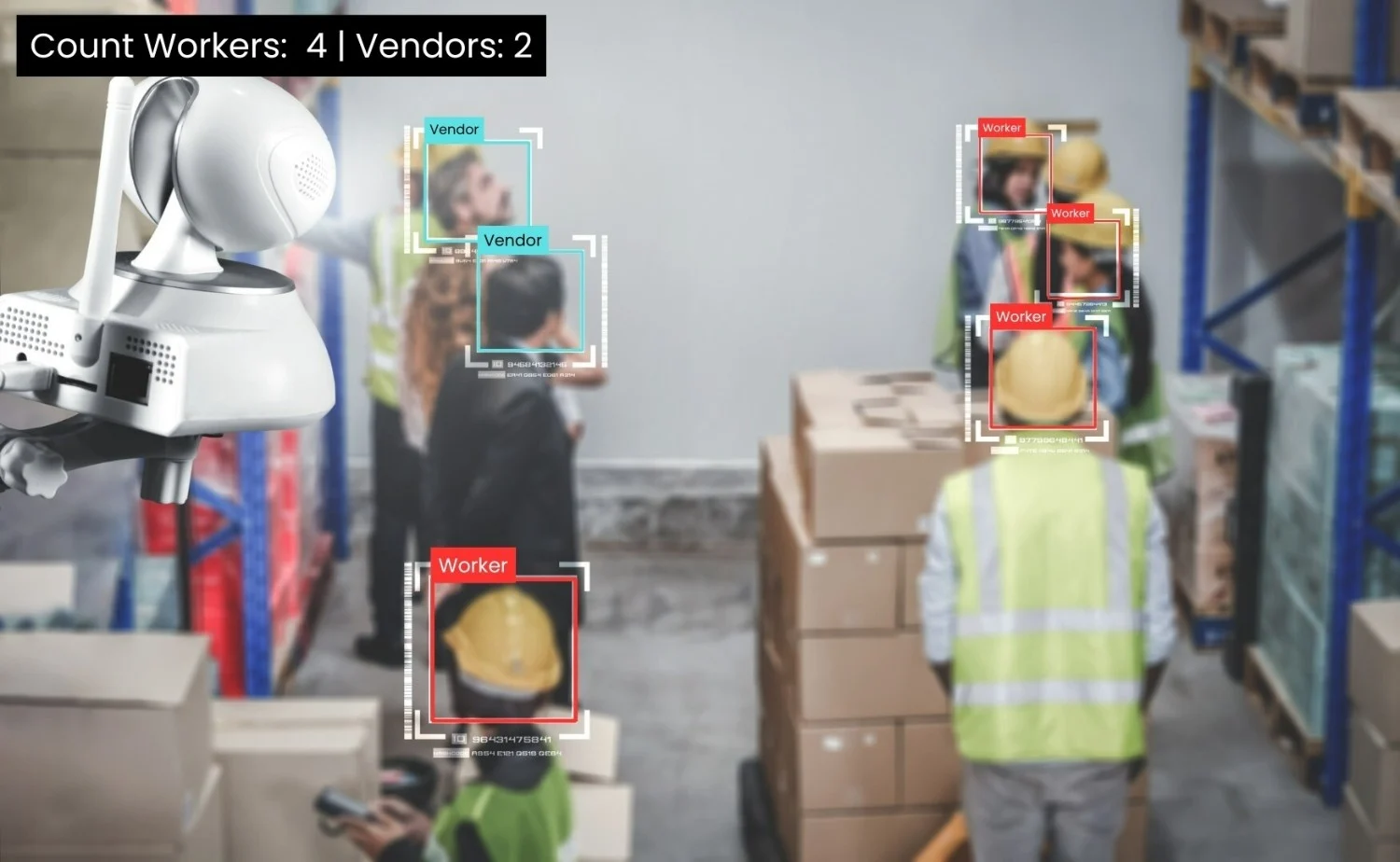
Factories don’t deal with just one type of entry. They manage three critical groups:
Staff (Employees)
Multiple shift timings
Department-based access restrictions
Attendance tracking requirements
Contractors
Temporary workforce
Access limited to specific zones
High risk of unauthorized movement
Vendors
Frequent but short visits
Access mainly to loading/unloading areas
Need for strict entry and exit tracking
Traditional systems fail to handle this complexity efficiently.
Why Traditional Systems Fail in Factory Environments
Most factories still rely on:
- ID cards
- Fingerprint devices
- Manual registers
These methods create more problems than they solve:
Cards can be shared between workers
Fingerprint systems slow down entry during shift changes
Manual logs don’t provide real-time tracking
No proper control over contractor and vendor movement
This leads to both security gaps and operational inefficiencies.
What is Face Recognition for Factory Access Control?
Face Recognition for Factory Access Control is an AI-based system that verifies identity using facial features.
In a factory setup, it acts as a centralized access control layer for staff, contractors, and vendors.
Instead of relying on physical credentials, the system:
Captures a person’s face
Matches it with stored data
Grants access based on role and permissions
This ensures secure and automated entry across all factory gates.
How It Works for Staff, Contractors, and Vendors
For Employees (Staff Entry)
Employees simply walk up to the gate, and the system recognizes them instantly.
Marks attendance automatically
Restricts access to assigned departments
Prevents proxy attendance
For Contractors (Temporary Access Control)
Contractors are registered with limited access rights.
Access is granted only for specific days or hours
Entry is restricted to designated work zones
Access is automatically revoked after project completion
For Vendors (Controlled Entry & Exit)
Vendors are managed with strict entry controls.
Allowed only at designated entry points
Access limited to delivery or loading areas
Entry and exit timestamps are recorded
With Face Recognition for Factory Access Control, every movement is tracked without manual effort.
Key Problems Solved in Factory Entry Management
1. Unauthorized Access to Restricted Areas
Factories have sensitive zones like production floors, warehouses, and control rooms. Facial recognition ensures only authorized individuals can enter these areas.
2. Proxy Attendance and Time Theft
In large factories, employees marking attendance for others is a common issue, leading to payroll losses and inaccurate records. Facial recognition eliminates this completely.
3. Uncontrolled Contractor Movement
Contractors often move beyond their assigned areas. With Face Recognition for Factory Access Control, access is strictly limited to approved zones.
4. Vendor Entry Without Proper Tracking
Manual vendor logs are unreliable. Facial recognition ensures every vendor entry and exit is recorded digitally.
5. Delays During Shift Changes
Peak hour entry leads to long queues. Facial recognition speeds up verification, reducing waiting time significantly.
Operational Benefits for Factories
A modern Biometric Access Control System improves both security and efficiency. Factories benefit from:
Faster entry during shift changes
Accurate attendance tracking
Reduced manual supervision
Real-time visibility of workforce movement
Better compliance and audit readiness
This creates a more controlled and efficient working environment.
Designed for Real Factory Conditions
Factories are not ideal environments—they are challenging. Modern systems are built to handle:
Low Light or Night Shifts
Infrared-enabled cameras ensure accurate recognition.
Workers Wearing PPE
Helmets, masks, and safety gear do not affect identification.
High Footfall at Entry Gates
The system can handle large volumes without slowing down.
Harsh Industrial Environments
Built to work in dust, heat, and outdoor conditions.
Best Practices for Factory Deployment
To maximize the effectiveness of Face Recognition for Factory Access Control:
Install cameras at entry and restricted zones
Define role-based access for staff, contractors, and vendors
Use centralized monitoring dashboards
Keep user data updated regularly
Integrate with CCTV and attendance systems
A structured setup ensures both security and smooth operations.
Why Factories Are Moving Toward Face Recognition
Factories are becoming smarter and more automated. Manual systems are no longer enough to handle complex workforce movement.
Face Recognition for Factory Access Control offers:
Automated entry management
Better control over people movement
Reduced dependency on manual processes
Scalable security across multiple gates
It is quickly becoming the preferred solution for industrial security.
Conclusion: Secure Every Entry Point with Katomaran
Factories need more than basic security—they need full control over who enters and where they go.
Face Recognition for Factory Access Control secures staff, contractors, and vendor entry in one unified system.
Katomaran’s FRS (Facial Recognition System) delivers AI-powered, touchless access—controlling restricted areas, automating attendance, and integrating seamlessly with CCTV.
If you’re looking to reduce risks and improve efficiency, Katomaran’s FRS solutions are built for modern factory environments.

Kavinpradeep
Digital Marketer
Kavinpradeep is a Digital Marketer at Katomaran Technologies, creating content on AI video analytics, VMS, IoT, and intelligent surveillance technologies for real-world use.