Introduction
Managing traffic violations is no longer only about spotting a speeding vehicle on the road. Today, traffic authorities need a smarter and more reliable way to detect violations, identify the vehicle, and keep proper evidence for further action. This is where ANPR and speed enforcement in ITMS play an important role.
In many traffic environments, manual monitoring is slow and difficult. Officers cannot be present everywhere, and reviewing hours of footage for one violation takes too much time. Even if a speeding vehicle is captured, the next challenge is proving the event clearly. The system should show the vehicle, the number plate, the speed, the location, and the time of violation in one proper record. That is why modern Intelligent Traffic Management Systems (ITMS) combine ANPR and speed enforcement into one connected workflow. Instead of only detecting a violation, the system can capture the event, read the number plate, and generate evidence that supports review and enforcement.
This blog explains how that full process works and why this combination is becoming essential in modern traffic management.
What Is ANPR in ITMS?
ANPR stands for Automatic Number Plate Recognition. In an ITMS setup, ANPR is used to detect and read vehicle number plates through traffic cameras and intelligent software.
When a vehicle passes through a monitored road or lane, the ANPR system captures the number plate image and converts it into text. This helps traffic teams identify the vehicle involved in an event or violation.
In simple terms, ANPR gives identity to the vehicle.
It is widely used in traffic enforcement because just seeing a vehicle is not enough. Authorities need to know which vehicle crossed the road, entered a lane, or committed a violation. ANPR makes that possible by turning the plate image into usable vehicle information.
Inside traffic systems, ANPR is commonly used for: vehicle identification, violation tracking, entry-exit monitoring, blacklist alerts, and digital evidence generation.
What Is Speed Enforcement in Intelligent Traffic Management?
Speed enforcement is the process of automatically detecting vehicles that cross the allowed speed limit. In an Intelligent Traffic Management System, speed enforcement helps traffic authorities monitor overspeeding without depending only on manual checking.
The system measures the speed of a moving vehicle and compares it with the set limit for that road or zone. If the vehicle crosses that limit, the system flags it as a violation.
This is important because overspeeding is one of the major reasons for road accidents. A smart speed enforcement system helps authorities reduce risky driving behavior and improve road safety.
More importantly, automated speed enforcement works continuously. It can monitor roads day and night, cover more traffic, and detect violations more consistently than manual observation.
Why ANPR and Speed Enforcement Work Better Together
Speed enforcement alone can detect that a vehicle crossed the speed limit. But that is only one part of the process. For actual enforcement, authorities also need to know: which vehicle it was, when the event happened, where it happened, and whether there is enough proof to support action.
That is where ANPR becomes important.
When ANPR and speed enforcement work together, the system does more than detect overspeeding. It also identifies the vehicle by reading the number plate and linking it with the speed violation.
This makes the workflow much stronger.
Instead of a simple speed alert, the traffic team gets a complete event record with: vehicle image, number plate, speed data, date, time, and location.
That means the violation is not just detected. It is also documented properly. This combination reduces manual work and helps traffic teams move faster from detection to review and action.
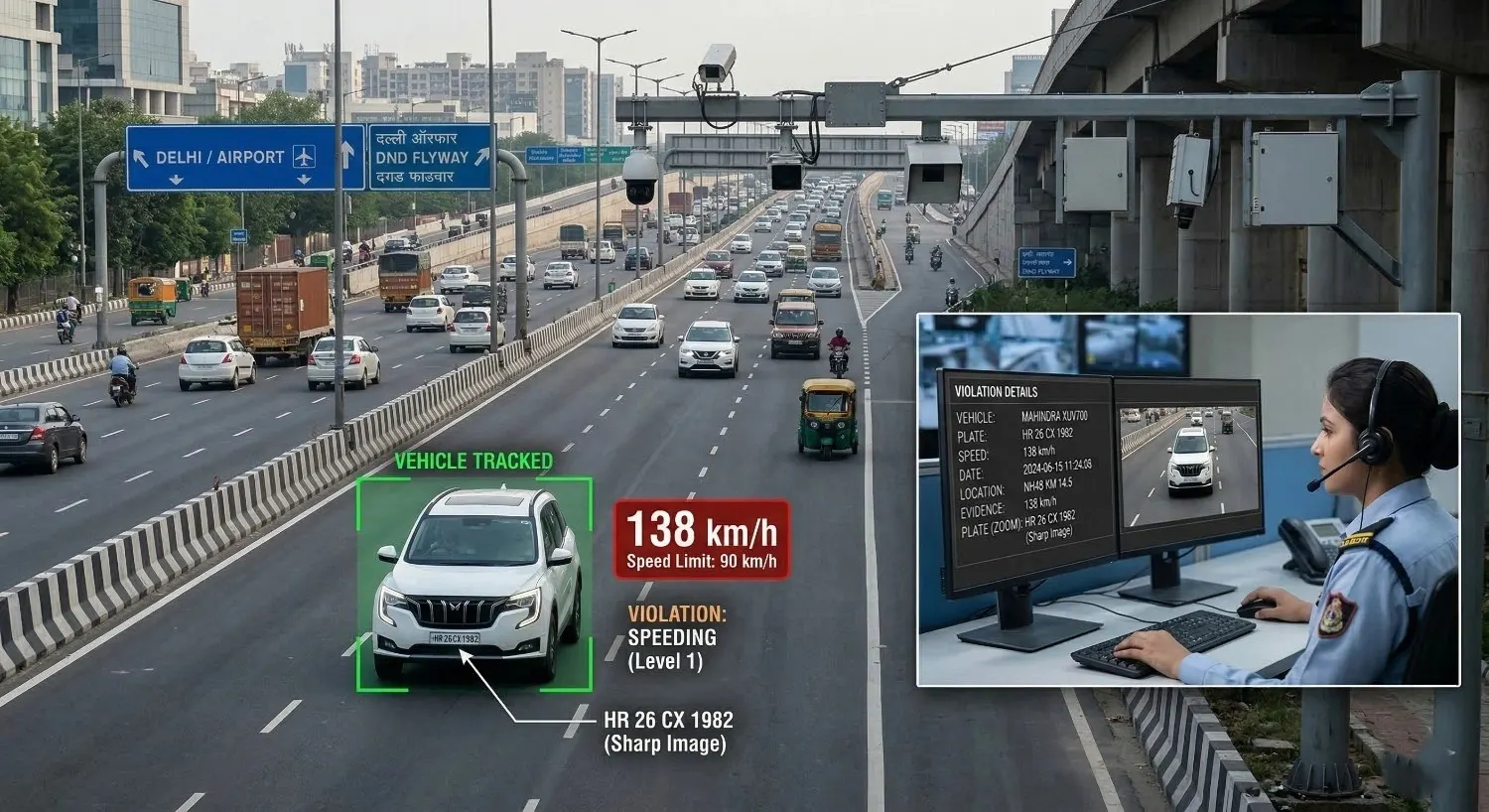
From Violation Capture to Evidence Workflow: How the Full Process Works
This is the core part of the system.
A good ANPR + speed enforcement solution in ITMS should not stop with detection. It should support the complete flow from violation capture to evidence creation.
Step 1: Vehicle Detection
The first step is detecting the vehicle as it enters the monitored road or lane. The traffic camera or monitoring setup continuously watches the road and tracks moving vehicles.
Step 2: Speed Measurement
Once the vehicle is detected, the system measures its speed. This speed is compared with the configured speed limit for that location.
If the vehicle stays within the limit, there is no issue. If it crosses the limit, the system marks it as a violation.
Step 3: ANPR Plate Recognition
At the same time, the system captures the vehicle image and reads the number plate using ANPR. The plate details are converted into text and attached to the event.
This step is very important because it identifies the violating vehicle clearly.
Step 4: Violation Validation
After the speed and number plate are captured, the system validates the event. It checks the speed value, time, lane, and other details to make sure the violation record is complete.
Step 5: Evidence Generation
Once the event is confirmed, the platform creates an evidence package. This package may include: vehicle image, number plate image, recognized plate number, actual speed, speed limit, timestamp, location, lane number, and event ID.
Some systems may also store a short video clip or snapshots for stronger proof.
Step 6: Review and Enforcement Workflow
After evidence is generated, the event can be reviewed by the traffic operator or enforcement team. They can verify the details and move the case forward for penalty, challan, or legal review if needed.
This is what makes the full workflow useful. It connects detection, identification, and evidence into one process.
What Evidence Is Captured in an ANPR + Speed Enforcement System?
Evidence is one of the most important parts of traffic enforcement. Detecting a violation is useful, but proving it properly is what makes the system practical.
A typical ANPR + speed enforcement system can capture:
full vehicle image
close-up number plate image
recognized number plate text
actual vehicle speed
allowed speed limit
date and time
location of violation
lane information
camera or device ID
event snapshots
supporting video clip
event reference number
This kind of structured evidence makes it easier for operators to review the case quickly. It also helps in record keeping, reporting, and dispute handling later.
Key Benefits of ANPR + Speed Enforcement in ITMS
There are many reasons why this combination is valuable in modern traffic systems.
First, it improves accuracy. The system does not only detect the speed violation. It also links it with the correct vehicle and supporting evidence.
Second, it reduces manual effort. Operators do not have to spend too much time searching footage and matching vehicle details separately.
Third, it supports faster enforcement. Since the event record is already organized, authorities can review and process the case more efficiently.
Another major benefit is better digital evidence management. Events can be stored, searched, and retrieved more easily when everything is captured in one structured format.
Most importantly, it supports better road safety. When drivers know that overspeeding can be detected and documented clearly, enforcement becomes stronger and road discipline improves.
| Traffic Environment | How ANPR + Speed Enforcement Helps |
|---|---|
| Highways and Expressways | Detects high-speed violations across long road stretches and supports continuous traffic enforcement. |
| City Roads and Urban Corridors | Helps monitor daily traffic movement and identify speeding vehicles in busy road networks. |
| School Zones and Accident-Prone Areas | Supports stricter speed monitoring to improve safety in sensitive and high-risk zones. |
| Smart City Projects | Connects violation detection with broader traffic monitoring, analytics, and enforcement systems. |
| Toll Roads | Helps identify vehicles and monitor speed compliance in controlled traffic corridors. |
| Restricted Zones | Supports vehicle identification and speed control in areas with limited or regulated access. |
| Industrial Traffic Areas | Monitors vehicle movement and speed where safety, compliance, and controlled access are important. |
How Katomaran Technologies Supports Smarter Traffic Enforcement
At Katomaran Technologies, we understand that traffic enforcement needs more than simple detection. It needs a connected workflow that helps authorities capture the violation, identify the vehicle, and manage the evidence properly.
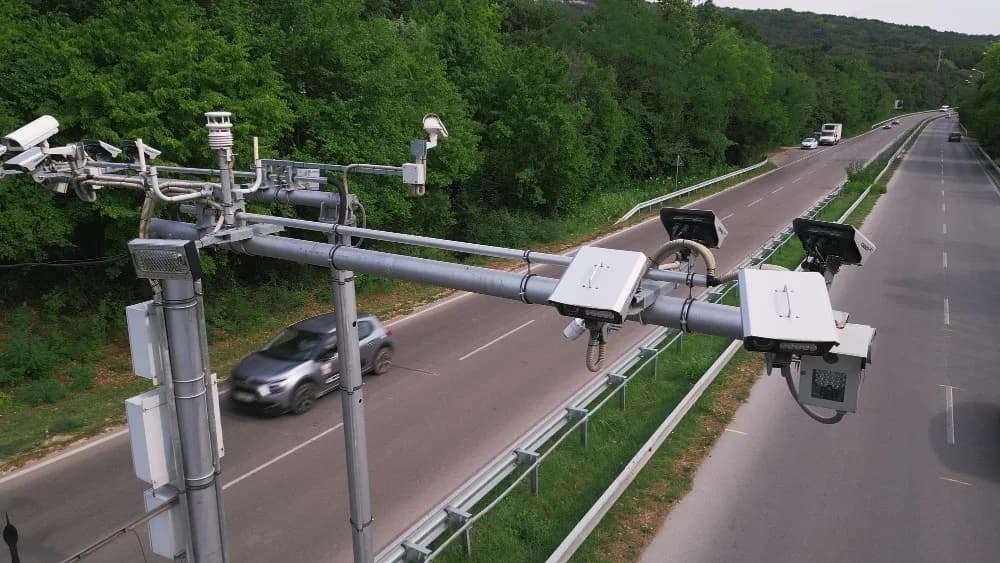
With integrated ANPR and speed enforcement in ITMS, traffic teams can work with structured event records instead of disconnected alerts. This makes review easier, improves operational efficiency, and supports more reliable enforcement. The real value of this approach is that it turns traffic monitoring into actionable traffic management.
Conclusion
Modern traffic enforcement is not only about finding a speed violation. It is about building a complete workflow from detection to proof. That is why ANPR + speed enforcement in ITMS is such a powerful combination. Speed enforcement detects the violation. ANPR identifies the vehicle. The evidence workflow connects everything into one usable record. This makes traffic enforcement faster, clearer, and more practical for today’s roads. For authorities looking to improve road safety and digital enforcement, this combination offers a smarter way to move from violation capture to evidence-based action.

Dinesh Kumar
SEO Analyst
Dinesh Kumar is an SEO Analyst at Katomaran Technologies, writing search-optimized content on AI video analytics, VMS, intelligent surveillance, and IoT-driven technology solutions.