Introduction
Perimeter security protects industrial facilities, warehouses, construction sites, utilities, campuses, and critical infrastructure. Yet fences, guards, alarms, and CCTV cameras can still leave gaps. Blind spots, poor visibility, false alarms, manual monitoring, and delayed verification may allow an intrusion to go unnoticed until damage occurs.
Modern AI video analytics software transforms existing CCTV cameras from passive recording tools into proactive monitoring systems. It continuously analyzes video, detects relevant activity, and alerts security teams when a defined rule is violated.
What Are Perimeter Security Gaps?
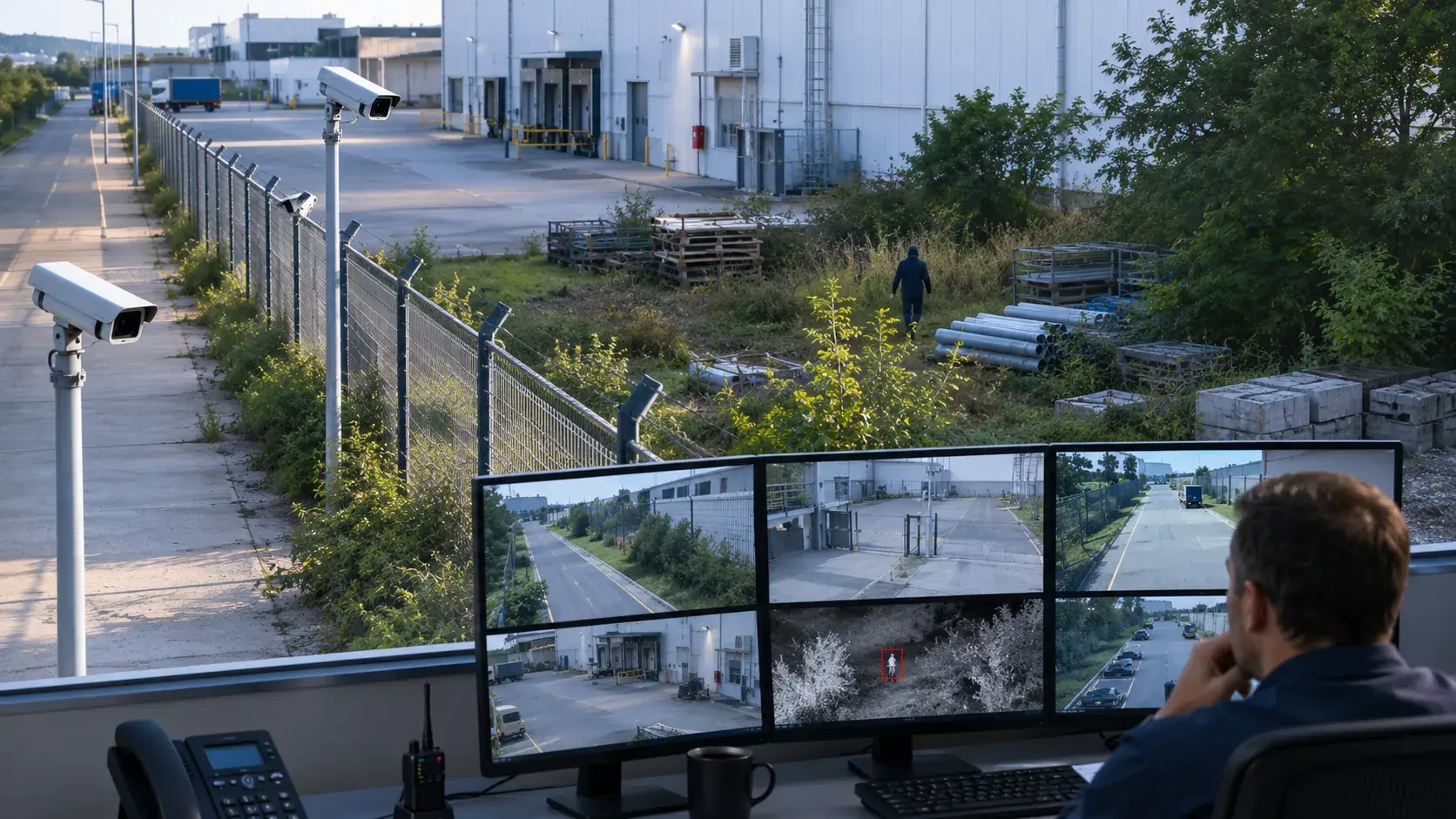
A perimeter security gap is any weakness that prevents a security team from detecting, verifying, or responding to unauthorized activity effectively. It may be physical, such as a damaged fence or uncontrolled entrance, or operational, such as an operator missing suspicious movement across multiple camera feeds.
Gaps can also result from poor camera placement, long boundary lines, low-light areas, vegetation, changing site layouts, disconnected systems, or alerts that provide too little information for quick verification. Effective perimeter protection therefore requires reliable detection, useful alerts, visual evidence, and a clear response workflow.
Why Traditional Perimeter Security Misses Threats
Traditional CCTV systems are often used mainly for live viewing and post-incident investigation. Their effectiveness depends heavily on operators continuously watching multiple screens. As the number of cameras increases, important activity can be missed, especially during quiet periods or night monitoring. An AI-powered remote security monitoring system helps teams focus on detected events instead of manually observing every feed.
Basic motion detection can create another problem. Rain, shadows, headlights, animals, and moving vegetation may trigger alarms that are not genuine threats. Repeated irrelevant alerts can increase alarm fatigue and slow the response to real incidents.
Camera performance also depends on viewing angle, target size, lens selection, lighting, and pixel density. Proper camera planning for long-distance object detection and suitable methods for object detection in pitch darkness are essential for dependable coverage.
How Intelligent Video Analytics Closes Perimeter Security Gaps
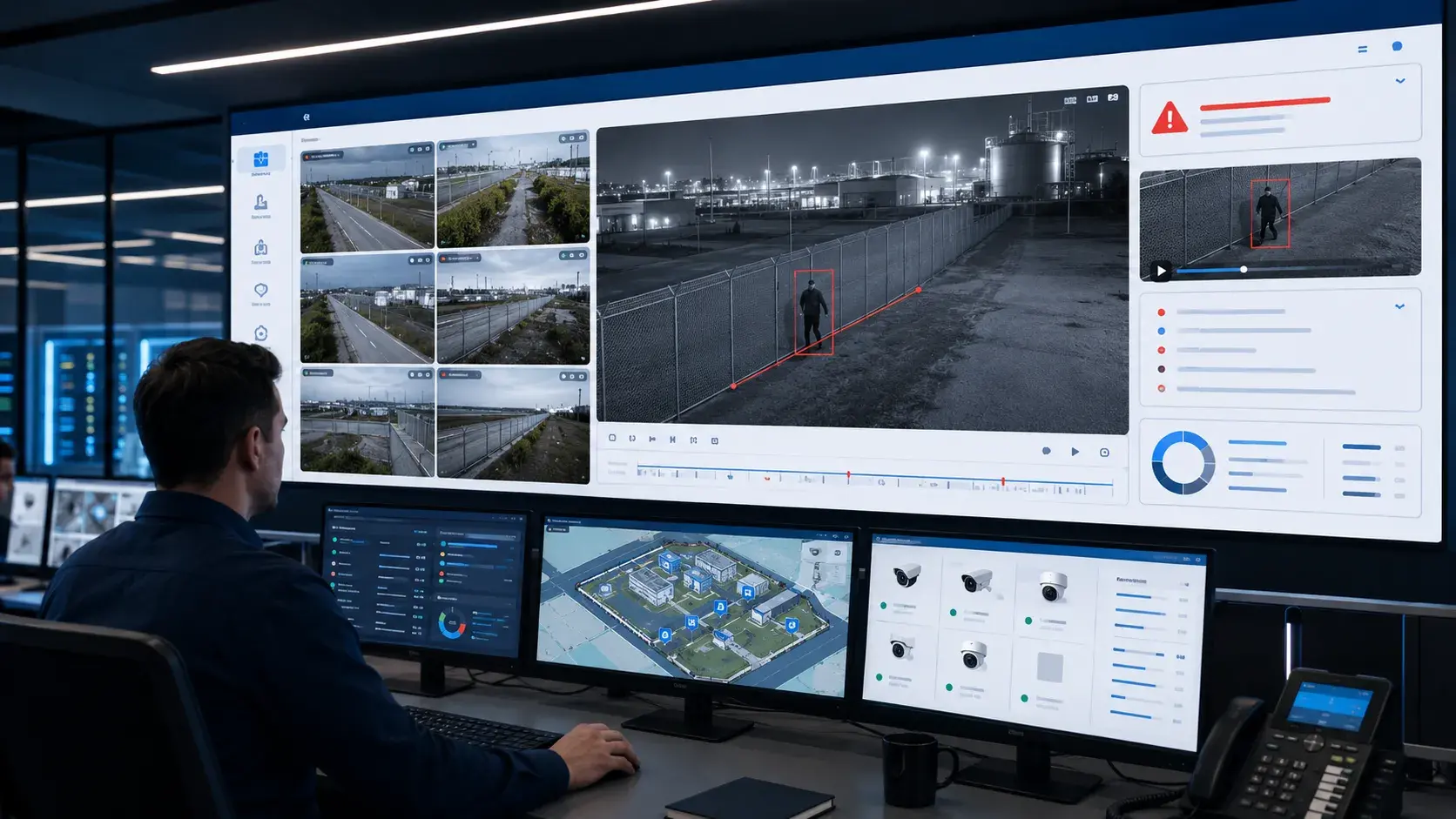
Intelligent video analytics examines live camera feeds and identifies people, vehicles, objects, and movement patterns. It applies predefined rules to determine whether an event requires attention. Object detection, classification, and tracking enable security systems to understand activity rather than reacting to every movement.
Real-Time Intrusion Detection
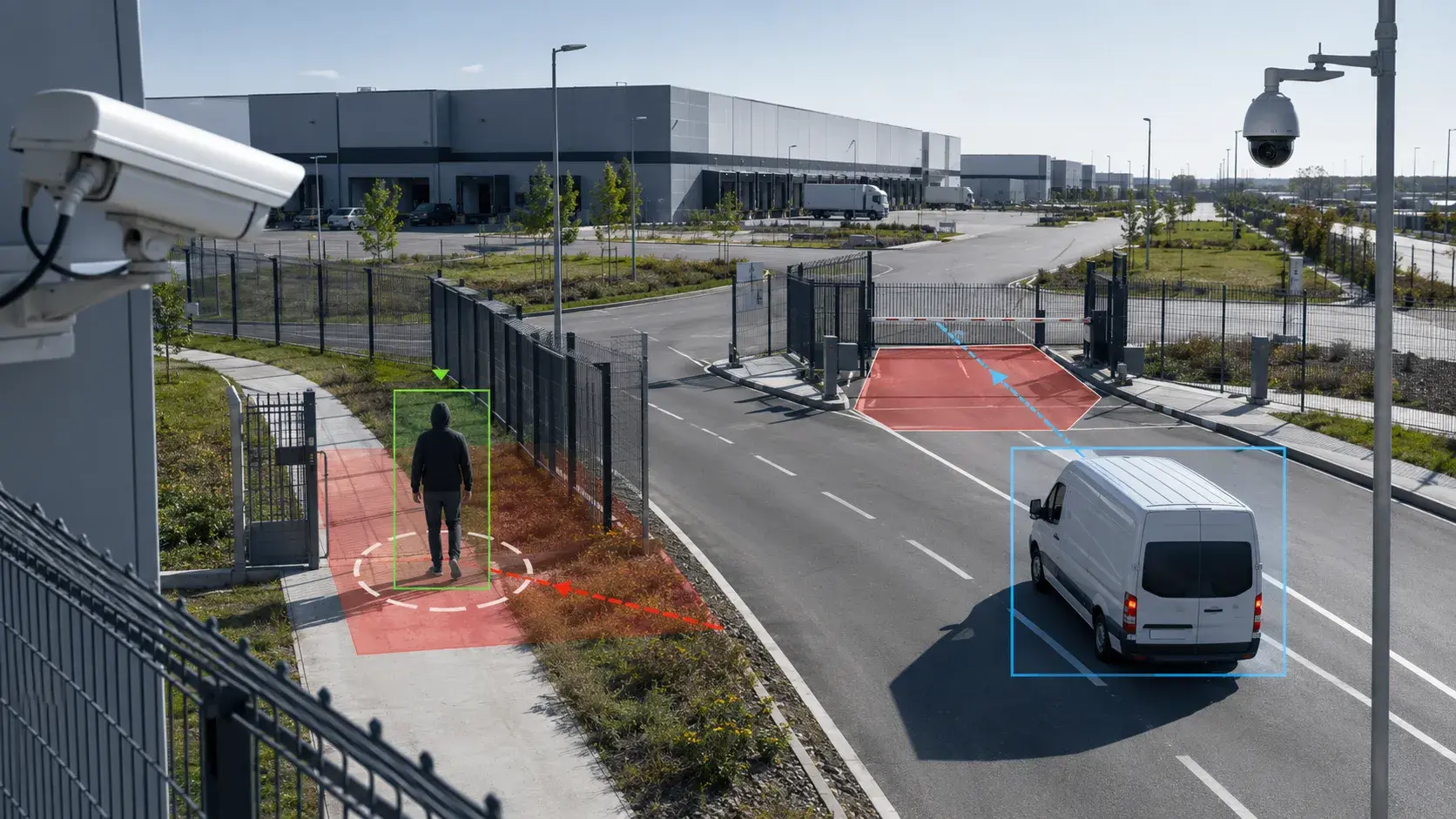
AI perimeter intrusion detection can identify a person or vehicle entering a protected zone and generate an alert while the event is happening. Security teams can define virtual zones around fences, gates, loading yards, storage areas, substations, or other restricted locations.
Virtual Line Crossing and Direction Rules
A virtual line can be drawn within a camera view to detect movement across a selected boundary. Direction-based rules help distinguish normal activity from suspicious entry.
For example, a vehicle leaving through an approved exit may be allowed, while movement toward a restricted yard after working hours can trigger an alert.
Person and Vehicle Classification
Unlike basic motion detection, intelligent analytics can classify detected objects. This helps filter irrelevant movement and allows different responses for people and vehicles.
Time schedules, dwell duration, direction, and zone rules can further improve alert relevance.
Loitering and Suspicious Activity Detection
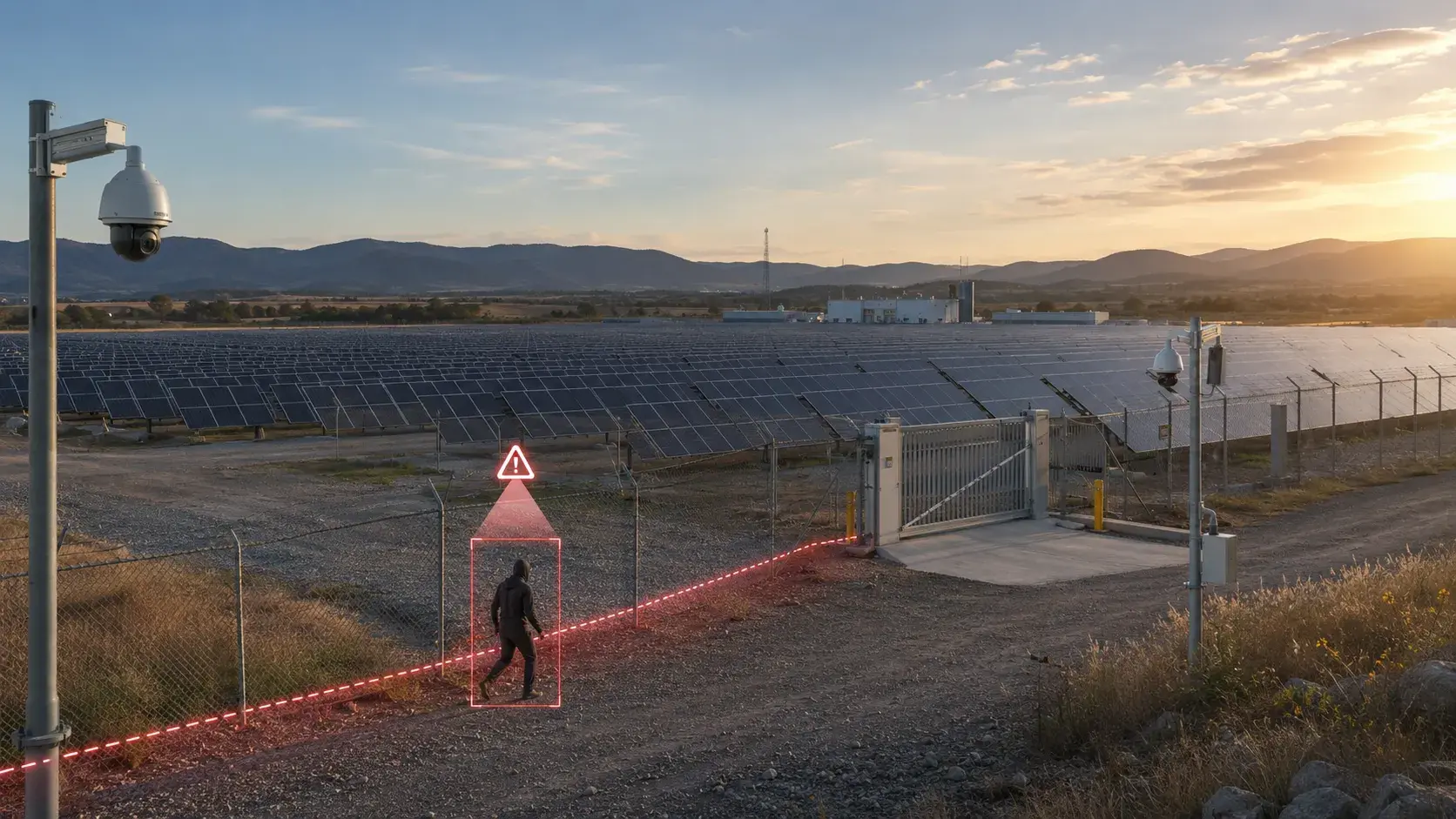
A person or vehicle remaining near a fence, gate, equipment area, or restricted entrance for an unusual period may indicate attempted theft or preparation for unauthorized access.
Loitering analytics can identify this behaviour before a boundary is crossed, giving security teams an opportunity to investigate earlier.
Camera Tampering and Video Verification
A security system becomes ineffective when a camera is blocked, shifted, blurred, or disconnected. Tampering alerts help teams identify these issues.
When a security rule is triggered, snapshots and video clips allow operators to verify the event before dispatching guards or escalating it.
From Detection to Security Response
An intelligent perimeter workflow connects every stage of incident handling:
Camera feed → AI analysis → Object classification → Rule validation → Alert → Operator verification → Response → Incident record
This workflow gives operators the camera location, event time, detected object, and visual evidence needed to make a faster decision.
The response may include notifying guards, activating an alarm, locking an access point, contacting emergency teams, or preserving footage for investigation.
Integrating Analytics with Existing Security Infrastructure
Organizations do not always need to replace their complete surveillance infrastructure. Compatible CCTV streams can be connected to analytics software, while a centralized video management system can bring live video, alerts, playback, evidence, and camera management into one interface.
Video analytics can also integrate with access control, ANPR, alarm systems, sensors, and command-centre workflows. This creates a connected environment where a sensor alert can be visually verified, an unauthorized vehicle can be investigated, and relevant footage can be accessed without searching through hours of video.
Where Intelligent Perimeter Analytics Is Used
Intelligent perimeter monitoring supports sites where large boundaries, valuable assets, remote locations, or restricted areas make continuous manual observation difficult.
For power plants, substations, transport facilities, and utilities, critical infrastructure video security can strengthen monitoring around essential assets.
Warehouse video analytics can detect activity around dock yards, perimeter edges, storage zones, and staff-only areas. At temporary worksites, construction site video intelligence can support after-hours intrusion detection and restricted-zone monitoring.
Remote energy sites also benefit from automated alerts. Katomaran’s solar farm perimeter security deployment demonstrates how analytics can support intrusion and loitering detection around a large, distributed facility.
Planning an Effective Perimeter Analytics Deployment
Successful deployment begins with a risk assessment. Security teams should identify vulnerable gates, fence lines, blind spots, high-value assets, vehicle routes, low-light areas, and locations with a history of suspicious activity.
Camera placement, resolution, field of view, lighting, network availability, and environmental conditions should then be reviewed. Detection zones and rules must match real site operations. A gate used during business hours may require different rules at night.
Before full deployment, teams should test the system under different lighting and weather conditions, review alert quality, adjust zone boundaries, and define who verifies and escalates each event.
Regular reviews are also important as vegetation, equipment, temporary structures, and operational routes change.
Strengthen Perimeter Security with Katomaran Technologies
Katomaran Technologies helps organizations use existing CCTV infrastructure for intelligent perimeter monitoring. Its video analytics platform supports real-time intrusion detection, virtual line crossing, person and vehicle detection, loitering alerts, camera tampering detection, event clips, and centralized monitoring.
The platform supports edge, on-premise, cloud, and hybrid environments. It can also connect with VMS, access control, and other security workflows to help teams detect threats, verify incidents, and manage evidence from a unified system.
Closing Perimeter Security Gaps with Video Intelligence
Strong perimeter protection is not only about building a physical boundary. It is about recognizing suspicious activity early, confirming whether it presents a threat, and enabling the right response.
Intelligent video analytics for perimeter security helps organizations move from passive surveillance to proactive detection. By combining existing CCTV cameras with automated analytics, relevant alerts, visual verification, and centralized monitoring, security teams can improve visibility and respond before incidents escalate.

Dinesh Kumar
SEO Analyst
Dinesh Kumar is an SEO Analyst at Katomaran Technologies, writing search-optimized content on AI video analytics, VMS, intelligent surveillance, and IoT-driven technology solutions.